Related: Window Feeder Placement: Why Three Feet From Glass Matters
Fall is when a backyard bird feeding setup earns its keep. The juncos arrive, the goldfinches finally sit still long enough to count, and the first hard freeze separates the feeders built for weather from the feeders built for photographs. I have kept a log of every species that hits my yard for ten years now: 38 species at the feeders, 214 on the county list, and a cups-per-week column that decides what I recommend and what I quietly take down.
Four pieces do four different jobs in that setup. A hummingbird feeder covers the stragglers still moving through in early fall. A window feeder puts birds two feet from your coffee. A pole and baffle system decides whether your seed belongs to you or to the neighborhood squirrels. A camera feeder handles the photos for people who would rather not sit still at the glass.
Prices move, so I do not print them. Every product block below links to the listing where you can check the current Amazon price, and I would rather you look at the number yourself than trust a snapshot from the day I wrote this.
How I judge a feeder before it earns a hook
Five questions, every time. Will birds actually use it, or will it sit pretty on the pole? Can I take it apart and clean it in under ten minutes? What does a determined fox squirrel do to it in week one? Will it survive a Wisconsin February, freeze, thaw, freeze? And would I still hang it after four seasons?
Two of those questions come from rehab work, not from shopping. I handle the songbird side of a county wildlife rescue, and every salmonella intake I have seen traced back to a feeder nobody took apart since fall. House finch eye disease travels the same way, bird to bird, on a dirty perch. A feeder you cannot fully disassemble is a disease vector with a perch on it.
The other question is placement. A window feeder belongs within three feet of the glass, close enough that a bird cannot build up the speed to hurt itself. My own white-throated sparrow taught me that one the hard way. Three feet is not a suggestion.
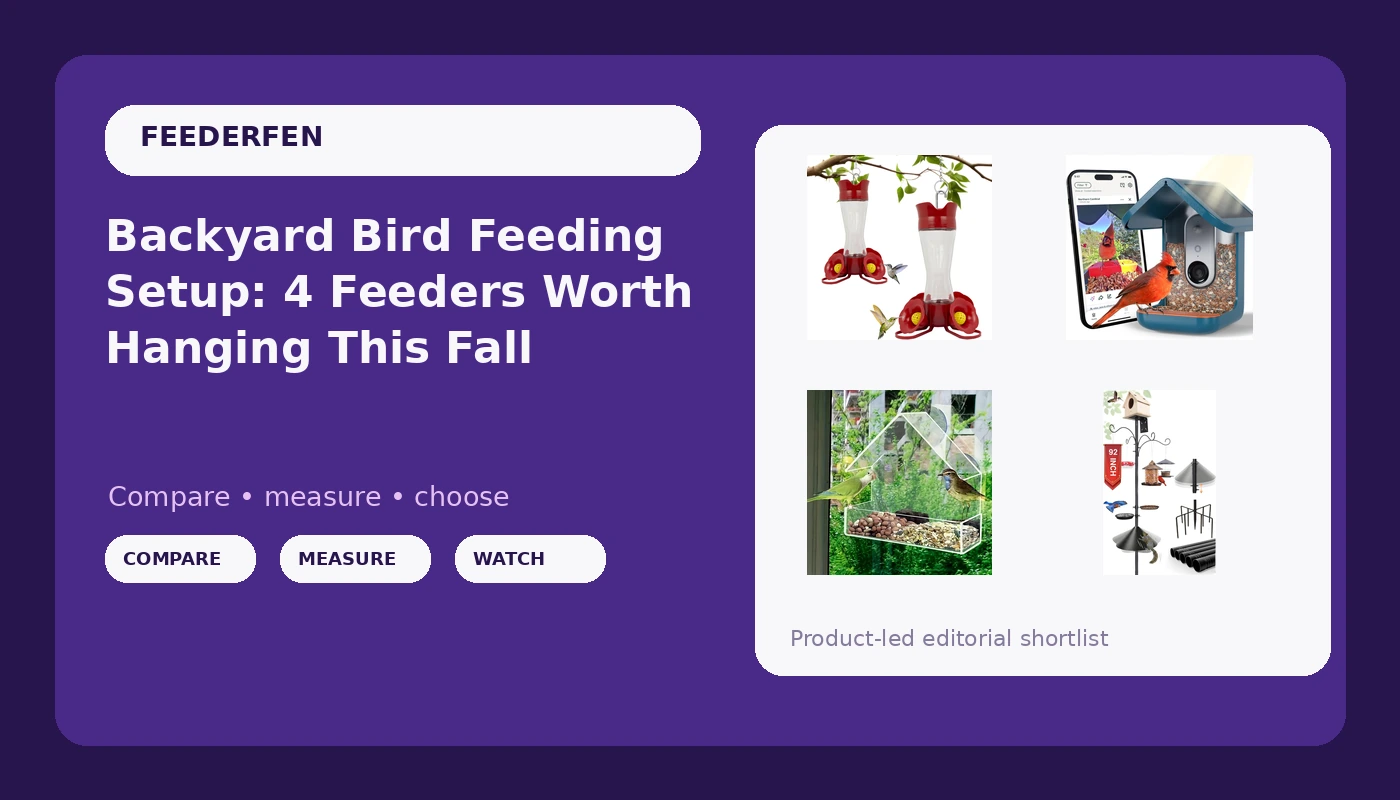
Perky-Pet Glass Hummingbird Feeder: Small Batches, Cleaner Glass
Glass is the reason this one is in the guide. Plastic nectar feeders scratch, scratches hold residue, and residue is what grows. Glass rinses clean and stays clean, and an 8 oz nectar capacity means you mix small batches instead of a quart of sugar water that sits in the sun and turns. In August heat, small batches are a feature rather than a limitation: you dump less, and you refill more often with fresh nectar.
That capacity cuts both ways. If your yard hosts a dozen ruby-throated hummingbirds fighting over territory in late July, a small reservoir is a daily refill. If your traffic is a pair and a passing migrant, this is the right size, and it is the size I would hand a first-time hummingbird feeder owner. Skip the red dye. Clear nectar in a clean feeder works, and the dye is not doing the birds any favors.
Where it hangs matters as much as what it holds: shade, out of the worst afternoon sun, and somewhere you can see it from a window you actually sit at. Hanging a hummingbird feeder where you never look is how a feeder becomes a mold experiment by August.
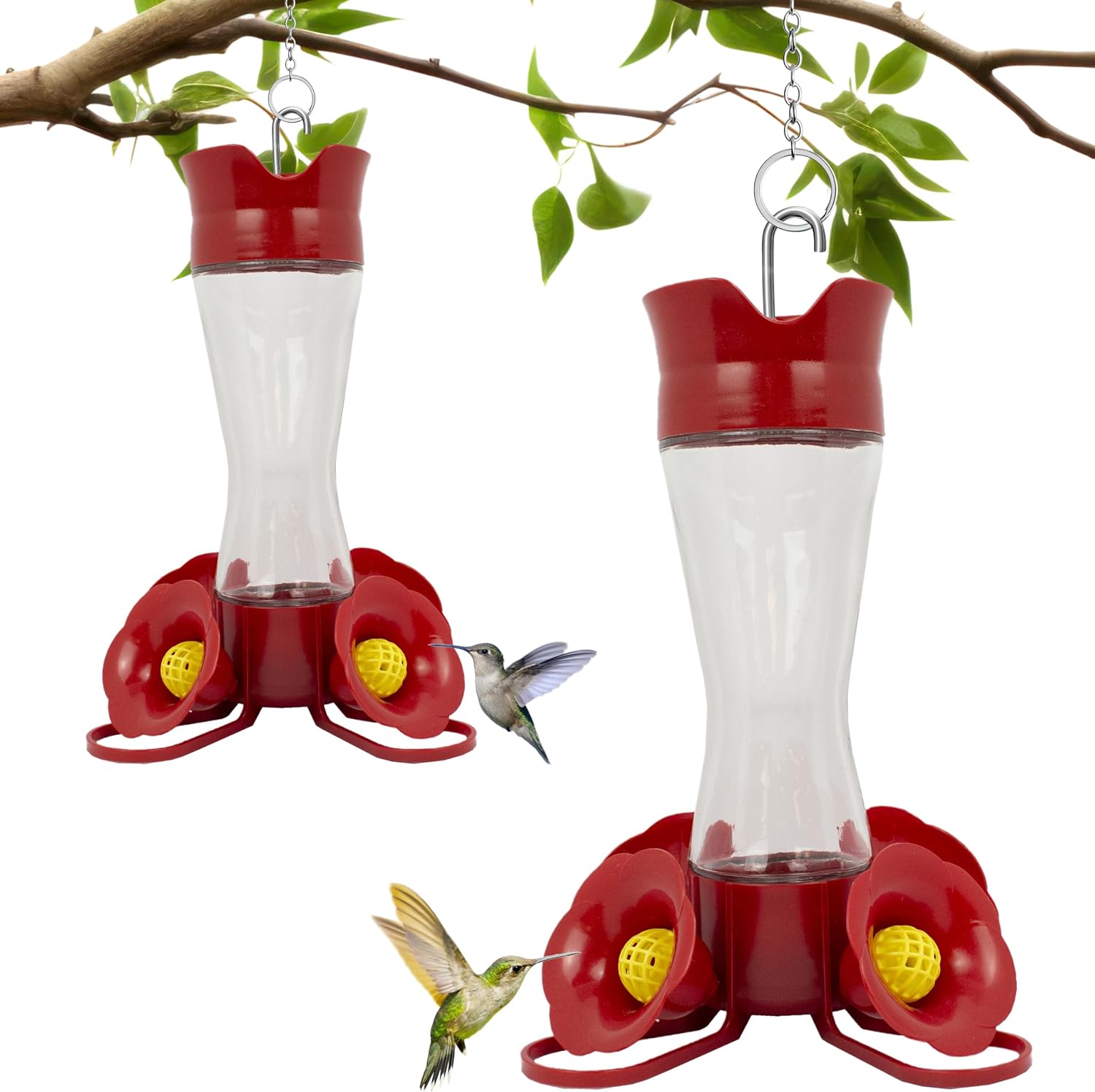
Clear Acrylic Window Feeder: Two Feet From Your Coffee
This is the least expensive way to get birds close, and close is the entire point. Mounted on the glass, a clear acrylic tray puts chickadees, titmice, and house finches at arm's length while you sit still inside with a mug. For anyone learning bird identification, that beats binoculars: you get to watch a chickadee for two full minutes instead of two seconds.
Acrylic wipes clean, which matters because a window feeder takes weather on both sides. The design is simple, and simple is what you want here: a tray, a clear front, and as few crevices as possible where old seed turns to paste. Seed choice matters too. In a shallow tray, hulled sunflower hearts and no-mess blends leave nothing behind, while a cheap blend padded with milo and red millet sits there uneaten and molds after a rain.
The thing I check first on any window feeder is the mounting hardware, not the tray. Suction cups are the weak point, and a hard freeze is where they let go. In a climate with real winters, I want a feeder that attaches with a bracket that goes through the sill, or I want to accept that the feeder comes inside before the first ice. The birds will forgive you for a feeder that disappears in January. They will not forgive a tray that hits the porch at 6 a.m.
This is also the one placement that actively prevents window strikes. Put a feeder within three feet of glass and birds cannot build the speed that kills them. Put one thirty feet out, where they can reach full speed, and you have built a trap. Distance is the whole safety margin.
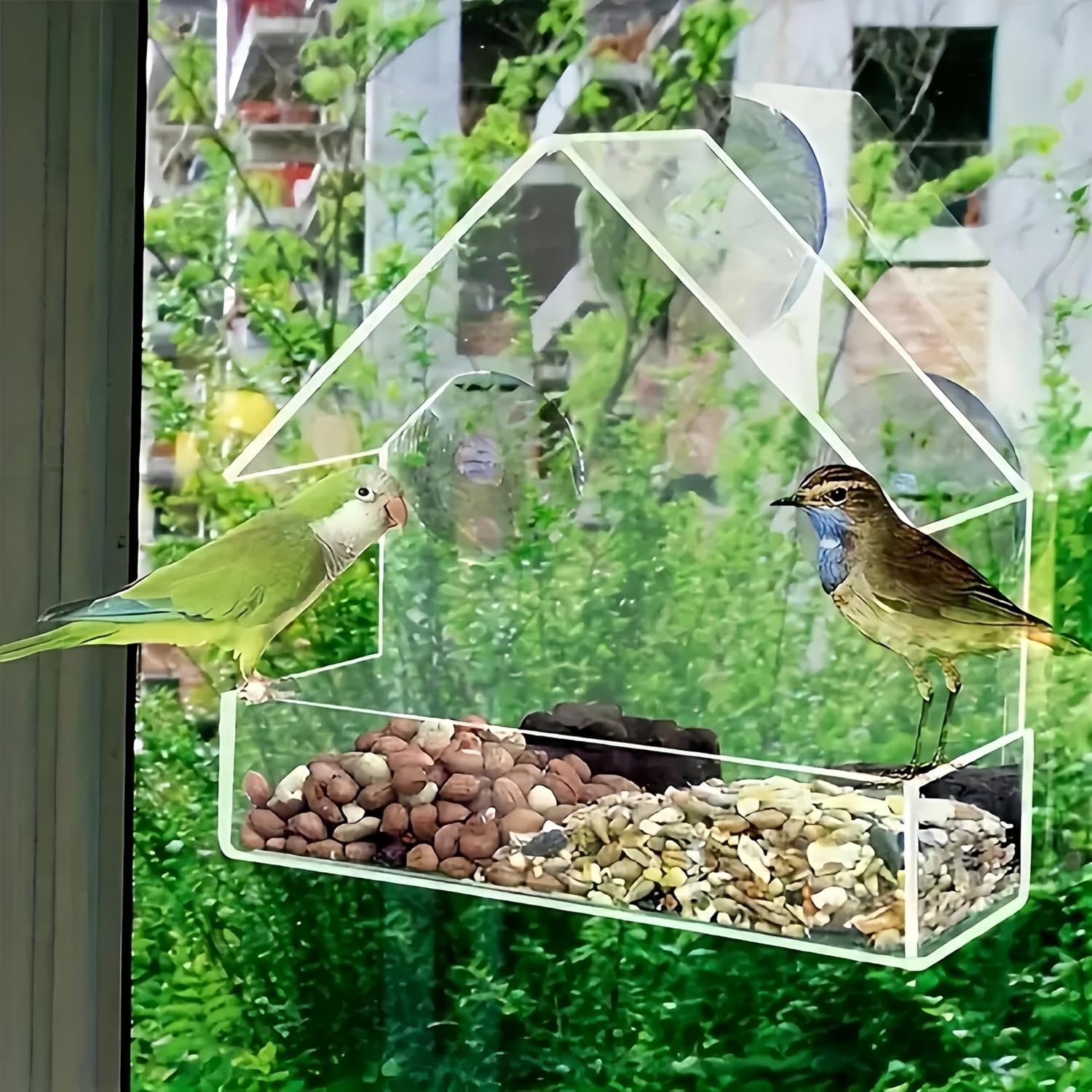
eWonLife 92 Inch Feeder Pole: Where Squirrel-Proof Gets Honest
Every squirrel argument in a backyard ends at the pole. You can buy the best baffled tube feeder on the market, and if it hangs from a hook a squirrel can climb, the squirrel eats. A 92 inch steel pole with a 1 inch diameter and a nine prong base changes the geometry of the problem: the feeder hangs high, the baffle sits between the squirrel and the seed, and the base is wide enough that a fox squirrel leaning out from the top does not walk the whole assembly over.
Nine prongs and adjustable shepherd's hooks mean one pole carries several feeders, which is the setup I actually run: a tube on one arm, a suet cage on another, and a water tray on a third. Water is the part people skip. From June through August, my bath logs more species than every feeder in the yard combined, and a birdbath tray on a feeder pole is the easiest way to keep water where you can see it and refill it.
Now the honest word, and I give it every time. Squirrel-proof is a marketing phrase. Squirrel-resistant is a real thing, and it is measured in weeks of a determined squirrel trying. A baffle only works if the pole stands clear of launch points: away from fences, away from low branches, away from the deck rail a squirrel can leap from. Mount a baffled pole three feet from a fence and you have built a squirrel ladder with extra steps. Move it out, keep the baffle clear, and the same pole does its job.
The 1 inch diameter is the spec I care about most. Thin poles wobble in wind, and a wobbling pole spills seed and rattles the baffle. Heavy gauge steel plus a wide base is what keeps a loaded pole standing through a February thaw, and it is why I would rather spend on the pole than on a fourth feeder to hang from a hook that sags.
Birdbuddy Pro Solar Smart Bird Feeder: Great Photos, One Honest Caveat
This is the one people ask about at parties. A camera feeder with solar charging, AI bird identification, and 2K video is a genuinely useful teaching tool: you get a photo of the bird that just landed, a name attached to it, and video you can scrub when a streaky sparrow will not sit still long enough for a good look.
Solar is the right call for a camera feeder. Every battery swap on a pole-mounted camera is a ladder in the snow, and a panel that trickles charge through the day means fewer of those trips. Mount it on the tall pole above and you can put the camera feeder at eye level without giving a squirrel a step up.
My caveat is the same one I give every time this feeder comes up: know what you are buying, and it is not only hardware. The smart features lean on an app, the app leans on a subscription, and the identification leans on a model that has never met your yard. I do not pay for subscriptions, and I say so every time I post one of the photos, because the photos really are good. Use the AI identification as a first guess and confirm it against a field guide. It will call a house finch a purple finch on a bad afternoon, and so will most people.
If what you want is a record of what visits, a camera feeder supplements a written log rather than replacing it. If what you want is a photograph of a northern cardinal on a snowy morning without leaving the kitchen, this is the best tool in the guide for that, and the subscription is the price of the toy.
The reference table
This is how the four pieces sort out. Placement column matters more than any spec sheet, because a good feeder in a bad spot feeds nothing but squirrels and starlings.
| Setup piece | Best for | Where it goes | Watch out for | Price |
|---|---|---|---|---|
 Visit on Amazon → Perky-Pet Glass Hummingbird Feeder |
First hummingbird feeder, small yards, fall migrants | Shade, visible from a window you use | Small capacity means frequent refills in peak season | $16.15 |
 Visit on Amazon → Clear Acrylic Window Feeder |
Learning bird ID, close viewing, small spaces | Within three feet of the glass, always | Mounting hardware, especially suction cups in a freeze | $7.28 |
 Visit on Amazon → eWonLife 92 Inch Feeder Pole |
Hanging several feeders plus water on one station | Open ground, clear of fences and low branches | A baffle near a launch point does nothing | $39.99 |
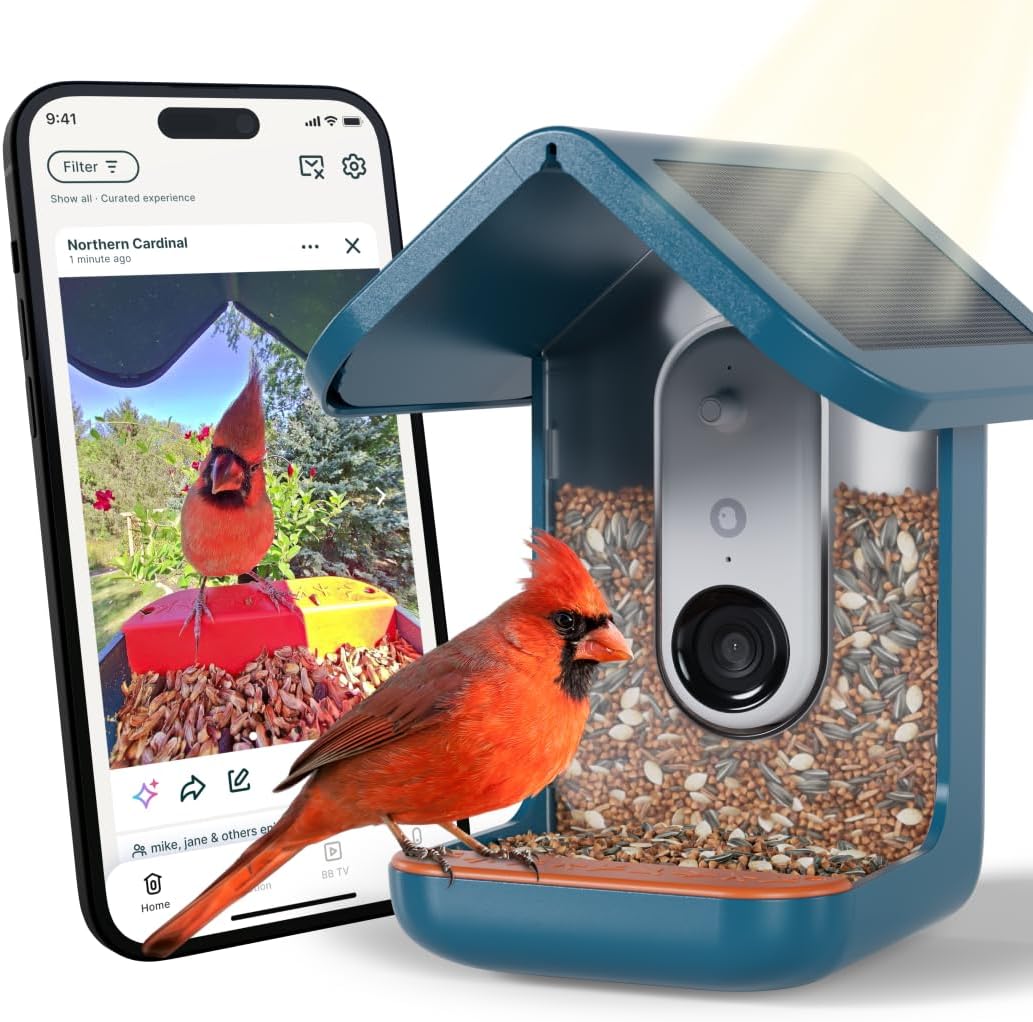 Visit on Amazon → Birdbuddy Pro Solar Smart Feeder |
Photos, video, learning calls and markings | Pole or post, sun exposure for the panel | Subscription and cloud dependency, AI misidentifications | $239.99 |
Matching the four pieces to your yard
If you buy one thing, buy the pole. Every other feeder in this guide performs better when it hangs from something a squirrel cannot climb, and the pole is the piece that survives the longest.
If you have a kitchen window and a chair, buy the window feeder. It costs less than a bag of good seed, and it is the fastest way to learn the birds in your own yard, because they sit still at arm's length instead of flashing past.
If hummingbirds are the reason you started feeding birds, buy the glass feeder and hang it in shade. If you want the photos and the identification help and you are comfortable with a subscription, buy the camera feeder and mount it on the pole. If you want all of it, the pole plus any two feeders is a complete station, and the second feeder is always the one that surprises you in the log.
Should you buy the Perky-Pet Glass Hummingbird Feeder?
Yes, if your traffic is modest and your goal is clean nectar. Glass rinses in seconds and does not hold the scratches that plastic does, and the small capacity keeps you from letting a big batch of sugar water sit and ferment in the heat. If you host a crowd in late July, plan on refilling daily. No red dye, ever, and a spot in the shade rather than full afternoon sun.
Should you buy the Clear Acrylic Window Feeder?
Yes. It is the cheapest close-up view you will ever buy, and close-up viewing is how people actually learn to identify birds. Acrylic wipes clean, and the tray is easy to empty when it rains. Just look hard at how it mounts before winter arrives. If the attachment is suction cups and your winters freeze, plan to bring it in or upgrade the hardware.
Should you buy the eWonLife 92 Inch Feeder Pole?
Yes. It is the least glamorous purchase in this guide and the one that changes the most. Tall, thick steel with a wide base and a baffle puts seed out of reach and lets you hang a tube, a suet cage, and a water tray on one station. Remember that squirrel-resistant is the honest standard, and placement is what makes the baffle work.
Should you buy the Birdbuddy Pro Solar Smart Feeder?
Yes, for the photos, with your eyes open about the app and the subscription. Solar charging saves you winter battery swaps, and the AI identification is a solid starting point that still deserves a field guide check. Keep a written log alongside it. The camera records what showed up; the log is what tells you what the yard is doing over years.