Related: Bird Bath or Bird Feeder: Which One Brings More Species
I keep a spreadsheet I call the log. Every species that lands in my yard, every first-of-season date, every cup of seed a feeder pulls in a week. Ten years of entries, and the log has overruled my opinions more times than I can count. It is the only reason I trust myself to recommend a backyard bird feeding setup to anyone.
Here is what the log has taught me about gear. A feeder's real specs are how fast it empties and how easily it comes apart for cleaning. Water brings in more species than any seed blend from June through August. And "squirrel-proof" is a marketing word, while "squirrel-resistant" is a claim you can measure in weeks.
So when I build a setup for someone, I do not start with the prettiest feeder on the shelf. I start with four questions. Will birds actually use it? Can I take it apart and clean it in under ten minutes? What does a determined fox squirrel do to it in week one? Will it survive a Wisconsin February? Everything below passes those questions for a different reason. One watches the yard for you, two fill it, and one keeps the hummingbirds coming back.
The Feeder That Watches Back: Smart Solar Bird Feeder with Camera & Outdoor Bird Bath
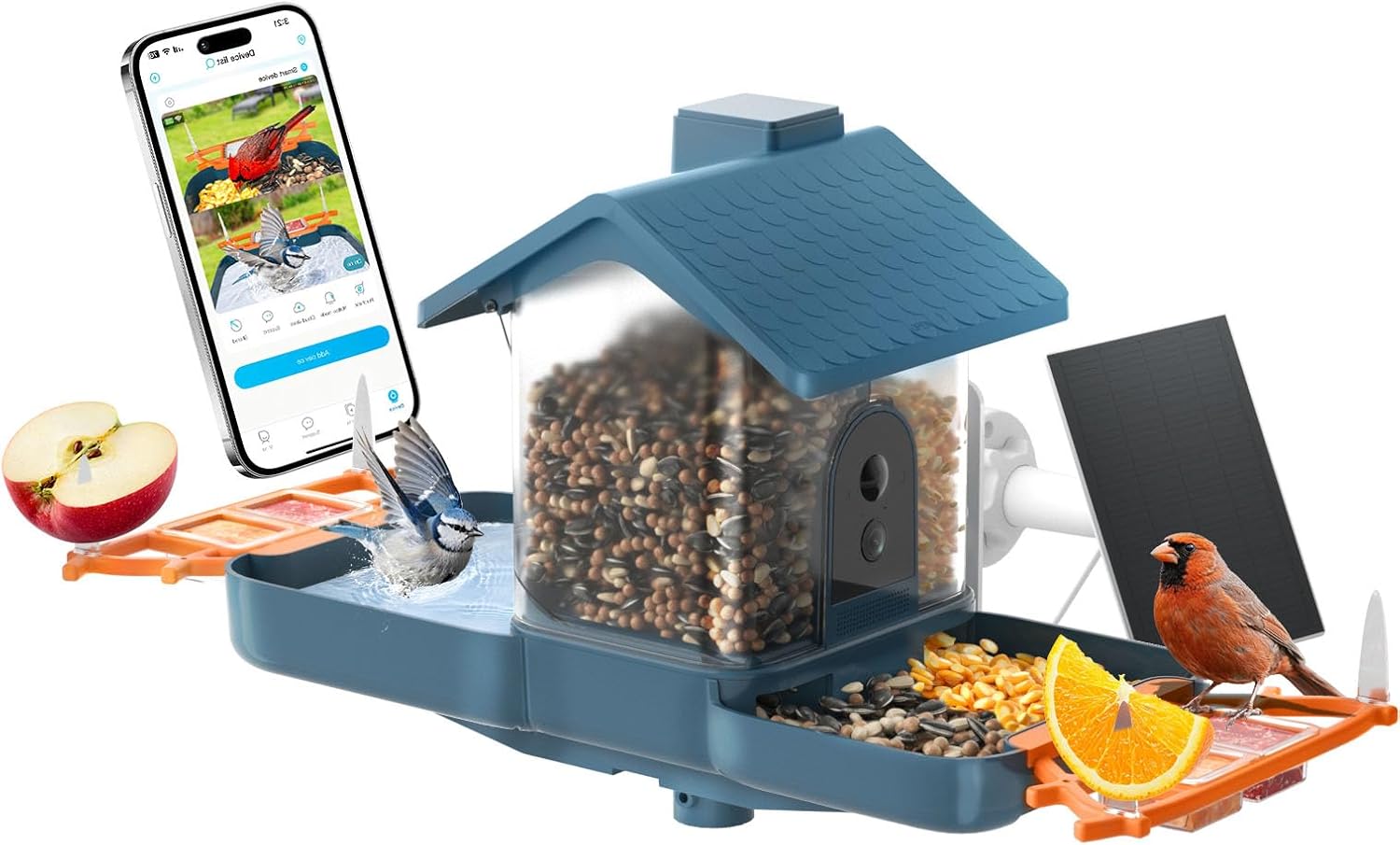
If your yard is small, or your good window faces the wrong corner of the lot, this is the piece of gear on this list that solves two problems at once. The Smart Solar Bird Feeder with Camera & Outdoor Bird Bath puts a camera feeder and a water source on the same mount, and it runs on solar, which means no cord, no outlet, and no drilling through the siding to get power to the far end of the yard.
The bath is the part I would buy it for. From June through August, my bath gets more entries in the log than every feeder combined. Birds need water for drinking and for bathing, and in a hot, dry stretch they need it more urgently than they need seed. Putting seed and water on one post also means one thing to check in the morning instead of two.
The camera is the part you have to think about honestly. A camera feeder is still a feeder. Seed gets wet, wet seed molds, and a camera does not clean itself. Whatever it captures, you are still taking the thing apart, washing it in hot soapy water, rinsing it, and letting it dry before it goes back out. I would also read what the camera needs from your Wi-Fi and your phone before you buy. A camera that will not connect is just an expensive hopper.
Solar is a genuine advantage in an open yard and a genuine limitation under a dense canopy. If your best feeder spot sits in shade all day, hang this one where the sun actually reaches it, or skip it and put your money in seed.
Seed That Does Not Get Wasted: Wagner's Safflower Seed
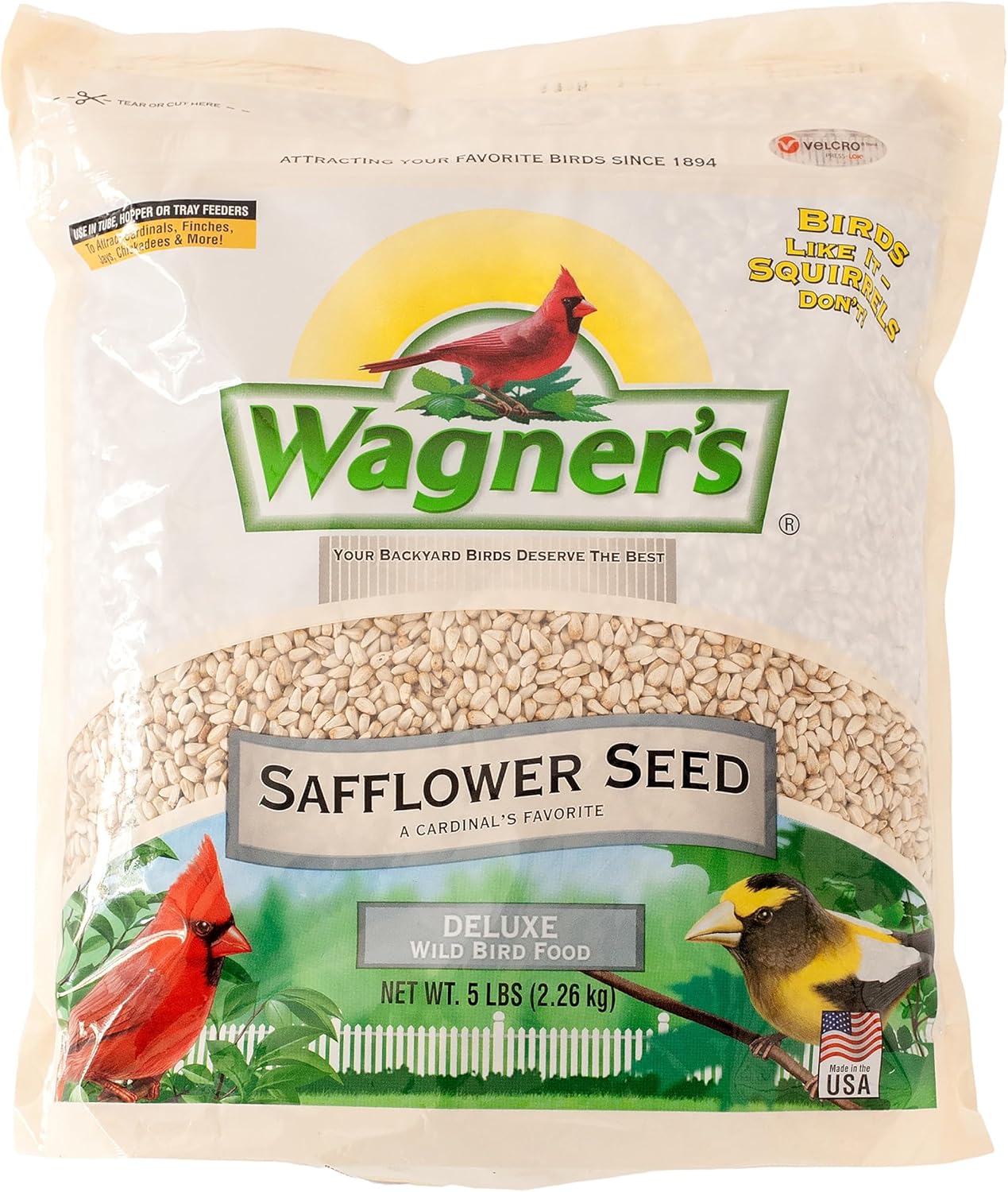
Cheap seed is the most expensive seed you will ever buy. Milo and red millet sit in the tray uneaten, they mold in the rain, and I end up scrubbing the platform twice as often. Safflower is the opposite of that. One ingredient, no filler to rake out from under the feeder, and a track record of being the seed that squirrels and grackles mostly leave alone.
Wagner's sells it in a 5 pound bag, which is a sensible size for a tube feeder or a small hopper and a terrible size if you are filling a platform every day. If your draw is high, buy two and keep one sealed and dry in the garage. Seed that sits in a humid garage loses its appeal faster than most people realize.
Two things to expect. First, safflower is not an instant hit. Birds that grew up on black oil sunflower may ignore it for a week or two before the cardinals and house finches decide it is worth the trip. Give it time before you declare it a failure. Second, keep the feeder dry. Safflower holds up better than a fruit blend, but no seed does well in a tray that fills with rainwater.
Safflower works in a tube, a hopper, or a platform. It is the bag I hand people whose feeder is being emptied by birds they did not invite.
A Blend for a Mixed Crowd: Kaytee Nut & Fruit Wild Bird Seed
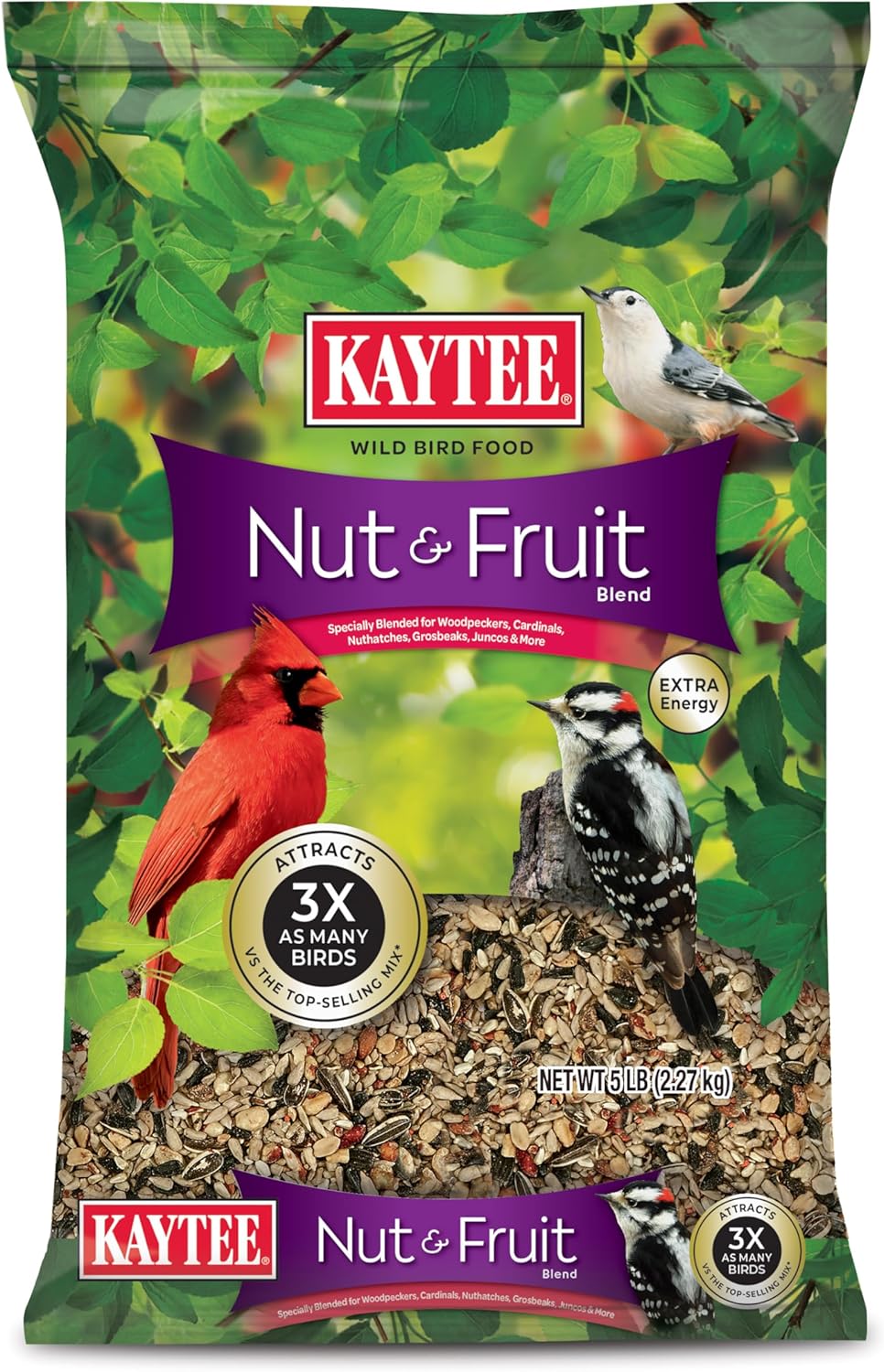
If safflower is the quiet, efficient choice, Kaytee Nut & Fruit is the loud one. Fruit and nut pieces pull in a wider crowd than any single seed, and they pull those birds in fast. It is the blend I would put in a hopper when someone wants to see variety at the feeder and does not mind a little more housekeeping.
Read the ingredient list on any blend before you buy it, and this is the test I use. If milo or red millet is near the top, put it back. Those are the fillers that end up on the ground, sprouting under the feeder and molding in the tray. A nut and fruit blend should read like food, not like ballast.
The trade-off with fruit and nuts is moisture. Those pieces clump when the weather turns damp, and clumped seed in a hopper is how you get a feeder that birds stop using and you stop noticing. Use a hopper that keeps seed dry rather than an open platform, do not fill it to the brim, and dump the last inch rather than letting it sit there for a month.
Expect more debris under this feeder than under a sunflower feeder, and clean the tray more often because of it. That is the honest cost of variety, and it is worth paying if you like a busy pole.
The Hummingbird Feeder I Would Hang in April: First Nature 32-Ounce Wide-Mouth
My first ruby-throated hummingbird shows up on April 20th, two years running, and the feeder is hanging before that date. I have one hard rule for hummingbird feeders. If I cannot rinse the whole thing in under a minute, it does not get recommended, because a feeder that is a chore to clean becomes a mold experiment by August.
The First Nature feeder is built around that rule. The wide mouth means you can get a hand and a brush into the reservoir without fighting a narrow neck, and the whole thing rinses out fast. It holds 32 ounces, which is more than most people need in May and exactly what you want in July, when a hot week can have you refilling a small feeder twice a day.
A few habits that matter more than the feeder itself. Skip the red dye. It is unnecessary, the birds do not need it, and a clean feeder with clear nectar works fine. Change the nectar every few days in heat, sooner if the liquid starts to look cloudy. Hang it in afternoon shade if you can, because nectar spoils faster in direct sun. And put out an ant moat, then remember to refill it, because an ant moat that has dried out by Tuesday is not doing anything.
Clean it with hot water and a bottle brush, not soap, and let it dry completely before it goes back out.
How I evaluate a feeder or a bag of seed
I run the same five questions past every product before it earns a spot on the fence. Will birds actually use it, or will it sit pretty on the pole? Can I take it apart and clean it in under ten minutes? What does a determined fox squirrel do to it in the first three weeks? Will it survive a Wisconsin February, freeze, thaw, freeze? Would I still hang it after four seasons?
The squirrel question is the one that separates real gear from packaging. I let the neighborhood fox squirrels work on a feeder for three weeks before I write a word about it. If a squirrel reaches seed even once, the word in my write-up is "resistant," not "proof." That is not pedantry. It is the difference between a feeder you keep and a feeder you replace in the spring.
The cleaning question is the one that keeps birds alive. I have seen house finch eye disease and salmonella in rehab intakes, and every one of those cases traced back to a feeder nobody took apart since fall. A dirty feeder is a disease vector with a perch on it. Take it apart or take it down.
And the draw question is the one that decides value. Cups per week tells you more than capacity does. A feeder that empties in five days is doing its job. A feeder that sits half full for a month is decoration.
What the log says about putting a setup together
Water first. If you only add one thing to a yard this year, add water, because the bath outdraws every feeder I own from June through August. That is why the solar camera feeder with the integrated bath is interesting. It gets water onto a post that might otherwise only hold seed.
Seed second, and read the bag. Filler is the single most common mistake I see in backyard setups. People buy the cheapest blend on the shelf, the birds sort through it, and the tray ends up full of milo that molds in the rain. Single-ingredient seed and honest blends cost more per pound and less per bird fed.
Placement third. A window feeder belongs within three feet of the glass, not ten feet out in the lawn. That is the distance where birds cannot build up enough speed to hurt themselves. My white-throated sparrow taught me that one the hard way.
The setup at a glance
| Product | Where it belongs | What it gives you | What to watch |
|---|---|---|---|
 Visit on Amazon → Visit on Amazon →Smart Solar Bird Feeder with Camera & Outdoor Bird Bath |
Sunny post, near a window | Camera footage plus a water source on one mount | Needs real sun, and the bath still needs scrubbing |
 Visit on Amazon → Visit on Amazon →Wagner's Safflower Seed, 5 lb |
Tube, hopper, or platform | Single ingredient seed that squirrels usually skip | Give birds a week or two to switch over |
 Visit on Amazon → Visit on Amazon →Kaytee Nut & Fruit Wild Bird Seed, 5 lb |
A hopper that keeps seed dry | Variety for a mixed crowd | Clumps in damp weather, so do not overfill |
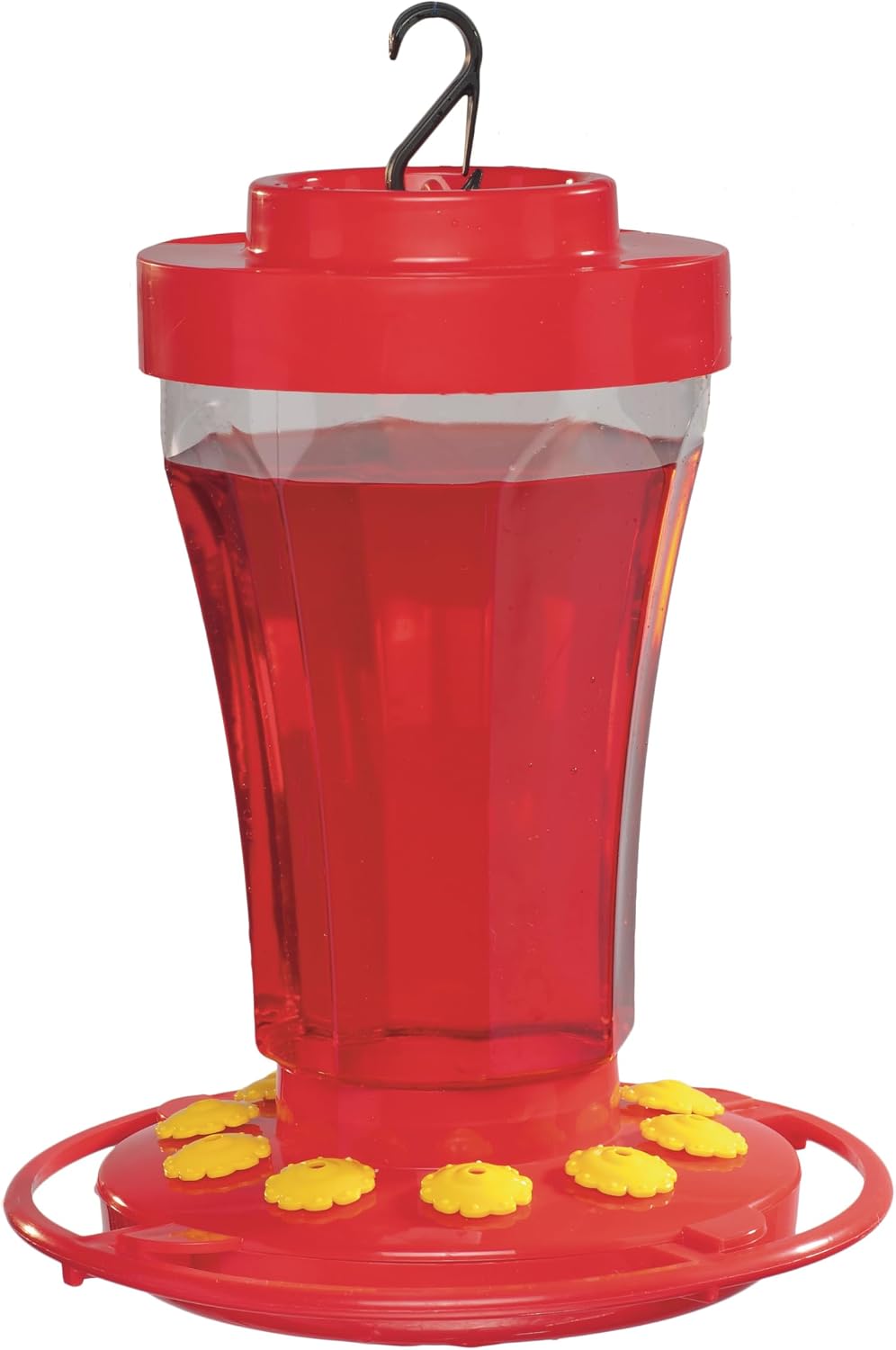 Visit on Amazon → Visit on Amazon →First Nature Hummingbird Flower Feeder, 32 oz |
Shaded hook, visible from the kitchen | Fast rinsing and fewer refills | Nectar still gets changed every few days in heat |
Prices move constantly on all of this, so use the links above to see where they stand today rather than trusting any number in a review.
Should you buy the Smart Solar Bird Feeder with Camera & Outdoor Bird Bath?
Yes, if your best feeder spot gets sun and you want water in the same footprint. The bath is the part that earns its place from June through August, when water draws more species than seed does. The camera is a bonus, and it does not excuse you from taking the feeder apart and washing it. Check what the camera needs from your Wi-Fi and your phone before you buy, because a camera that will not connect is just an expensive hopper.
Should you buy Wagner's Safflower Seed?
Yes, if squirrels or grackles are emptying your feeder. It is a single ingredient with no filler, and squirrels tend to leave it alone. Give your birds a few weeks to switch over, and keep the bag sealed and the feeder dry so the seed does not go stale in the tray. It is the bag I hand people who are tired of refilling a platform every other day.
Should you buy Kaytee Nut & Fruit Wild Bird Seed?
Yes, if you want variety and you are willing to clean more often. Fruit and nut pieces pull a mixed crowd fast, and they also clump and spoil faster in damp weather than plain sunflower does. Use a hopper that keeps seed dry, do not overfill it, and expect more debris under the feeder.
Should you buy the First Nature Hummingbird Flower Feeder?
Yes. The wide mouth means I can rinse the whole thing in under a minute, and that is the only test that really matters for a hummingbird feeder. The 32-ounce reservoir means fewer refills in July. Skip the red dye, hang it in afternoon shade, and change the nectar every few days in heat.