Related: How to Place a Feeder So Birds Stop Hitting Your Window
I keep the log. Ten years of it now: every species that visits, the first-of-season dates for the migrants, and how many cups of seed each feeder draws per week. So when someone asks me which bird feeders for small yards are actually worth hanging, I do not answer from the product photos. I answer from the log, from a cleaning schedule I keep whether or not I feel like it, and from three weeks of letting the neighborhood fox squirrels work on anything new before I write a word about it.
A small yard has a specific problem. You get one pole, one good window, and a deck rail, and every feeder has to justify the square footage it takes up. The three feeders below do three different jobs, and that is the entire point. One mounts on the glass, three feet from the window, which is exactly where a feeder belongs if window strikes are on your mind. One is a hummingbird feeder that arrives as a two-pack, so one can hang while the other dries. One is a hanging metal feeder that holds the seed volume a busy yard actually goes through in a week.
Here is what each one is for, how it behaves over a season, and where it fails.
What I check before a feeder earns a spot
Five questions, every single time.
Will birds actually use it, or will it sit pretty on the pole and empty at a rate of zero cups a week? The draw tells you more than the capacity ever will. A four-pound feeder that drops two cups a week is a decoration. A one-pound window tray that empties in three days is working.
Can I take it apart and clean it in under ten minutes? This is not fussiness. Every salmonella intake I have helped with in rehab traced back to a feeder nobody took apart since fall, and house finch eye disease moves through a crowded, dirty feeder fast. If the answer is a hose spray, the answer is no.
What does a determined fox squirrel do to it in week one? I let them try. If a squirrel reaches seed even once, the word in my write-up is resistant, not proof. There is no such thing as squirrel-proof plastic with a two-week warranty.
Will it survive a Wisconsin February, freeze, thaw, freeze? Metal and glass handle it. Thin plastic and cheap suction cups do not.
Would I still hang it after four seasons? If I would not, it does not get recommended, no matter how good the listing looks.
Add one more thing that has nothing to do with the feeder itself: water. From June to August, my bath gets more entries in the log than every feeder combined. Feeders are the headline. Water is the reason birds stay.
Best for the window: Window Bird Feeder by Nature's Hangout
The first window feeder I ever hung went up three feet from my dining room glass, and it went up because a white-throated sparrow survived a strike on that exact window and spent three days in a shoebox in my kitchen while I learned to weigh a bird in grams. That placement is not sentimental. It is the one distance where a bird cannot build up enough speed to hurt itself, and a feeder that keeps birds close to the glass is doing double duty as strike prevention.
This one is built for that job. No assembly means it comes out of the box ready to hang, which matters more than it sounds like it should. I have watched people give up on window feeders because the bracket had six parts and a diagram. This one does not have that problem. The suction cups are the strong kind, and the tray is clear, so you get the view you hung it for in the first place. Chickadees and titmice work it, and a downy woodpecker will take a turn on it if you put a little suet crumble in the mix.
Now the honest part, because I would be lying to you if I skipped it. Suction cups and hard freezes do not get along. I have had a cup let go at six below zero, and the tray hit the porch. So this feeder lives on a protected sill or in a three-season room in my rotation, and I check the cups with warm water every couple of weeks to get the grit off, because grit is what kills the seal. If you want a window feeder that stays up through a Wisconsin January, you want one that bolts through the sill with a metal bracket. If you want one that goes up in a minute and gives you a face-to-face with a chickadee from October through April, this is the one.
Cleaning is the easy part, and it should be weekly. Take the tray off, wash it in hot soapy water, rinse it in a dilute bleach solution, and let it dry completely before it goes back up. Ten minutes, once a week. That is the whole schedule.
Best for hummingbirds: Aspects HummZinger Excel Hummingbird Feeders, 16 Ounces Each, Pack of 2
The first ruby-throated hummingbird in the log has hit on April 20th two years running, and the feeder that catches that first-of-season entry has to be clean, full, and hanging before the bird shows up. That is the whole reason I care about this family of feeders. A hummingbird feeder that is a chore to clean becomes a mold experiment by August, and mold is the thing that sends people to rehab hotlines asking about sick hummers.
Two feeders in the box is the feature I would pay for twice over. Here is the rotation that works: one hangs with fresh nectar while the other is washed and drying on the rack. When you mix nectar at one part sugar to four parts water, with no red dye ever, that nectar is good for about two days in July heat and maybe four days in cool spring weather. A single feeder means you are either rushing the wash or hanging a feeder that is not quite dry, and neither one is good for the birds. With two, the swap takes five minutes and nothing has to be forced.
The wide-mouth top on this line is what makes the rinse fast, and a fast rinse is what keeps the schedule honest. If I cannot rinse a hummingbird feeder in under a minute, I will not recommend it, and I will not hang it either. Sixteen ounces is also the right capacity for a small yard. A giant reservoir sounds efficient until you realize you are pouring half of it down the drain every third day because nectar does not keep.
Where it struggles: this is not a winter feeder, and it is not a squirrel feeder, and if you leave it up past your last migrant, you are just feeding wasps. Take it down, clean it, and store it dry.
Best for the pole: Kingsyard Metal Bird Feeder
Every yard needs one feeder that holds real volume, because the log does not care about your aesthetic preferences. In January, a busy yard here goes through three cups a week on a tube alone, and that is before the juncos show up for the FeederWatch counts. Four pounds of capacity means fewer refills and fewer trips out in the cold with a scoop.
The circular perch is the detail I look for on a hanging feeder. Perch space decides how many birds can feed at once, and a ring gives you a crowd instead of a queue. Chickadees, house finches, and cardinals all work a ring perch, and a busy perch is a feeder that empties, which is exactly what you want.
Metal construction is the other thing that matters here. Metal takes a scrub brush, a bleach solution, and a Wisconsin February without cracking. It also does not fade into a chalky mess after one summer of ultraviolet light the way thin plastic does. Easy to clean and refill is a claim printed on a lot of boxes. On this one, the body comes apart without a fight, and that is the difference between a feeder you clean weekly and a feeder you clean in April.
The red finish is a nice touch for visibility, and it is worth saying plainly that it does not attract birds. Birds find food by sight and habit, not by a color chart, and a feeder that gets emptied regularly will draw more birds than any color scheme.
Squirrel honesty: this is a hanging feeder, not a fortress. A fox squirrel will get to it if you hang it from a branch with no defense. Put a baffle above it on a pole, keep it ten feet from the nearest launch point, and it holds up. Skip that, and you are feeding squirrels.
The comparison table
Same three feeders, sorted by what they are for. Capacities come from the listings. Cleaning notes are what the design actually demands of you.
| Feeder | Best for | Capacity | Cleaning | Where it fails | Price |
|---|---|---|---|---|---|
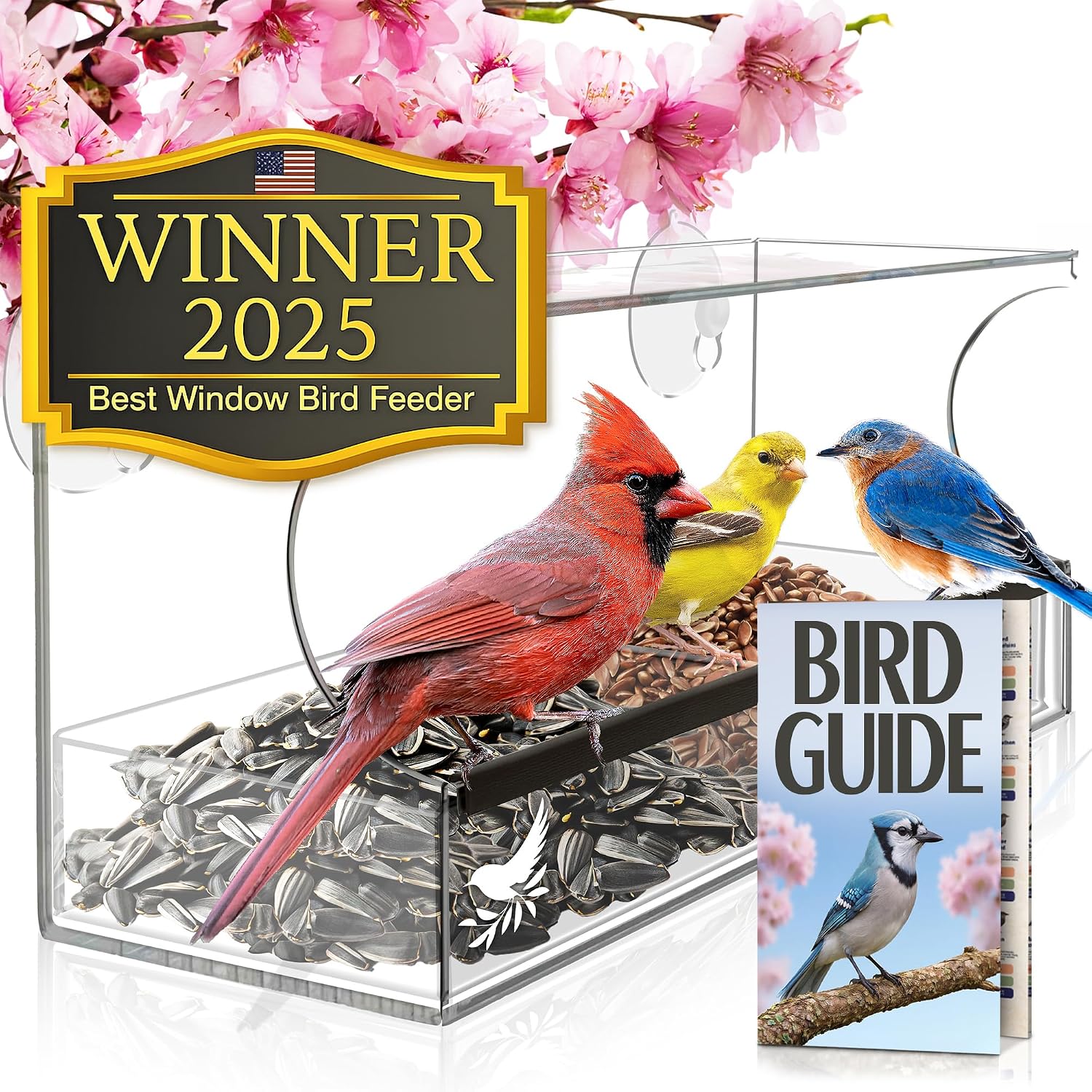 Visit on Amazon → Window Bird Feeder by Nature's Hangout |
Up-close viewing, window strike prevention | Not stated in the listing | Tray lifts off, weekly hot water and bleach rinse | Suction cups in a hard freeze | $29.95 |
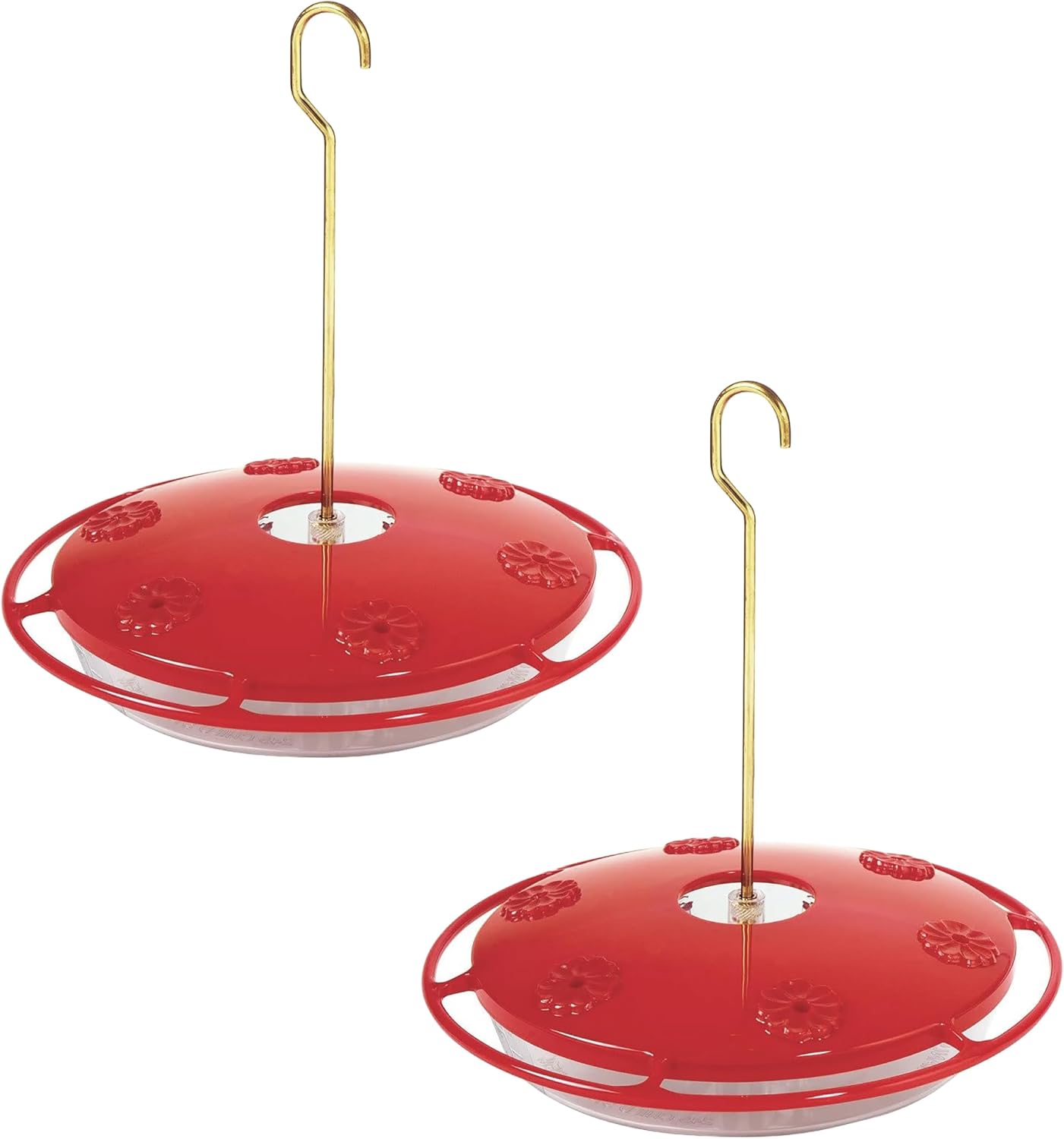 Visit on Amazon → Aspects HummZinger Excel Hummingbird Feeders, 16 Ounces Each, Pack of 2 |
Hummingbirds, April through September | 16 ounces each, two feeders | Wide-mouth top, rinse in under a minute, rotate every two to three days in heat | Nothing to do with squirrels; take it down when the migrants leave | $59.99 |
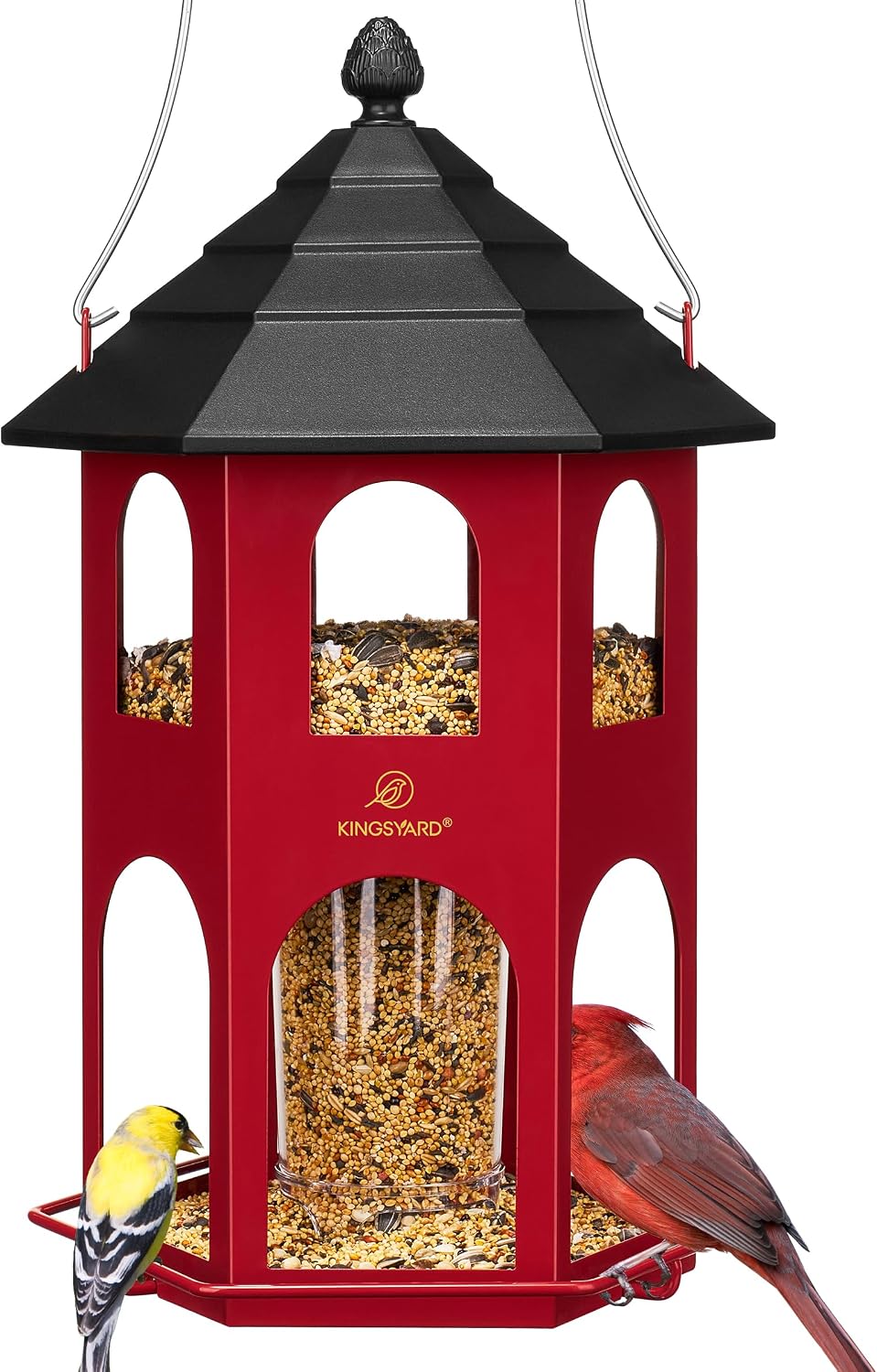 Visit on Amazon → Kingsyard Metal Bird Feeder for Outdoor Hanging, Wild Bird Feeders with Circular Perch, Easy to Clean & Refill, 4 lbs Large Seed Capacity, Red |
Volume, multiple birds at once, winter | 4 pounds | Body comes apart, metal takes a scrub brush | Not squirrel-proof; needs a baffle and a pole | $29.99 |
What the log taught me about running all three
Three feeders, three jobs, one weekly cleaning rotation. That is the whole system, and it is the reason the log stays useful instead of turning into a list of things I bought.
The window feeder is the one that teaches you the most, because it puts birds at a distance where you can actually watch behavior. You learn which species feed alone, which ones arrive in flocks, and how a chickadee takes one seed and leaves while a house finch camps on the tray. It is also the feeder that empties fastest in cold snaps, because the birds using it are the ones already comfortable near the house.
The hummingbird feeders carry the log through the season nobody thinks about. May and June are my best months for species, and a clean nectar feeder keeps hummers coming back to the same spot on the same schedule. Rotating two feeders is the entire trick.
The hanging feeder is the volume workhorse and the one that will teach you about squirrels. Watch it for three weeks before you decide anything about how well it is protected. If a squirrel gets one seed out of it, you have a squirrel problem to solve, and the answer is a baffle, not a new feeder.
One last thing, and it is the thing I would put on a card if I could: take the feeders apart. Not a hose spray, not a wipe with a rag. Apart, washed, rinsed, dried. Every salmonella case I have seen in rehab came back to a feeder nobody disassembled since fall, and that is the only failure mode on this list that actually hurts birds.
Should you buy the Window Bird Feeder by Nature's Hangout?
Yes, with one condition. It arrives assembled, it mounts in a minute, and a feeder three feet from the glass is doing strike prevention while it feeds birds. The view is the whole point, and it delivers that. The condition is that you respect suction cups. Check them with warm water every couple of weeks, and bring the feeder in when the hard freezes start, or add a bracket. Do that, and it is the most-used feeder in my winter rotation. Skip it, and you will be picking a tray up off the porch.
Should you buy the Aspects HummZinger Excel Hummingbird Feeders two-pack?
Yes. Two feeders is the feature, not a bonus. One hangs while the other dries, nectar stays fresh on a two to three day schedule in July, and the wide-mouth top keeps the rinse under a minute. Sixteen ounces is the right size for a small yard, because you are changing nectar every few days no matter how big the reservoir is. Mix one part sugar to four parts water, skip the red dye, and hang it before April 20th.
Should you buy the Kingsyard Metal Bird Feeder?
Yes, if you want capacity and easy cleaning in one piece. Four pounds means fewer refills, the circular perch means more birds at once, and metal survives the freeze-thaw cycle that destroys plastic. Just do not buy it expecting squirrel-proof. Hang it on a pole with a baffle above it, keep it away from the nearest launch branch, and it will empty on schedule all winter.