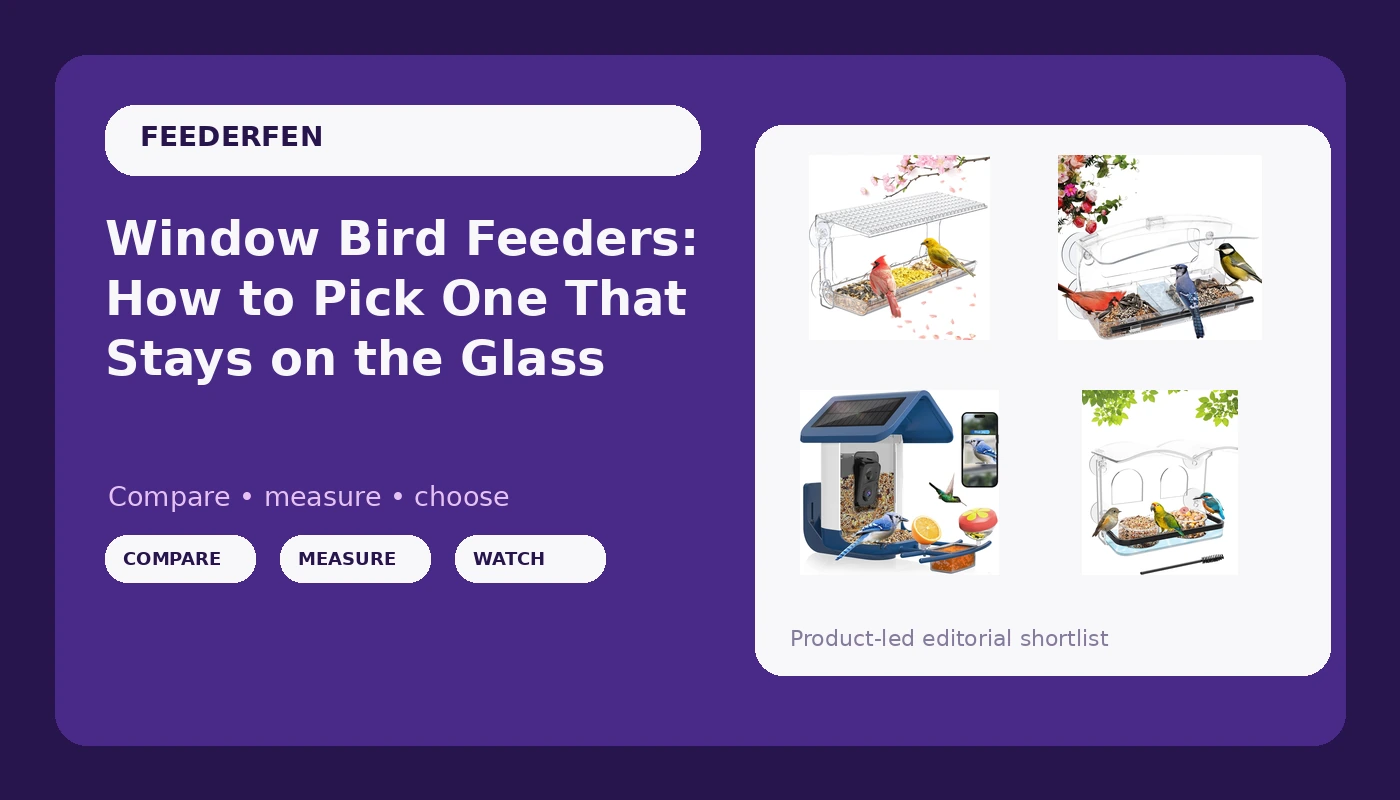
Related: Where to Hang a Window Feeder So Birds Do Not Hit the Glass
A window bird feeder with suction cups is the only feeder that puts a bird within arm's reach of your coffee. It is also the feeder most likely to end up on the porch floor. I hung my first one three feet from the dining room glass the same year a white-throated sparrow survived a window strike there and spent three days in a shoebox in my laundry room. Three feet is not a compromise, it is the point: a bird leaving a feeder that close cannot build up speed, and it is already pointed at the glass instead of at open sky.
That part is settled. What is not settled is which acrylic tray stays stuck through a Wisconsin freeze-thaw cycle and which one you can take apart in under a minute. I keep a log of cups of seed per week and first-of-season dates, ten years of it, and a window feeder earns its spot the same way everything else on my fence does: by how fast it empties and how easy it is to clean. Here is what I look at in each of the four designs below.
Best Overall: SUNALLY Window Bird Feeder Outdoors
Clear is the whole argument for a window feeder, and this one is built around it. A clear acrylic body means you see the entire bird, not a head poking over an opaque rim. That matters more than people expect. Half of what I log is behavior, not species: which bird arrives first, which one gets displaced, whether a chickadee takes a seed and leaves or sits and hulls it on the spot. You only get that from glass-clear walls.
The draw question is what I would watch here. A clear tray with an open profile tends to empty fast, which is good, because a feeder that empties fast is a feeder birds are actually using. Fast draw also means you are refilling often, and that is where the cleaning habit comes in. Every salmonella case I have seen come through rehab traced back to a dirty feeder nobody took apart since fall. If the tray does not lift off or open up easily, you will not clean it weekly, and a window feeder is the worst place to skip that, because it is three feet from where you eat.
Best Value: Window Bird Feeder with Strong Suction Cups, Clear Acrylic Design
This is the budget pick of the group, and it carries two features I look for by name on any tray feeder: drain holes and a large seed tray.
Drain holes are not a marketing line to me, they are disease prevention. Seed that sits in standing water after a rain molds, and moldy seed is how you end up with sick birds at a feeder you were trying to help. A tray that sheds water keeps the draw honest, because birds will not eat wet, clumping seed, and the log will show it: the cups per week fall off a cliff and you blame the seed when the problem is the tray.
The large tray cuts both ways. More seed capacity means fewer trips out in January, which I appreciate. But a full tray is also the heaviest load those suction cups will ever see, and the load is what eventually fails. My rule with any cup-mounted feeder is to fill it halfway and refill more often. You get fresher seed, less weight on the glass, and a better read on how fast the feeder is actually drawing.
Best Grip: Window Bird Feeder with 4 Strong Suction Cup
Four cups instead of two is the simplest way to spread the load, and on a window feeder the mount is the failure point. I have had a suction cup let go in January at six below zero, and the tray hit the porch hard enough that I stood there feeling stupid about the whole category. More contact points, each carrying less weight, is the right instinct.
But cups are only half the equation, and the other half is you. Glass prep decides more than cup count. I wipe the pane with isopropyl alcohol, let it dry completely, and mount when the glass is at room temperature rather than on a January afternoon when it is cold and possibly frosted. Cups that go on cold glass in winter never get a full seal, and a partial seal is the one that lets go at 3 a.m. in a thaw.
I would also test the grip before I trust it. Load the tray, hang it, and give it a firm tug with your hand. If any cup shifts, reseat it. Then check all four after the first hard frost, because that is when the seal changes.
Best Camera Option: Smart Bird Feeder with Camera Solar Powered, 2K Live Stream
This is the only feeder in the group that answers a question the other three cannot: what came to the feeder while I was at work. A 2K live stream plus solar power is a genuinely useful combination, because the solar panel solves the problem that kills most camera feeders, which is a battery that dies in the middle of a February cold snap.
Solar is not magic in a Wisconsin winter. Short days and snow on the panel cut charging, and a cold battery holds less. What solar does is reduce how often you have to think about it, and for a backyard camera that is most of the battle.
The thing I check before recommending any camera feeder is the software arrangement. Does the app need a paid subscription for the features you actually want? Does footage store locally, or only in the cloud? I have watched plenty of gorgeous feeder footage and I still will not pay a monthly fee for a bird feeder, so I want to know what works without one. Ask that question before you buy, not after.
How I evaluate a window feeder
None of these four has a full season in my log yet, so I will not pretend otherwise. What I can tell you is the set of questions every feeder answers before it earns a permanent hook, and these are the ones I applied here.
First, will birds actually use it, or will it sit pretty on the glass? A window feeder has a real advantage, because it is close to cover and close to you, and birds adjust to a kitchen window faster than people expect. But a tray that is too deep, or one where the seed sits below the rim line, gets ignored.
Second, can I take it apart and clean it in under ten minutes? Not rinse. Take apart. A hose spray is not cleaning, and a feeder that cannot be disassembled is a feeder that gets skipped during the two-week gap in my log every August when the garden takes over.
Third, what does the mount do at six below zero? Suction cups are the honest weak point of this entire category. Screened porch, fine. A heated indoor window, fine. Exposed glass in a real winter is a test, and I want to know how many cups are carrying the load and whether they are accessible enough to reseat.
Fourth, will seed stay dry? Drain holes and a tray that sheds water beat any claim printed on the packaging.
Fifth, would I still hang it after four seasons? That is the only question that has ever mattered.
The window feeder reference table
This is how the four stack up by role, not by photo. Every row links to the product page, and none of these prices are printed here because they move. Check the current listing before you decide.
| Feeder | Best for | Mount | Notes | Price |
|---|---|---|---|---|
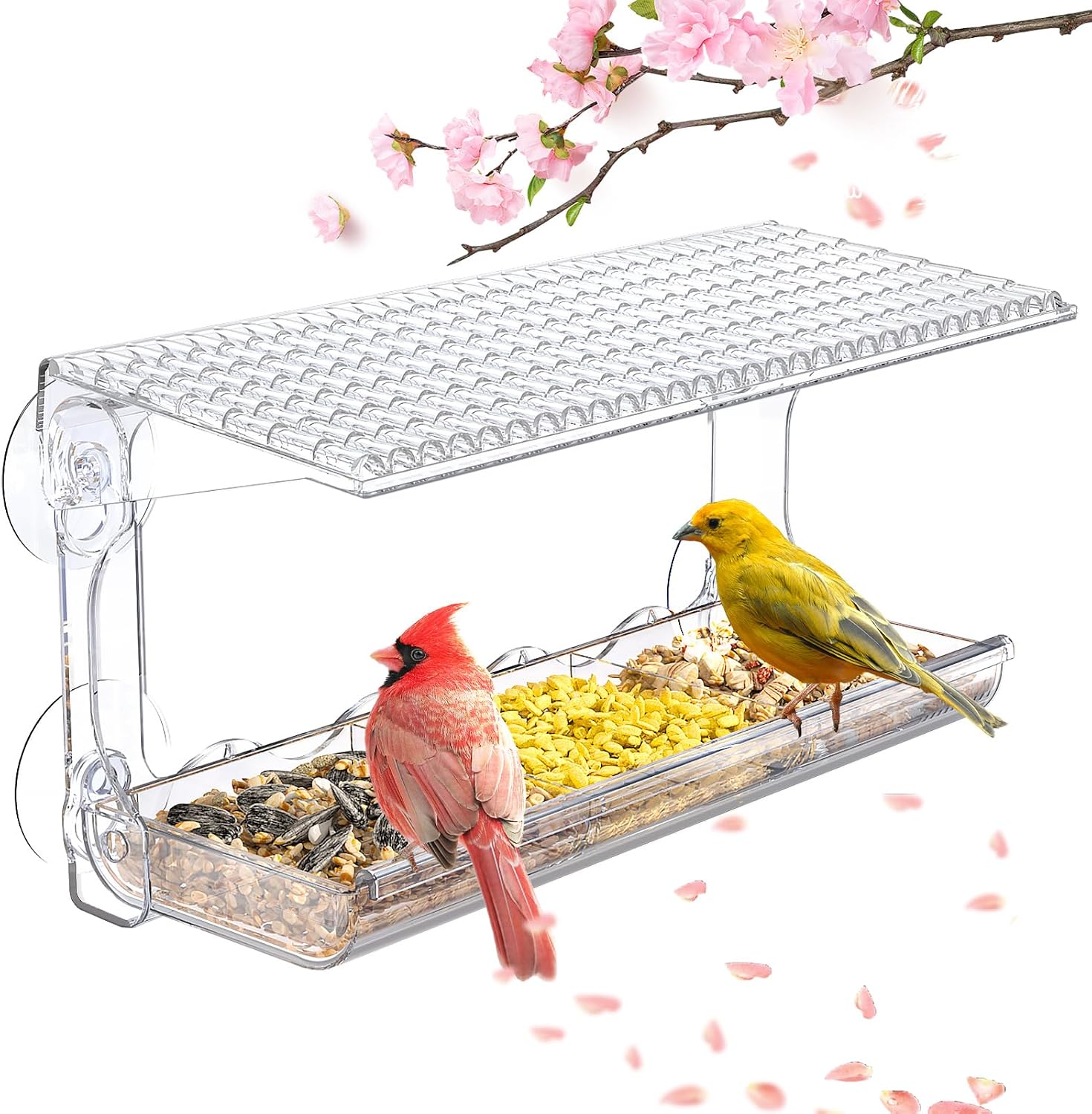 Visit on Amazon → SUNALLY Window Bird Feeder Outdoors |
Overall pick | Suction cups | Clear body for close-up watching | $14.99 |
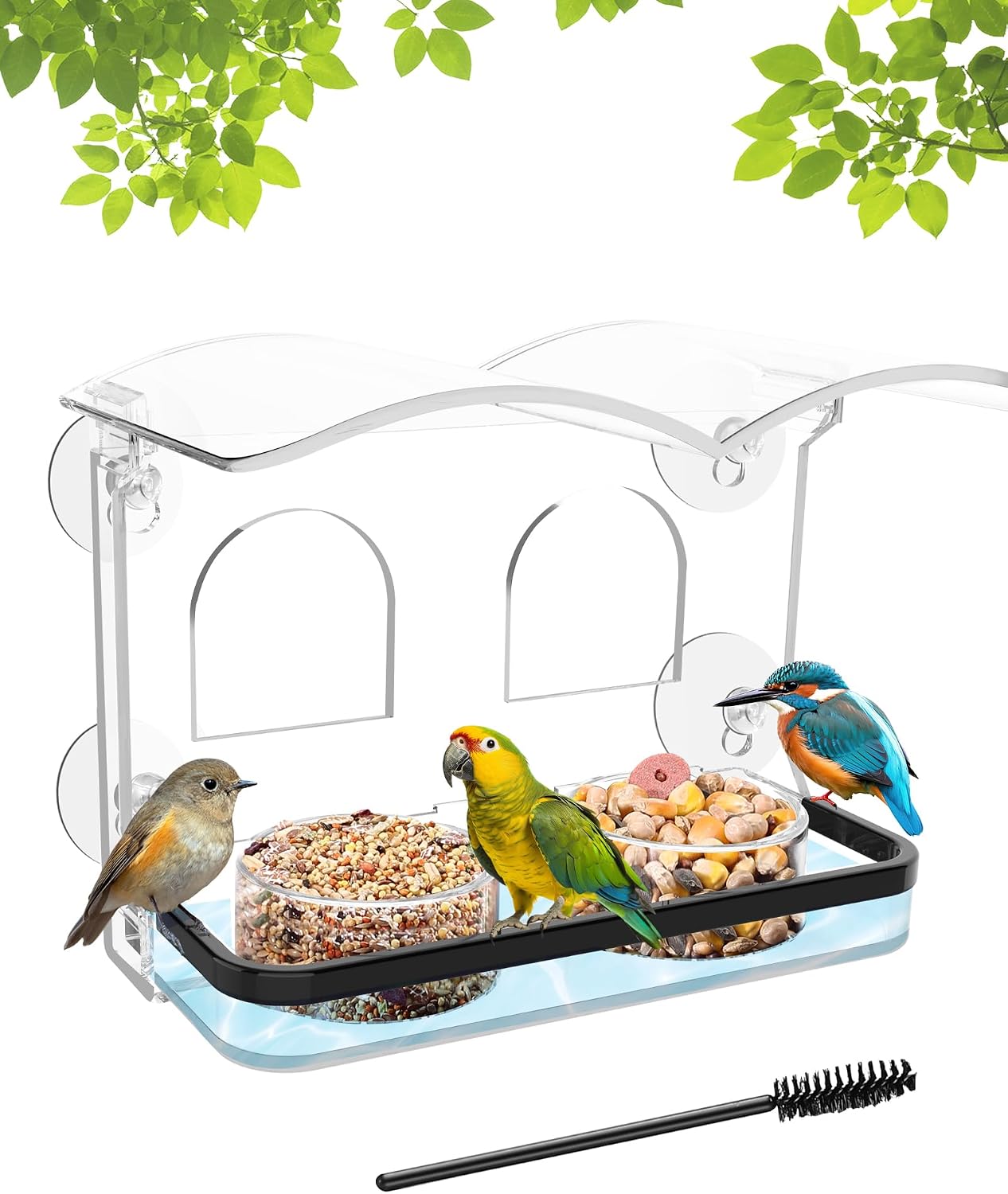 Visit on Amazon → Window Bird Feeder with Strong Suction Cups, Clear Acrylic Design |
Budget pick | Suction cups | Large tray, drain holes, weatherproof build | $6.99 |
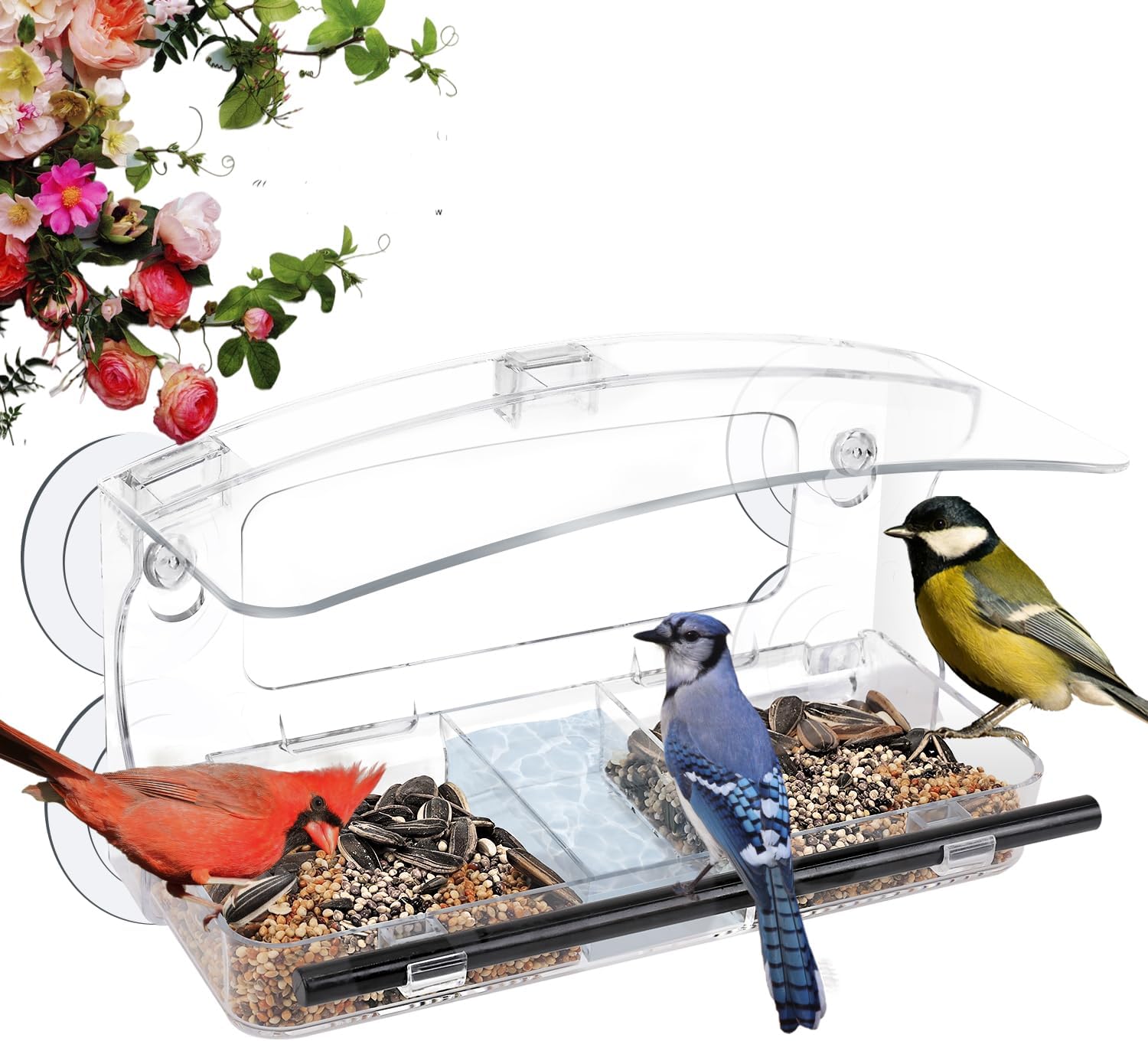 Visit on Amazon → Window Bird Feeder with 4 Strong Suction Cup |
Best grip | Four suction cups | Load spread across more contact points | $13.99 |
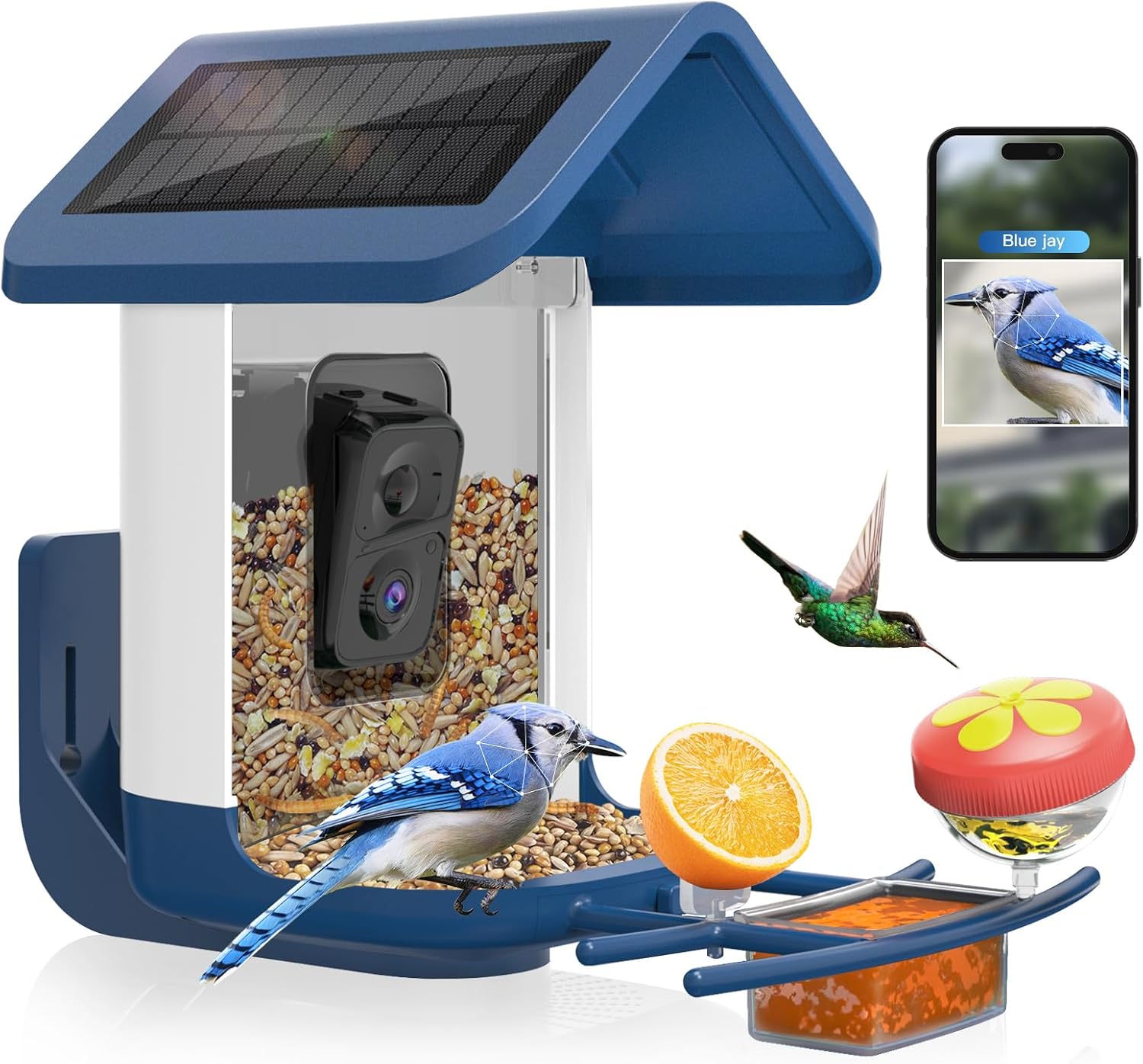 Visit on Amazon → Smart Bird Feeder with Camera Solar Powered, 2K Live Stream |
Camera option | Solar powered | 2K live stream, no cord to run | $129.99 |
Mounting, seed, and the parts nobody mentions
Three things decide whether a window feeder works, and none of them are on the box.
Placement comes first. Mount it within three feet of the glass, or move it out past thirty feet. The middle distance is where birds get hurt, because they have room to accelerate and the reflection of the sky is convincing. A window feeder at three feet is a strike preventer, not a strike risk.
Seed choice comes second. Black-oil sunflower is the workhorse for a tray like these, and sunflower hearts leave no hull litter under a window, which matters if there is a deck or a neighbor below. Skip blends padded with milo and red millet. That filler gets kicked to the floor, molds in the rain, and makes you clean the tray twice as often for no reason.
Cleaning comes third and it is the one people quit on. Take the feeder down, take it apart, wash it with hot soapy water or a diluted bleach solution, rinse, and let it dry all the way before it goes back up. Weekly is the target. If you cannot hit weekly, hit it at least twice a month, and more often in summer heat. A dirty feeder is a disease vector with a perch, and a window feeder is three feet from your kitchen table.
Should you buy the SUNALLY Window Bird Feeder?
If you want the clearest view of the four, this is the one. A clear acrylic body is the difference between watching a bird and watching a silhouette, and for close-up observation at a kitchen window that is the entire product. It is the design I would hang first and the one I would hand to someone who has never fed birds before.
The caveat is the mount, and the caveat applies to every suction cup feeder here. Prep the glass, mount it warm, and check the cups after the first freeze. Do that and it does what a window feeder is supposed to do.
Should you buy the Smart Bird Feeder with Camera Solar Powered?
Buy it if you want the record. The log is the reason I feed birds, and a camera feeder that captures visitors while you are away is the closest thing to an automatic log entry that exists. Solar power keeps it running without a cord, and 2K is plenty of resolution for identification.
Check the subscription terms first, and check where footage is stored. If the features you want work without a monthly fee, it is an easy call. If they do not, decide whether the footage is worth a recurring charge to you before the box arrives, because that decision is harder to make once the birds have found it.
The short version
For most windows, start with the clear acrylic SUNALLY for the view. If budget drives the decision, the acrylic tray with drain holes and a large seed tray does the job for less. If your glass gets wind and weather, four cups beat two. And if you want to know what shows up while you are at work, the solar camera feeder is the only one in this group that can tell you. Whichever you hang, put it three feet from the glass, keep it half full, and clean it every week. The log will do the rest.