I hung my first window feeder three feet from the dining room glass, and I did it for a bad reason: a white-throated sparrow survived a window strike on that pane and spent three days in a shoebox in my laundry room. Three feet is the distance that keeps a bird from building up enough speed to hurt itself, and it is the only reason that feeder went up. Ten years and a very long spreadsheet later, it is still how I think about a backyard bird feeding setup. It is not decor. It is a system, and every part of it either draws birds or it does not.
The log decides what stays on the fence. Cups of seed per week, species counts, first-of-season dates, and how many minutes a feeder takes to come apart on a Sunday morning. Not the powder-coated finish, and definitely not the product photo. So I lined up these four picks against the same questions I ask of anything new: will birds actually use it, can I take it apart and clean it in under ten minutes, what does a determined fox squirrel do to it in week one, will it survive a Wisconsin February, and would I still hang it after four seasons.
Related: Where to Hang a Window Feeder So Birds Do Not Hit the Glass
The honest answer for most yards is that a window feeder is a viewing tool and a tray of white proso millet is a feeding tool, so buying one of each beats buying two of either. Here is how the four picks in this comparison sort out.
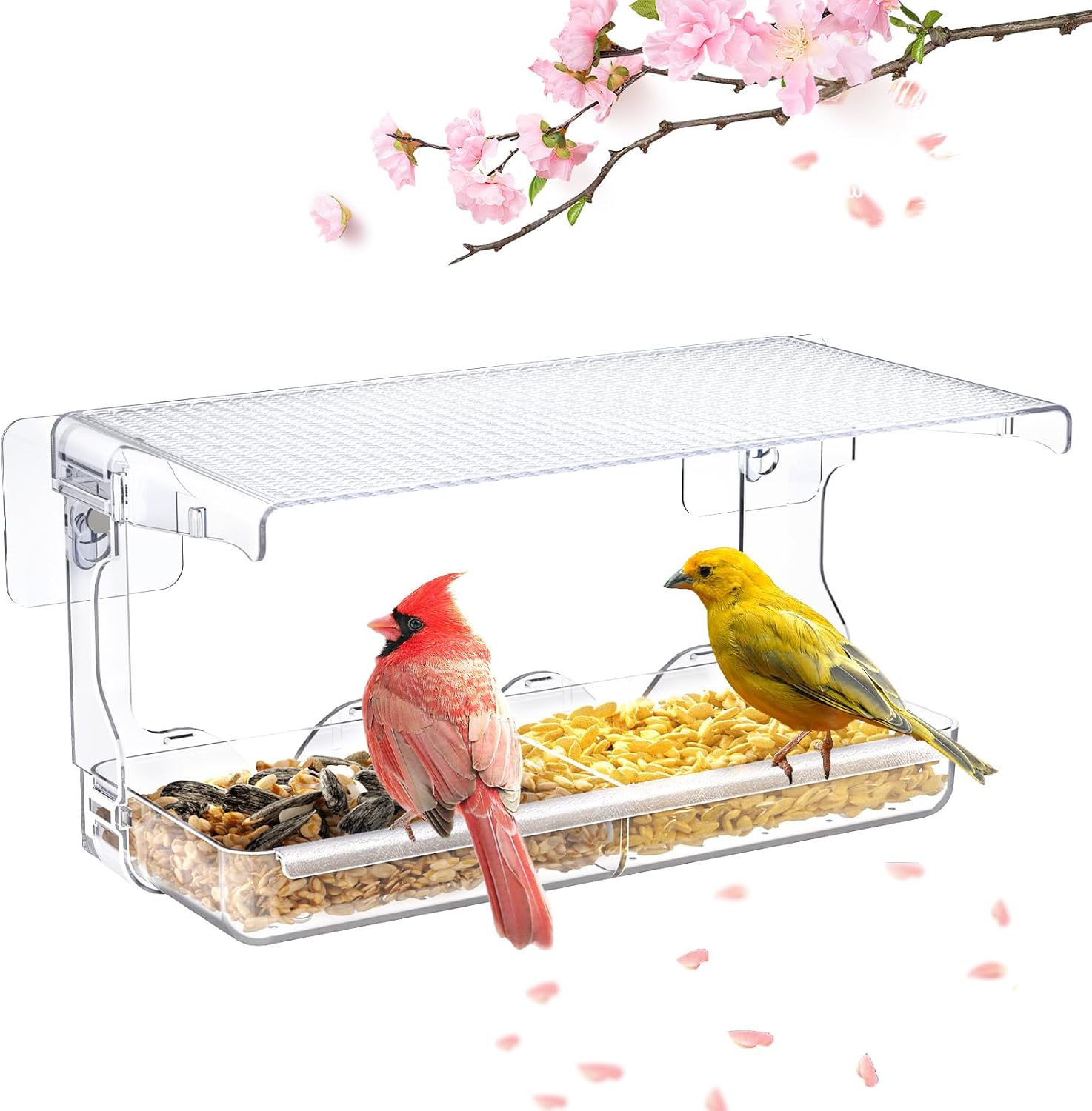
SUNALLY Window Bird Feeder for Outdoors, Clear Bird Feeders Window Mounted
Clearest view of any mount-on-glass feeder in this lineup, and the transparent body lets you read the seed level without stepping outside
Clear plastic films over fast in direct sun, and it still depends on suction cups holding through a hard freeze
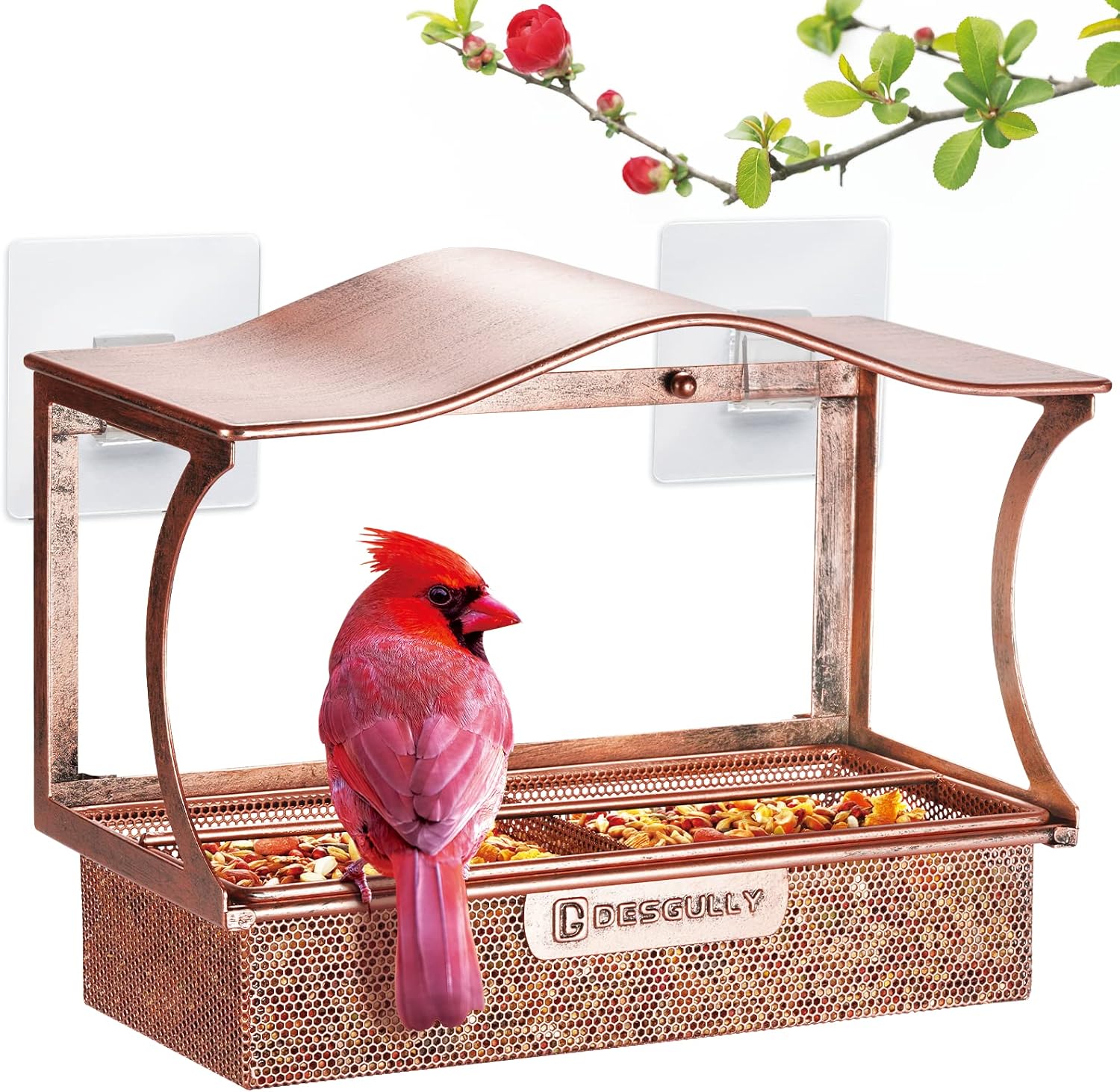
Window Bird Feeder with Strong Suction Cups, Metal Outdoor Gift - Curved
Metal construction holds its shape and a curved tray gives bigger birds a real perch instead of a ledge
Opaque body means you cannot see the seed level from inside, and it is still a suction-cup mount
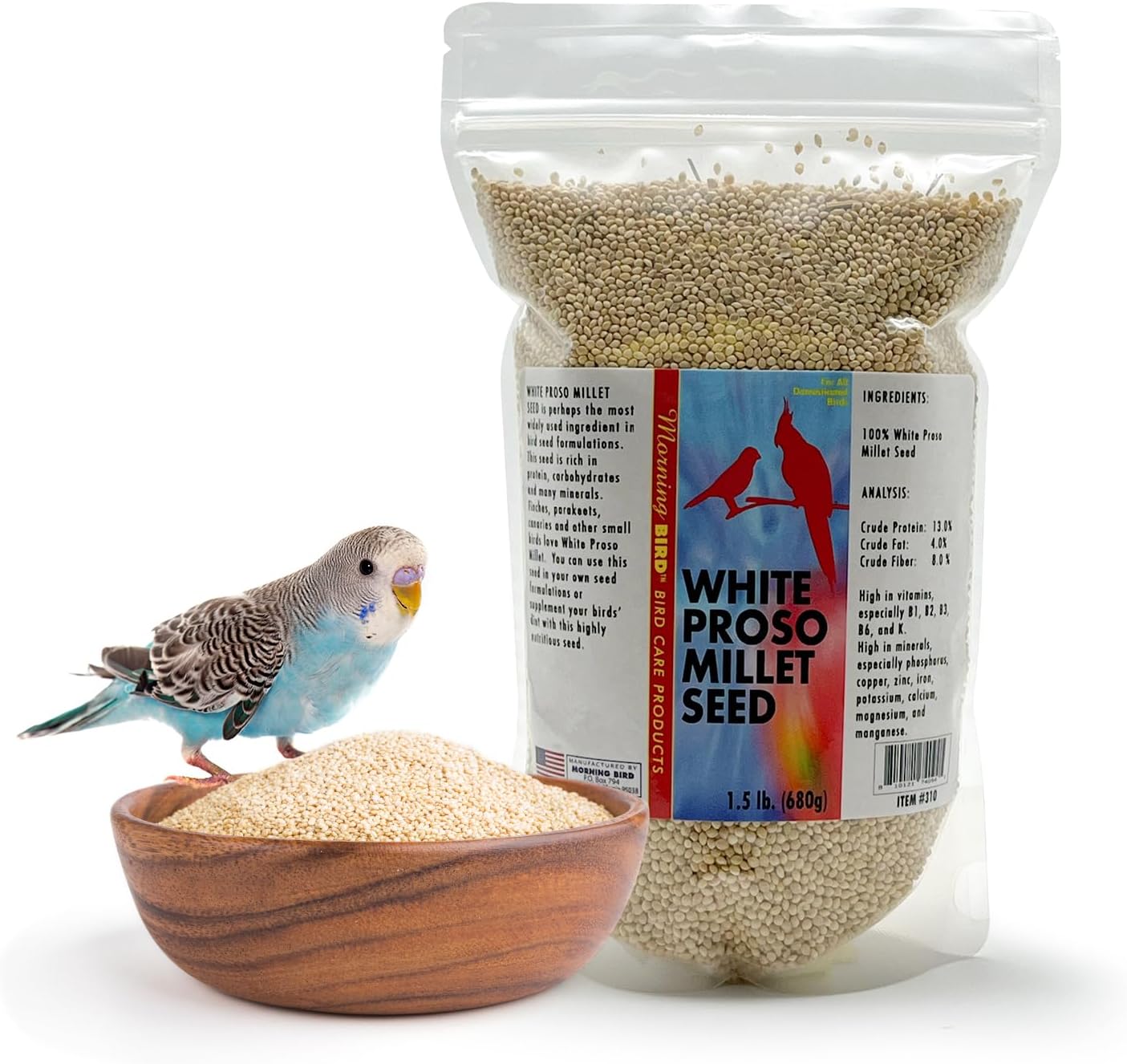
Morning Bird White Proso Millet 1.5 lbs, Unhulled Natural Bird Seed, Supports Feather Growth & Balanced Nutrition, High Energy Delicious Seed - Ideal for Finches, Parakeets & Pet Birds
One ingredient, no filler, and white proso is the millet that ground-feeding birds actually clean up
It is not sunflower, so it will not pull in the same crowd, and it molds fast once it gets wet
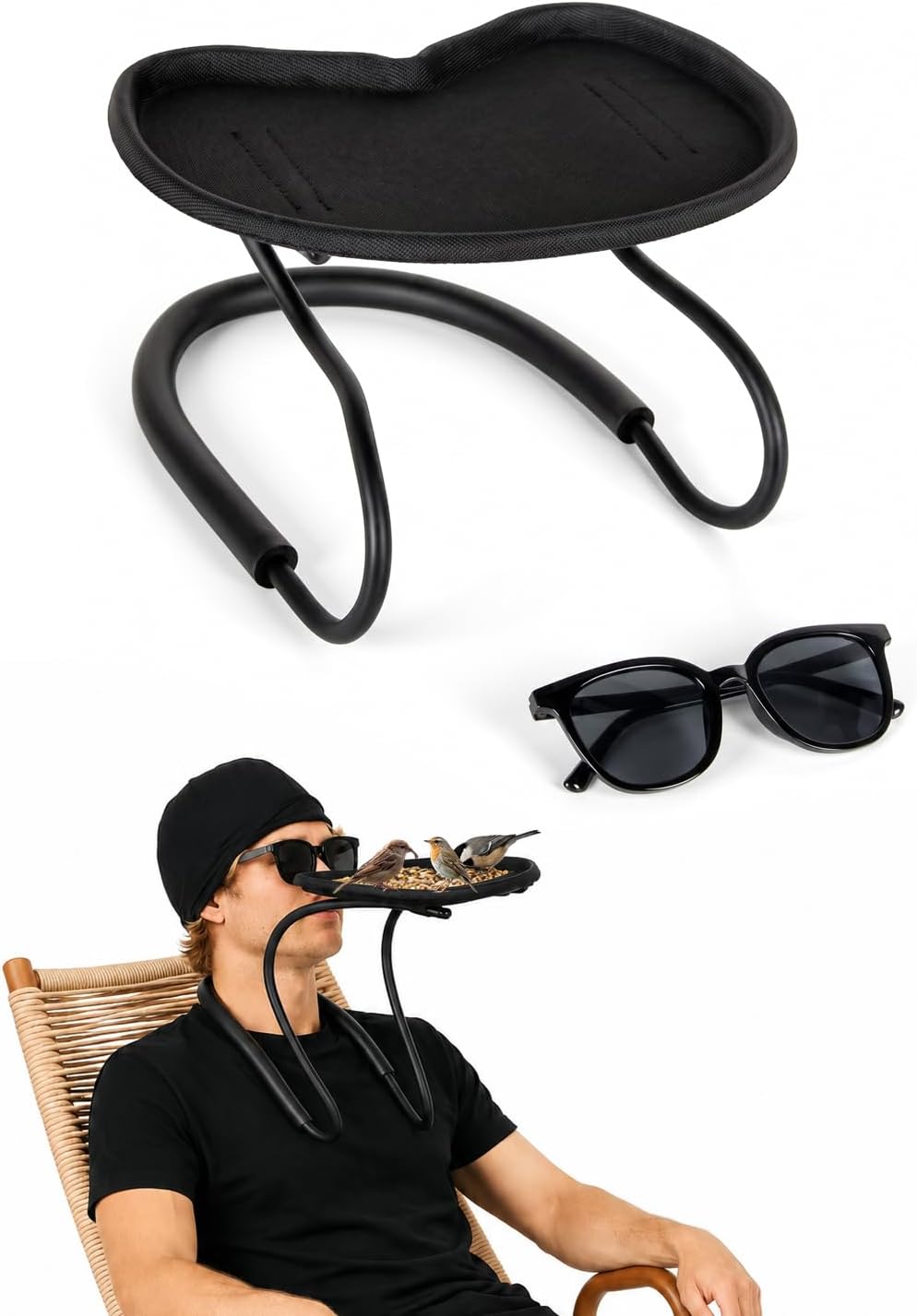
Interactive Wearable Bird Feeder Head Gear with Peck Proof Lenses, Hands-Free Close-Up Bird Watching Kit with Adjustable Neck-Mounted Support, Sunglasses & Camouflage Hat for Small Backyard Birds
The only pick here that gets you inside pecking distance without a blind, and the peck-proof lenses are the reason it is wearable at all
It is a novelty, not a feeder, and anything you wear while holding seed needs the same cleaning discipline as a tray
Prices and availability were captured from Amazon Creators API and may change.
What actually matters in a window feeder
Three things decide whether a mount-on-glass feeder earns a permanent spot, and none of them are on the box.
First, placement. A window feeder belongs within three feet of the glass. Any farther out and a bird leaving the tray can build up flight speed before it reaches the pane. The whole point of mounting to the window is that the feeder breaks up the reflection and keeps departures slow. If you are hanging one to stop strikes and you put it eight feet out on a pole, you have built the problem, not the solution.
Second, how it comes apart. Every feeder in my yard gets fully disassembled and scrubbed on a schedule, because a dirty feeder is a disease vector with a perch. I have watched salmonella cases come through rehab intake and traced them back to trays nobody took apart since fall. A window feeder that snaps into three pieces and fits in the sink is a feeder that gets cleaned. One that needs a screwdriver and a soak does not.
Third, the mount itself. Suction cups are the weak link in any window feeder, and I say that as someone whose January setup let go at six below zero and put a tray on the porch. Cups are fine on a screened porch or a mild climate. In a hard-freeze state, a feeder with a bracket that bolts through the sill is the version that survives. Neither of the two window feeders here is that bracket type, so both get judged on how well their cups are made and how much weight they ask those cups to carry.
SUNALLY Window Bird Feeder: the one you can actually see through
The clear-body design is the entire argument for this feeder, and it is a good argument. A transparent tray on the glass means you can watch a chickadee pick through seed at arm's length, from a chair, indoors, without moving. It also means you can read the seed level from inside the house, which sounds like a small thing until you own an opaque feeder and find yourself walking outside in slippers to check whether it is empty.
For anyone photographing birds through a window, clarity is the spec that matters. A clear tray gives you an unobstructed angle, and the birds get used to a shape on the glass faster than they get used to a shape on a pole.
The trade-offs are real. Clear plastic in direct sun grows that green film faster than opaque plastic or metal, and that film is exactly the kind of surface that harbors the crud you are trying to avoid. Plan on a more frequent scrub than you would give a metal feeder, and plan on taking it down rather than hosing it in place.
Then there is the cup question. Every ounce of seed in the tray is weight hanging off suction cups, and clear plastic trays are usually the lightest option here, which is genuinely in their favor. Still, clean the glass before you press the cups on, and re-press them when the temperature swings, because a cup that popped loose in October is a cup that will pop loose in January.
The curved metal window feeder: the sturdier mount
Where the clear feeder wins on visibility, this one wins on structure. Metal holds its shape. A curved tray gives a cardinal or a mourning dove an actual perch with a lip to grip, instead of a narrow ledge that bigger birds slide off. If your window action is mostly house finches and chickadees, that difference is minor. If you are trying to give larger birds somewhere to land, it is not.
The opaque body is the trade-off, and it cuts both ways. You cannot see the seed level from your chair, so you will check it more often than you need to, and you will overfill it, which is how seed sits, gets damp, and turns into a problem. Fill it halfway. Refill often. That habit alone does more for feeder health than any cleaning product.
Suction cups are still the mount, so the same freeze rule applies. Metal trays also swing harder between hot and cold than plastic does, which is worth knowing in July when a sunlit metal tray can get uncomfortably warm against the glass.
The reason I would still rank this above a plastic tray for a lot of yards is simple: it is the one that looks and feels like it will be hanging there in three years. Metal does not yellow, does not craze, and does not crack at a screw hole after two winters.
White proso millet: the single-seed pick
Here is where I have to be careful, because I have a standing complaint about millet in seed blends. That complaint is about red millet and milo, the cheap filler that birds kick onto the ground and that molds in the rain while I clean the platform twice as often as I should. White proso is a different seed with a different job. Ground-feeding species eat it, and they eat it clean.
This is a single-ingredient bag, which is the whole point. You are not paying for filler, and you are not guessing at a ratio. What white proso does well is bring in the birds that do not work a tube feeder: dark-eyed juncos, white-throated sparrows, mourning doves, and the finches that would rather pick off a flat surface than hang off a port. It is also the seed I would put out for a caged bird, which is what the label is aimed at, though the birds on my fence do not read labels.
The trade-offs are mess and moisture. Proso millet is a small seed with a hull, and hulls under a feeder mean sprouts in the grass and a mess on whatever is beneath the tray. Wet millet is spoiled millet, so this belongs in a tray with drainage or on a dry, sheltered platform, not in a tube that collects damp seed at the bottom. Which brings up the pairing nobody thinks about: millet in a window feeder is a bad combination. Small seed plus a shallow glass-mounted tray plus rain equals a film of mush on your window and a feeder you have to take down twice a week.
Buy it for ground feeders, keep it dry, and do not expect it to compete with sunflower for woodpeckers or nuthatches.
The wearable feeder headgear: what it is actually for
This one needs an honest framing, because it is the strangest product in the comparison and the easiest to dismiss for the wrong reason. It is a neck-mounted support with a hat, sunglasses, and peck-proof lenses, and the idea is that you carry the seed on your head and let small birds come to you hands-free.
As a feeder, it is not one. It holds a handful, it does not hang, and it does not empty into a tray that you clean. As a close-up viewing tool, though, it does something no window feeder can: it removes the glass. If you have ever wanted to watch a chickadee take a seed at a foot and a half, without a blind, this is the gadget that gets you there.
The peck-proof lenses are the part that makes it usable, and they are also the part that tells you what this thing is for. Small backyard birds investigate, and they will land on a hat. Eyewear that takes a peck is not optional.
The trade-offs start with patience. Birds do not come to a moving object, so the entire product only works if you can sit still for a long stretch, which makes it a poor fit for kids who want instant results and a great fit for someone who already sits quietly in the yard with binoculars. Then there is hygiene. Anything you wear while holding seed collects saliva, droppings, and dust, and it needs the same discipline as a tray: clean it, dry it, and put it away. During a bad year for house finch eye disease or a salmonella outbreak at your feeders, this is the first thing I would shelve, because it puts birds directly against your face and your clothing.
And it will not fill your log the way a feeder does. It is a novelty with a real use, and I would rather own it than pretend it replaces anything.
How the four fit together
None of these four is a complete setup on its own, and that is the point of comparing them. The clear window feeder is the viewing pick and the best first purchase if window strikes are your problem, because it is the one that has to be three feet from the glass to do its job. The curved metal feeder is the durability pick for a yard that wants a permanent-looking mount and a perch that holds bigger birds. The white proso millet is the seed pick for ground feeders and the one bag here that passes the ingredient check without a caveat, as long as it stays dry. The wearable headgear is the odd one out: a close-up tool, not a feeder, and one that asks more of your patience and your cleaning routine than the rest.
The thing I would not do is buy two window feeders and call it done. Seed draw tells you more than capacity ever will, and a yard with two glass-mounted trays and no tray on the ground is a yard that logs chickadees and nothing else.
The bottom line
Start with the clear window feeder if you want to see birds, and put it three feet from the glass where it belongs. Add the millet in a dry tray if you want juncos and doves on the log. Choose the metal curved feeder if you want the one that still looks right after a few Wisconsin winters. And treat the wearable headgear as what it is: a fun, genuinely useful way to get close, cleaned like the gear it is, and never a substitute for a feeder that empties.
Whichever way you go, the log is the judge. Count cups, note the species, and take the thing apart on a schedule. That habit matters more than any spec sheet on this page.