Related: Best No-Filler Bird Seed for Backyard Feeders
I have hung feeders in the same Madison, Wisconsin yard for twelve years and kept the log for ten of them. Species, first-of-season dates, cups of seed per week. So when someone asks me to name a squirrel proof bird feeder, I do not answer from the product photo. I answer from three weeks of a fox squirrel working the pole, from how the feeder held up through freeze and thaw, and from how long it takes me to take the thing apart and scrub it on a Sunday afternoon.
That last part is the one most buyers skip. A feeder is a surface birds stand on, poop on, and eat from, and a dirty feeder is a disease vector with a perch. Every salmonella case I have seen in rehab intake traced back to a feeder nobody disassembled since fall.
This guide covers the four things I would actually hang in a Wisconsin yard: a six-port metal tube, a metal mesh feeder for the clingers, a window feeder for close watching, and the seed that goes in all three. Prices move, so I do not quote them. Check current Amazon price on each one before you decide.
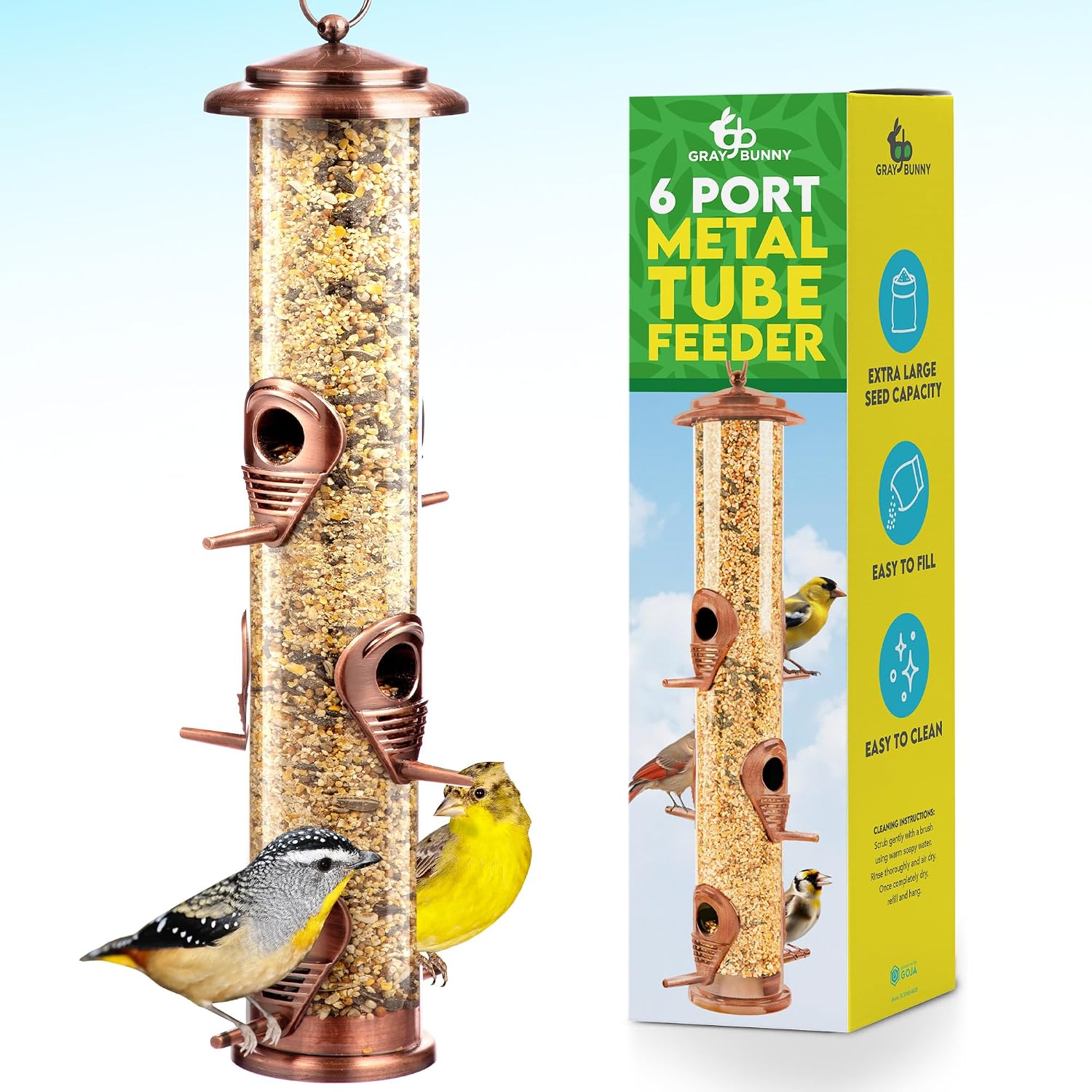
The Tube Feeder I Would Start With: Gray Bunny Squirrel Proof Bird Feeders for Outdoors 6 Port Metal Tube
A six-port metal tube is the least glamorous and most useful feeder you can hang. Metal matters more than people expect in a cold climate, because plastic gets brittle at ten below and cracks at the port collar, and a cracked collar is where rain gets in and seed turns to paste. Six ports with perches also means chickadees, finches, and cardinals get a turn without the boss bird parking on the tray all afternoon.
The draw on a tube like this is steady rather than dramatic. Black oil sunflower and sunflower hearts move through it at a predictable rate, and predictability is exactly why I recommend a tube first. You learn what a normal week looks like, and when the number doubles you know migrants are moving through.
Cleaning is where tube feeders separate from each other. This one is a metal body, so the whole thing can go into a bucket of hot water with unscented dish soap and a bottle brush, which is the only method I trust. A hose spray is not cleaning, it is a rinse.
On squirrels, the box says proof. I say resistant until a fox squirrel has had three weeks with it. Metal construction gives it a real chance, which is more than a plastic feeder with a two-week warranty can say.
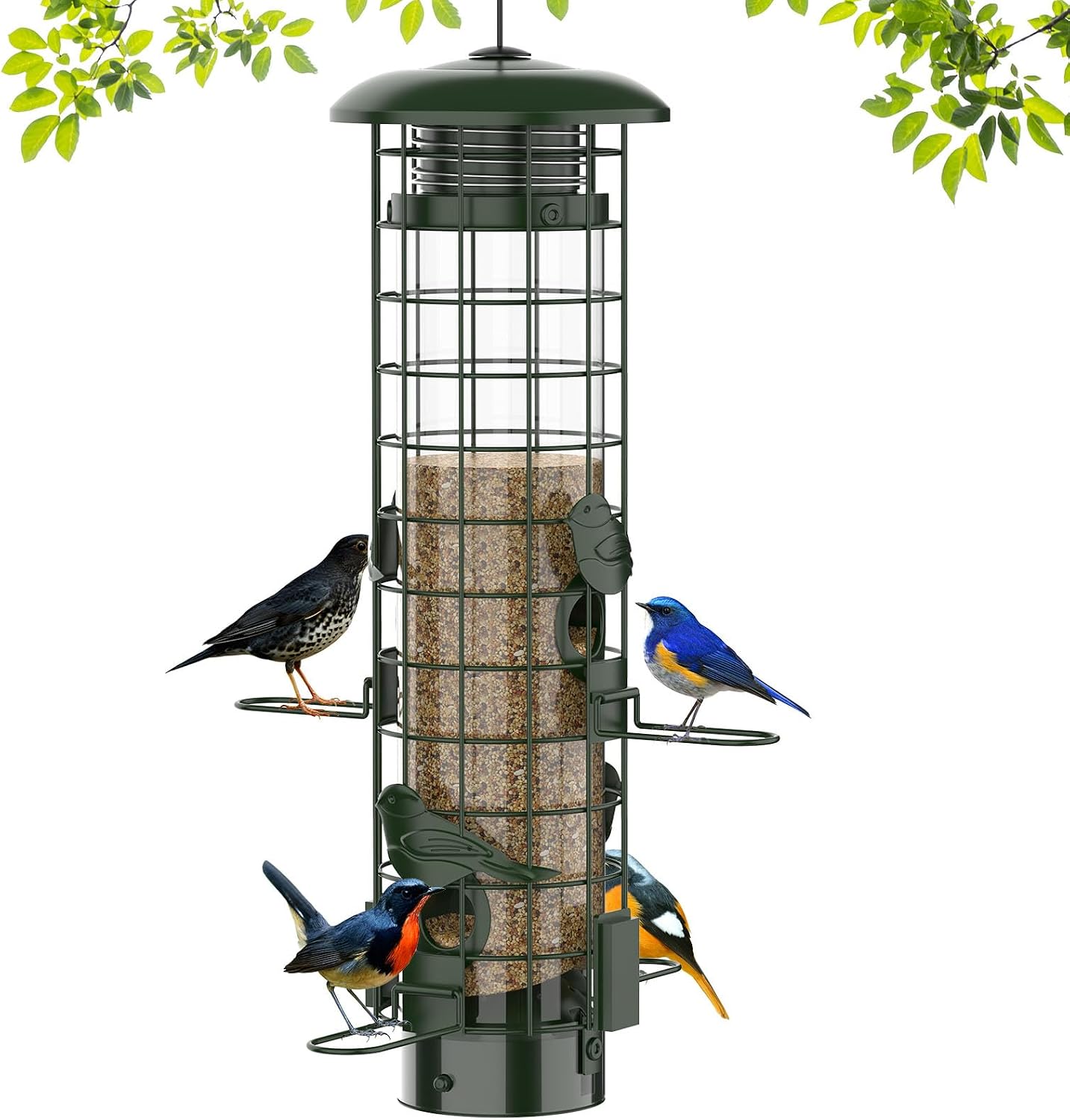
Best for Clingers and Small Seed: Metal Mesh Feeder with Gravity Protection
A mesh feeder is built for clingers. Chickadees, nuthatches, and woodpeckers hang sideways and upside down to feed, and a mesh body gives them something to grip that a smooth tube does not. This one is a metal mesh design with a three-pound capacity and gravity-based protection, and it is the feeder I would hang second.
The gravity design is the honest kind of squirrel deterrent, because the mechanism lives inside the feeder instead of on the box. What I would watch is the seed you put in it. Mesh holds small seed well, so nyjer and sunflower chips work, but a coarse blend with filler sits in the mesh and molds after a rain. Milo and red millet are automatic disqualifiers for me anyway, since birds scratch them to the ground and they sprout.
Three pounds is the right size for a mesh feeder. Go much bigger and the seed at the bottom sits long enough to go stale before the birds ever reach it.
Clingers use it. Perch birds mostly do not. If cardinals are your target, pair it with the tube feeder above.
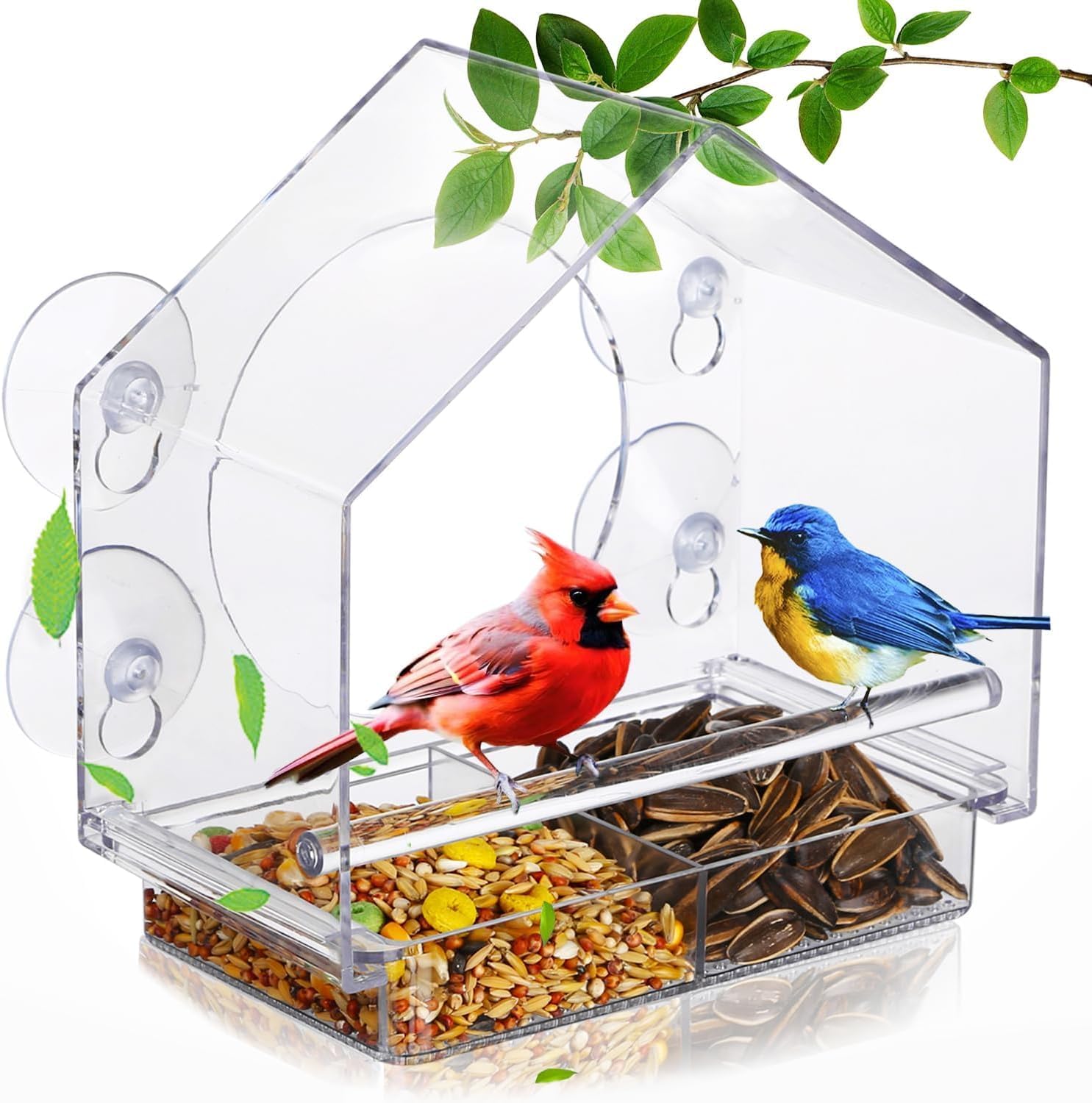
Best for Close Watching: Window Bird Feeders with Strong Suction Cups
A window feeder does one job no other feeder does. It puts birds three feet from your face, and three feet is the distance that prevents window strikes, because a bird launching from that close cannot build enough speed to hurt itself. That is why I hung my first one, after a white-throated sparrow survived a hit on my dining room glass.
This one is a clear tray with suction cups, and clear matters because you want to see through it from inside the house. It is easy to clean, which for a window feeder is the entire game. A tray that comes off the glass in one motion gets washed weekly. A tray that needs tools gets washed in August, if you remember.
The honest caveat is the cups. I have watched a cup let go at six below and the tray hit the porch. Suction cups belong on a sheltered window or a screened porch, not on a wind-blasted north pane in January. In a cold climate, plan on fresh cups every season, or take the feeder down before the first hard freeze. At this price the trade is reasonable.
It is also the feeder I recommend to anyone housebound, and to anyone watching with kids, because the birds come to the glass instead of the far end of the yard.
The Seed That Goes in All Three: Nature Anywhere Bird Banquet
Seed decides how much of your feeder budget actually turns into birds. This blend is a no-filler mix made in the USA, and no filler is the only seed claim I care about. Milo and red millet get scratched to the ground, sprout under the feeder, and mold in the tray after rain, which means you clean twice as often as you should have to.
Sunflower and sunflower chips pull the widest species list in my log: chickadees, cardinals, finches, nuthatches, titmice, and most of the winter sparrows. A blend that is mostly sunflower will empty fast, and an empty feeder is the point. Cheap seed is the most expensive seed you buy, because you pay for the filler and then pay again in cleaning time.
Store it dry. A five-gallon bucket with a lid in the garage beats a bag on the shed floor, where mice find it in a week. Once the juncos arrive in October, one bag will not last long.
How I test a feeder
Every feeder I write about gets the same protocol.
Three weeks on the pole with the neighborhood fox squirrels working it. If a squirrel reaches seed even once, the write-up says resistant, not proof, and I say so plainly instead of repeating the box copy.
Then the cleaning test. I take the feeder apart the way a person would on a Sunday afternoon and time it. If disassembly, scrubbing, rinsing, and drying runs past ten minutes, I note it, because a feeder that is a chore gets skipped, and a skipped feeder becomes a disease vector.
Then a full season in the yard with an entry in the log: species, first-of-season dates, and cups of seed per week. Draw tells you more about a feeder than capacity ever will.
Last is winter. Freeze, thaw, freeze, at ten below, with a heated bath on the same rail. Plastic gets brittle, suction cups let go, and anything with a battery in it tells you the truth about its battery life.
What the specs actually mean in practice
Capacity is a marketing number. Draw is the real one. A three-pound mesh feeder that empties in five days is doing more work than a ten-pound hopper that sits half full until the seed goes stale. When you read a listing, ask what empties fastest, not what holds most.
Port count matters less than perch design. Six ports on a metal tube let a flock feed without one bird dominating, but if the perches are too short for a cardinal, the cardinals bounce off and go find a platform. Watch who actually lands, not who could.
Metal over plastic in a cold climate, not because it looks better but because plastic gets brittle and cracks where the port collar meets the tube, and that crack is where rain gets in and the whole feeder starts growing something.
Suction cups are a wear part, like a furnace filter. Plan on replacing them, or take the window feeder down before the first hard freeze. The cup that fails is always the one you did not check.
And no blend with milo or red millet. Read the ingredient list before the price per pound.
The feeder and seed reference table
This is the table I keep next to the log. Who each feeder serves, what seed to put in it, and what to watch. It is a starting point, not gospel, because your yard is not my yard.
| Product | Best for | Seed to use | Cleaning | Watch for |
|---|---|---|---|---|
 Visit on Amazon → Visit on Amazon →Gray Bunny 6 Port Metal Tube |
Chickadees, finches, cardinals | Black oil sunflower, sunflower hearts | Bucket, bottle brush, weekly | Cracked port collars, seed paste |
 Visit on Amazon → Visit on Amazon →Metal mesh feeder, gravity protection |
Clingers: nuthatches, woodpeckers, chickadees | Nyjer, sunflower chips | Brush the mesh, weekly | Fine seed molding in the mesh |
 Visit on Amazon → Visit on Amazon →Window feeder with suction cups |
Close watching, strike prevention, housebound birders | Sunflower hearts, no-mess blends | Tray off the glass, rinse weekly | Cups letting go in freeze and thaw |
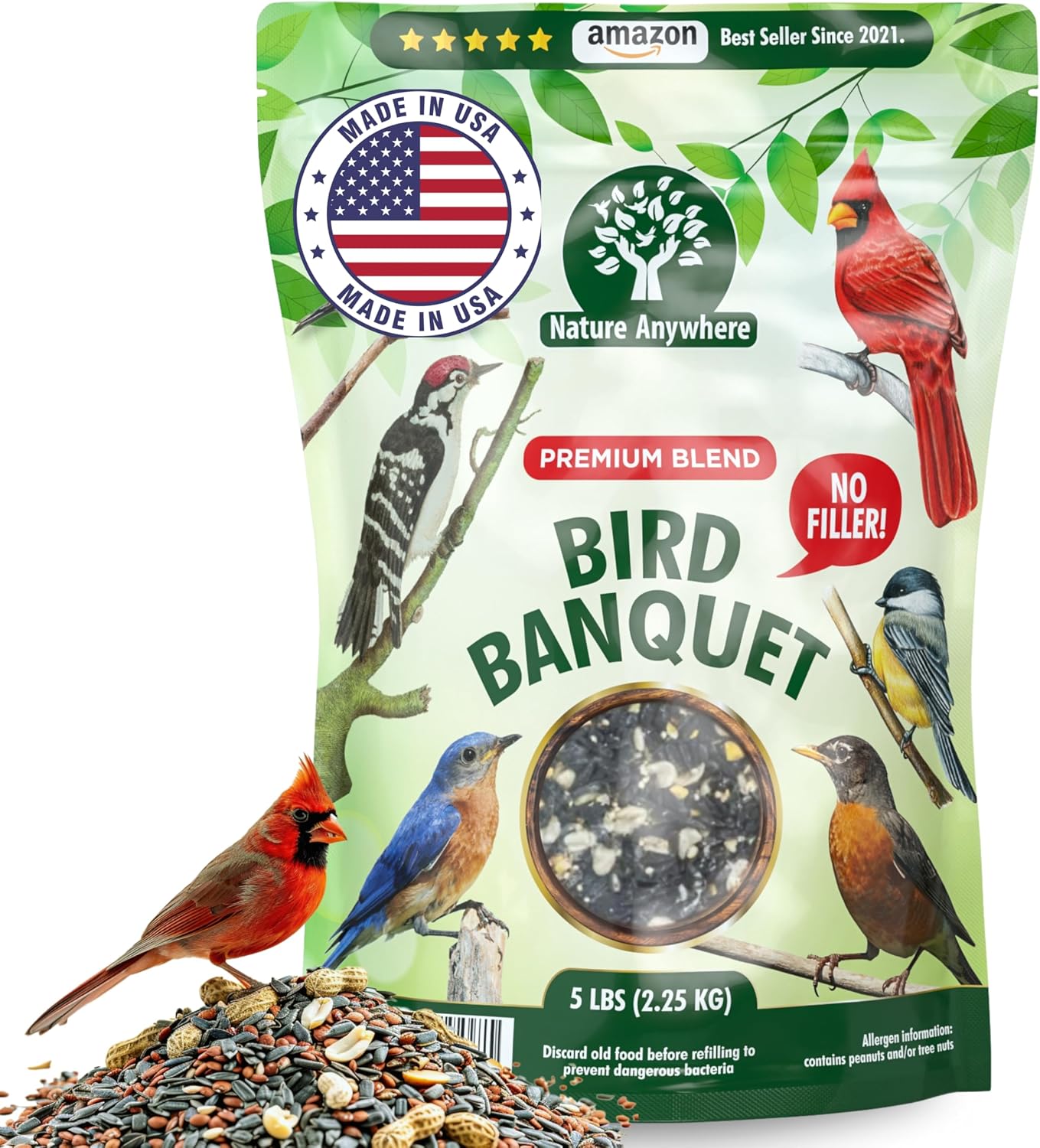 Visit on Amazon → Visit on Amazon →Nature Anywhere Bird Banquet blend |
All three feeders | As sold, no filler | Store dry and sealed | Running out during migration |
Water is the feeder you forgot
The bath gets more entries in my log from June to August than every feeder in the yard combined. If you are only going to add one more thing after the feeders above, add water before you add another seed port. Keep it shallow, keep it clean, and in winter check the wattage on any heated model before you plug it in.
Should you buy the Gray Bunny 6 Port Metal Tube?
Yes, if you want one feeder that does most of the work. It is metal, so it handles a hard freeze better than plastic, and six ports with perches let a flock feed without one bird parking on the tray all afternoon. Clean it weekly in a bucket with a bottle brush, and check the port collars for cracks before the first freeze.
Treat the squirrel claim the way you would treat any other one. Metal gives it a real chance, but resistant is the honest word until a determined squirrel has had three weeks with it. Check current Amazon price and see where it lands for you.
Should you buy the window feeder with suction cups?
Yes, for close watching and for strike prevention, with one condition. Put it on a sheltered window, or take it down before the first hard freeze. A clear tray three feet from the glass is the best birding I do all winter from a kitchen chair, and it is the cheapest way to keep a bird from hitting that same glass.
Should you buy the mesh feeder and the seed blend?
If your yard is full of chickadees, nuthatches, and woodpeckers, the mesh feeder earns its spot next to the tube. And if you are tired of raking sprouts out from under the feeder, a no-filler blend is the fix. Neither one is dramatic. Both of them show up in the log, which is the only review that counts here.