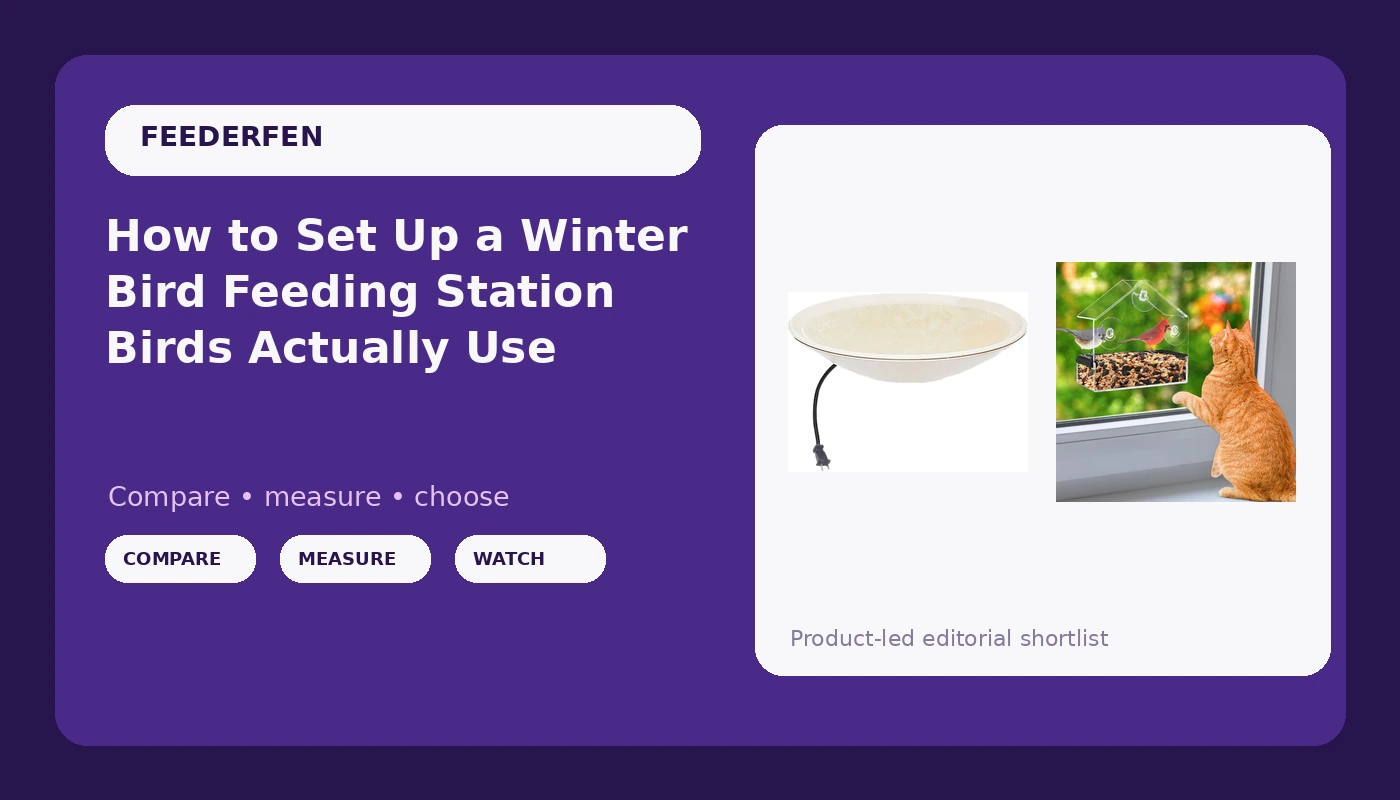
Most yards get a feeder on a pole, call the job done, and then the first hard freeze arrives, every puddle in the county turns to ice, and the yard goes quiet. A winter bird feeding station is the fix, and it is not one product. It is a placement decision, a water source, and a cleaning schedule you will still keep in February when the hose is frozen and the porch light is the only light you have.
I run that setup in Madison, Wisconsin, where February means freeze, thaw, freeze again in the same week. A heated bowl sits on my deck rail from the first hard freeze until ice-out, and a window feeder hangs three feet from the dining room glass all year. Between those two pieces, the winter log gets more species than it does from any seed blend I have ever bought.
This is the order I would build it in if I were starting from nothing: placement first, water second, seed third, and the cleaning routine before any of it.
Why you should trust me
I am a licensed wildlife rehabilitator and I run the songbird side of a county wildlife rescue out of my garage. The incubator is in the laundry room and the scale lives on the kitchen counter, which is why I talk about birds in grams and seed in cups.
I have been feeding backyard birds for twelve years and keeping the log for ten of them: a spreadsheet with every species that visits, the first-of-season date for each migrant, and how many cups of seed each feeder draws per week. My county life list sits at 214 species, and 38 of them have hit my feeders.
Two habits from rehab shape everything below. The first is that every salmonella and house finch eye disease case I have seen traced back to a feeder nobody took apart since fall. A dirty feeder is a disease vector with a perch. The second is that I do not call anything squirrel-proof until a fox squirrel has had three full weeks to work on it, which is why the word "resistant" shows up in my write-ups and the word "proof" almost never does.
How I picked and how I tested
Nothing here earns a recommendation without a full season in my yard and an entry in the log. That rule costs me products I liked and could not defend with numbers, and it is the only reason I trust my own recommendations.
For this guide, a window feeder has to survive a Wisconsin freeze and thaw cycle, come apart for cleaning in under ten minutes, and hold up to the wind that comes off an open field. A heated bath has to hold water open at single digits without warming it into a bacteria bath, and the basin has to be shallow enough that a goldfinch can stand in it and a chickadee can drink from the edge. I check wattage and thermostat behavior before I recommend any heated bath, and I check the ingredient list on every seed blend, because milo and red millet are automatic disqualifiers.
I picked these two categories because they do different jobs. A window feeder puts birds at eye level for a person at the kitchen table or a cat on the sill. A heated bowl keeps open water when every natural puddle is a sheet of ice, and water brings more species to a yard than any seed blend. From June to August my bath gets more entries in the log than every feeder combined, and in January it is the only reason a robin or a flicker stops in at all.
The two pieces this station is built around
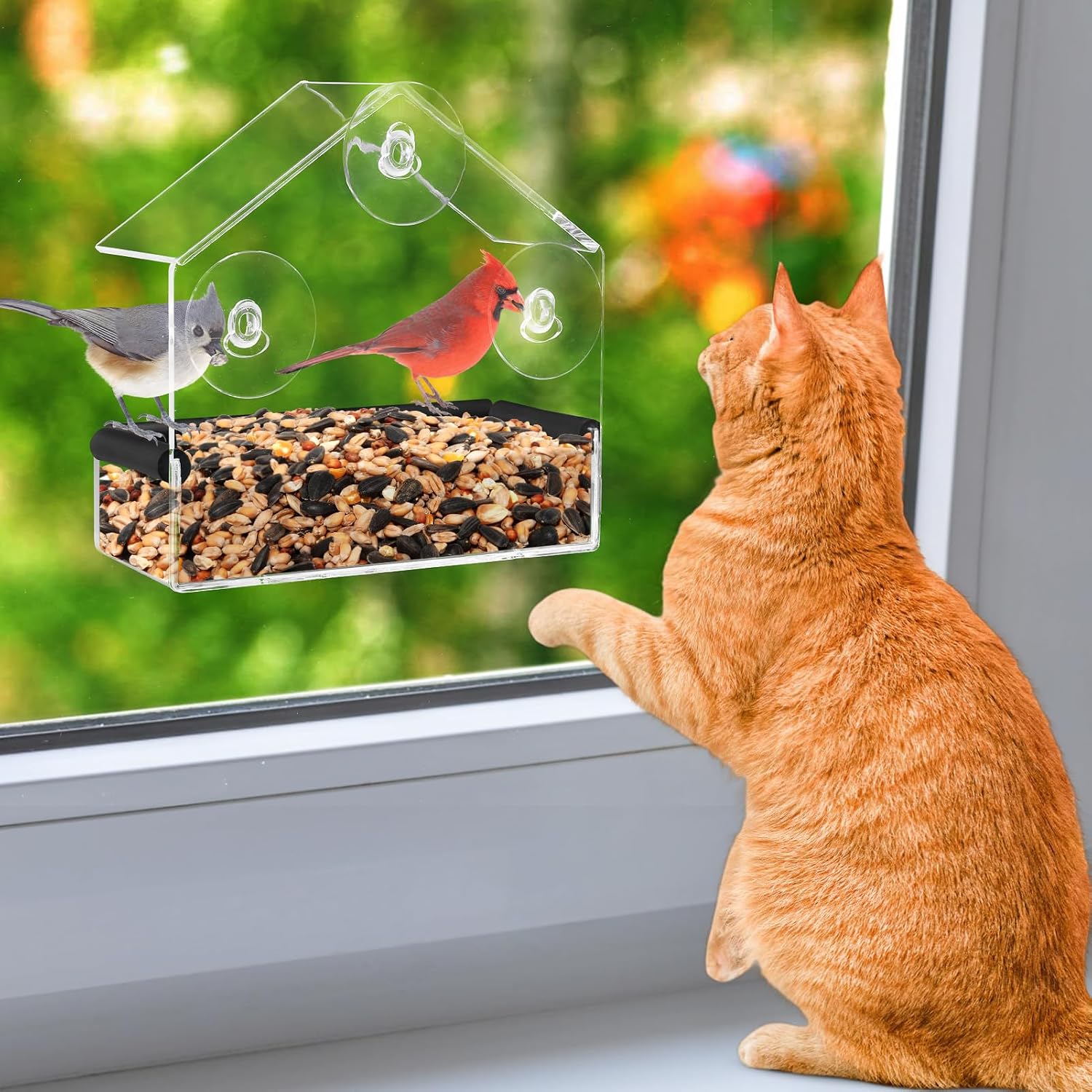
Budget pick: MEWTOGO Outdoor Window Bird Feeder for Cats Viewing, Small
 Visit on Amazon →
This is the small window-mounted feeder, and the name tells you exactly who it is for: it goes on the glass so the cat on the other side gets a channel that never reruns. Small is the right call for a window. A big hopper on a pane is a shadow across your living room and a sail in a winter wind, and the birds that use a window feeder are the ones you want close anyway: chickadees, titmice, house finches, goldfinches, the occasional downy woodpecker.
The reason to own one is distance. At a window you are watching birds from a foot away, which is closer than any binocular in my house will focus. That is also why window feeders work so well for anyone who cannot get out to a trail in January.
Two things to know before you hang one. First, the small size means a small draw. You will refill it more often than a tube feeder, and more refilling means more chances to notice wet seed and droppings, which is a good habit, not a chore. Second, the honest limit of any window feeder is squirrels. If a squirrel can reach the glass, this becomes squirrel food, and no window feeder on the market changes that. Mount it where the jump is not possible, or accept the loss.
Flaws but not dealbreakers: Small capacity and no squirrel defense. If you want volume and squirrel resistance, you are shopping for a pole system, not a window feeder.
Anyone in an apartment, a townhome, or a house with a cat and a good window will get the most out of this one.
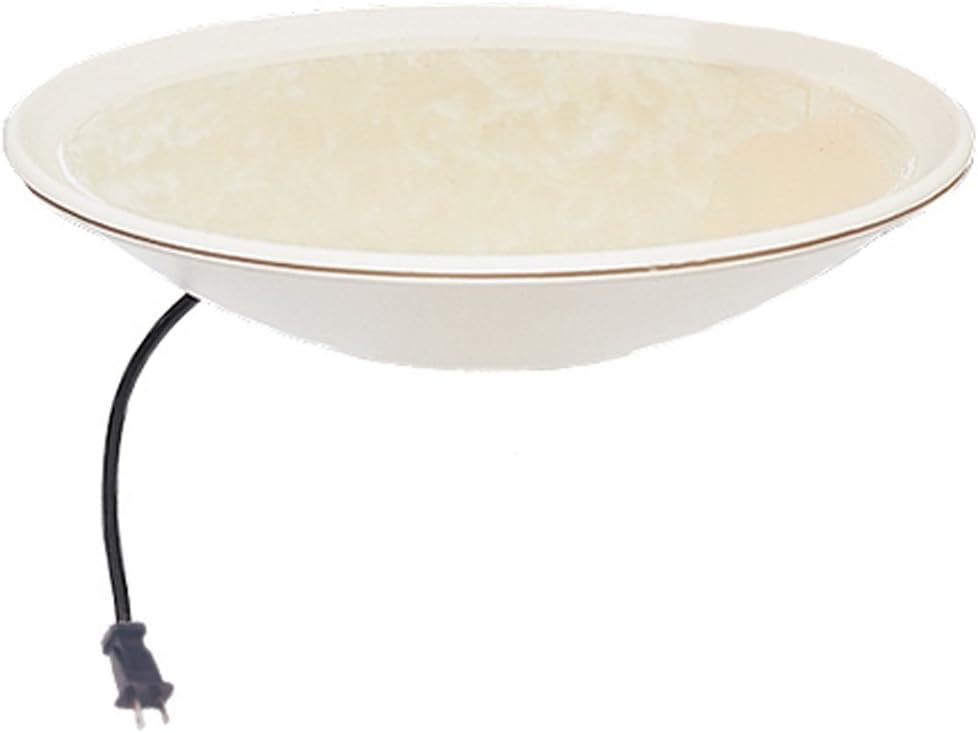
Upgrade pick: Allied Precision Industries API 600 20-Inch Diameter Heated Bird Bath Bowl (no stand), Light stone color
 Visit on Amazon →
This is the winter water piece: a heated bowl, 20 inches across, in light stone, sold without a stand. Twenty inches of diameter is the spec that matters. A wide, shallow bowl lets a small flock drink without shoving, gives smaller birds a bathing depth they can actually stand in, and holds enough open water that it does not flash-freeze the moment the thermostat cycles off.
No stand is either a feature or a problem, depending on your yard. If you already have a deck rail, a pedestal, a stump, or a sturdy bench, you supply the base and save the money a stand would cost. If you do not, measure your rail width before you order, because a 20-inch bowl on a 4-inch rail is a wind catcher. Set it where you can see it from a window, where it gets midday sun, and where the cord reaches an outdoor outlet with GFCI protection.
The thermostat question is the one I ask about every heated bath. A bath that runs wide open in a December thaw is warming water that should stay cold, and warm water grows bacteria faster than cold water does. You want a unit that holds water just above freezing, not one that turns the bowl into a hot tub. Once it is running, put a rock or a flat stone at the edge so birds have traction on the rim in a hard freeze.
Flaws but not dealbreakers: No stand included, and a bowl this wide needs a level surface. If your deck rail is narrow or your outlet is far, budget for a pedestal and a heavy outdoor cord.
Anyone with a deck, a railing, or an existing pedestal who wants open water all winter should start here.
The actual setup workflow
This is the part that decides whether the station works. It takes one afternoon and about ten minutes a week after that.
Step one: pick the window before you buy anything. Walk outside and look at your house. You want a window that gets morning sun, so frost burns off early and the birds find the feeder while you are still on your first cup of coffee. Then check the view: is there a shrub or a small tree within ten to twelve feet for escape cover? Is there a low bush right against the glass where a neighborhood cat can crouch? Move the feeder, not the bush, if the answer is yes to the second question.
Step two: mount the window feeder within three feet of the glass. This is the single most important number in this guide, and it is about window strikes. A bird that leaves a feeder five to fifteen feet from a pane builds real speed before it hits, and even the ones that fly off can die later from the injury. Inside three feet, a bird leaving the feeder has no room to accelerate, so it cannot hurt itself. My own education on this was a white-throated sparrow that spent three days recovering in a shoebox after a window strike on my dining room glass. I hung the first window feeder three feet from that glass the same week.
Step three: fill small, fill often, and skip the filler. Black oil sunflower and sunflower hearts are what my log shows birds actually eat. Blends padded with milo and red millet sit in the tray, mold in the rain, and force you to clean the platform twice as often. A window feeder with a small capacity will teach you portion control whether you want the lesson or not.
Step four: set the water station on a surface that does not move. A wide heated bowl on a wobbly rail is a splash generator. Level it, secure it against wind, and run the cord so nothing is stretched across a walkway where you or a dog will trip on it.
Step five: test the thermostat on a mild day. Fill the bowl, plug it in, and check it the next afternoon when the temperature is above freezing. If the water feels warm rather than cold, unplug it and re-read the listing. You want open water, not heated water.
Step six: clean both pieces every week, and more often in a thaw. This is the step people skip, and it is the step that matters most. Take the feeder apart. Wash it in hot soapy water, rinse it in a dilute bleach solution (one part bleach to nine parts water), rinse again, and let it dry completely before it goes back up. Dump and scrub the bath, then refill it. In a January thaw, do it twice a week. Every salmonella case I have seen in rehab traces back to a feeder that had not been taken apart since fall.
Step seven: manage squirrels honestly. Baffle the pole, keep the window feeder out of jumping range, and remember that squirrel-resistant is a real thing while squirrel-proof is a marketing word. The difference between the two is measured in weeks, not in the claim on the box.
Step eight: write it down. Cups per week, first-of-season dates, which species used which piece. Ten years of the log is the only reason I can tell you what actually works in a cold climate instead of what looked good on a shelf.
The competition and why it lost
A few products come up every time someone asks me about a winter station, and they are good gear that belongs in a different guide.
The K&H Thermo-Birdbath is the heated bath I run on my own deck rail, and it has been ice-free at ten below for two winters. It earns its place in a heated bath roundup. The bowl above is the pick here for anyone who already owns a surface and wants a wider diameter to work with.
The Brome Squirrel Buster Plus and the Squirrel Solution 200 are the two feeders that ended the squirrel war in my yard. They protect seed on a pole, which is a different problem from seed on a window pane. Neither one is a window feeder, and neither should be sold as one.
The Droll Yankees Onyx Clever Clean is the tube feeder I hand to people who say they hate cleaning feeders, and the Aspects HummZinger Ultra is what I hang on April 20, the day the first ruby-throated hummingbird shows up in the log. Both are spring and summer answers.
The category that genuinely lost is the cheap suction-cup window feeder. I tested one that let go at six below in January and dropped its tray onto the porch. If you buy a window feeder, look hard at how it attaches, and if it hangs on cups, clean the glass before you stick it, warm the cup in your hands, and add a backup tether to a hook so a failure costs you seed instead of the whole feeder.
What this all costs
The window feeder is the smallest line item in this setup. The heated bowl is the biggest single purchase, and it is the one that changes what your yard looks like in January, so it is the right place to spend. Add a brush, a bottle of bleach, an outdoor cord if your outlet is far, and seed bought in bulk rather than in small bags.
The electricity is the part people worry about and the part that costs the least. A thermostat cycling a bath on and off through a Wisconsin winter is a rounding error next to what you spend on seed.
The expensive version of this hobby is the one where you replace gear every spring because you skipped the weekly cleaning. Buy the two pieces once, take them apart on a schedule, and the cost per season drops every year you keep them.
Water first, seed second, cleaning before either. That is the station. Build it in an afternoon, and the yard stays loud all winter.