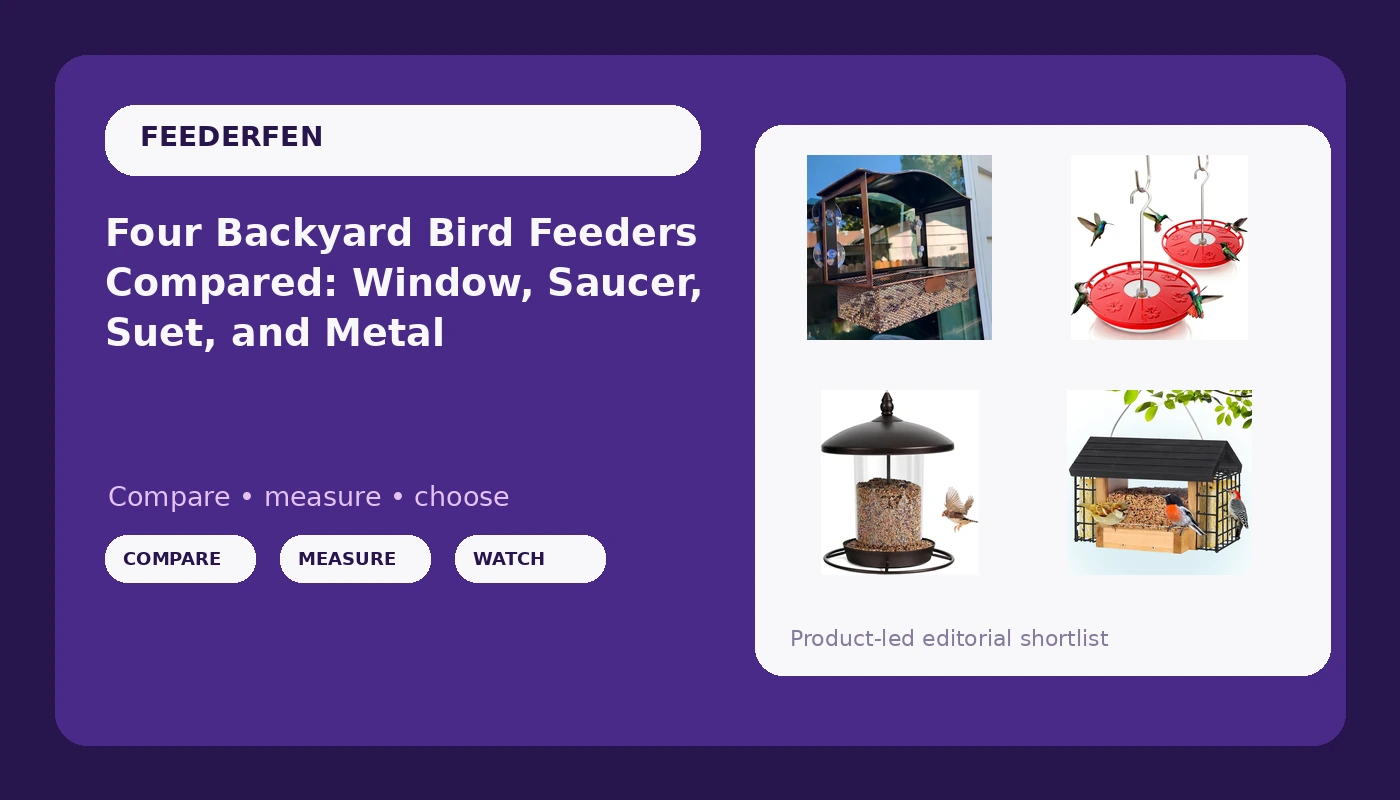
Backyard bird feeders are the one category of birding gear where the product photos and my log disagree almost every time. Ten years of entries, first-of-season dates, cups of seed per week, species counts, have taught me that a feeder's real spec is how fast it empties and how long it takes to take apart, not how it looks on a pole. So when I lined up four very different feeders to compare, I judged them the way the log does: a suction-cup window feeder, a two-pack of saucer hummingbird feeders, a metal-roof feeder built to survive chewing, and a wooden suet cage that holds two cakes at once. Every one of them is the right answer for somebody, and none of them is the right answer for everybody.
If I had to hang one of these four tomorrow, it would be the metal roof feeder, because seed is what most yards need year round and a metal roof sheds rain, which is what keeps seed from turning into a mold experiment.
A caveat before the table. I am not going to pretend these four have spent a winter on my fence. My rule is one full season in my yard before a feeder earns a permanent recommendation, and what follows is a category comparison built on twelve years of feeding, ten years of the log, and the rehab intakes that taught me which design flaws actually hurt birds.
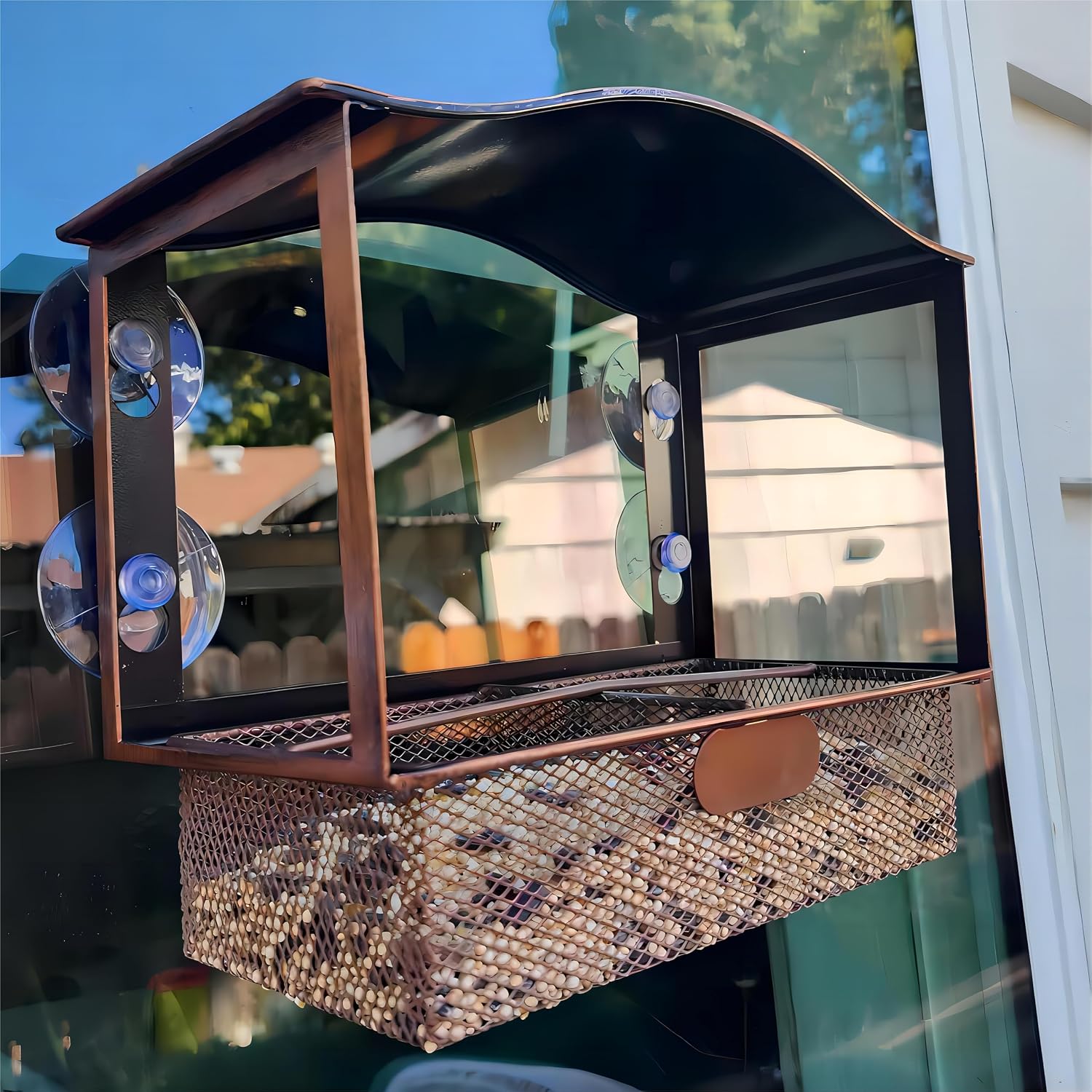
Lilyang Window Bird Feeder with Strong Suction Cups
Best close-up viewing of the four, and the format that fits an apartment window or a desk-side pane
Suction cups are the weak point in a hard freeze, and the tray holds far less seed than a hanging feeder
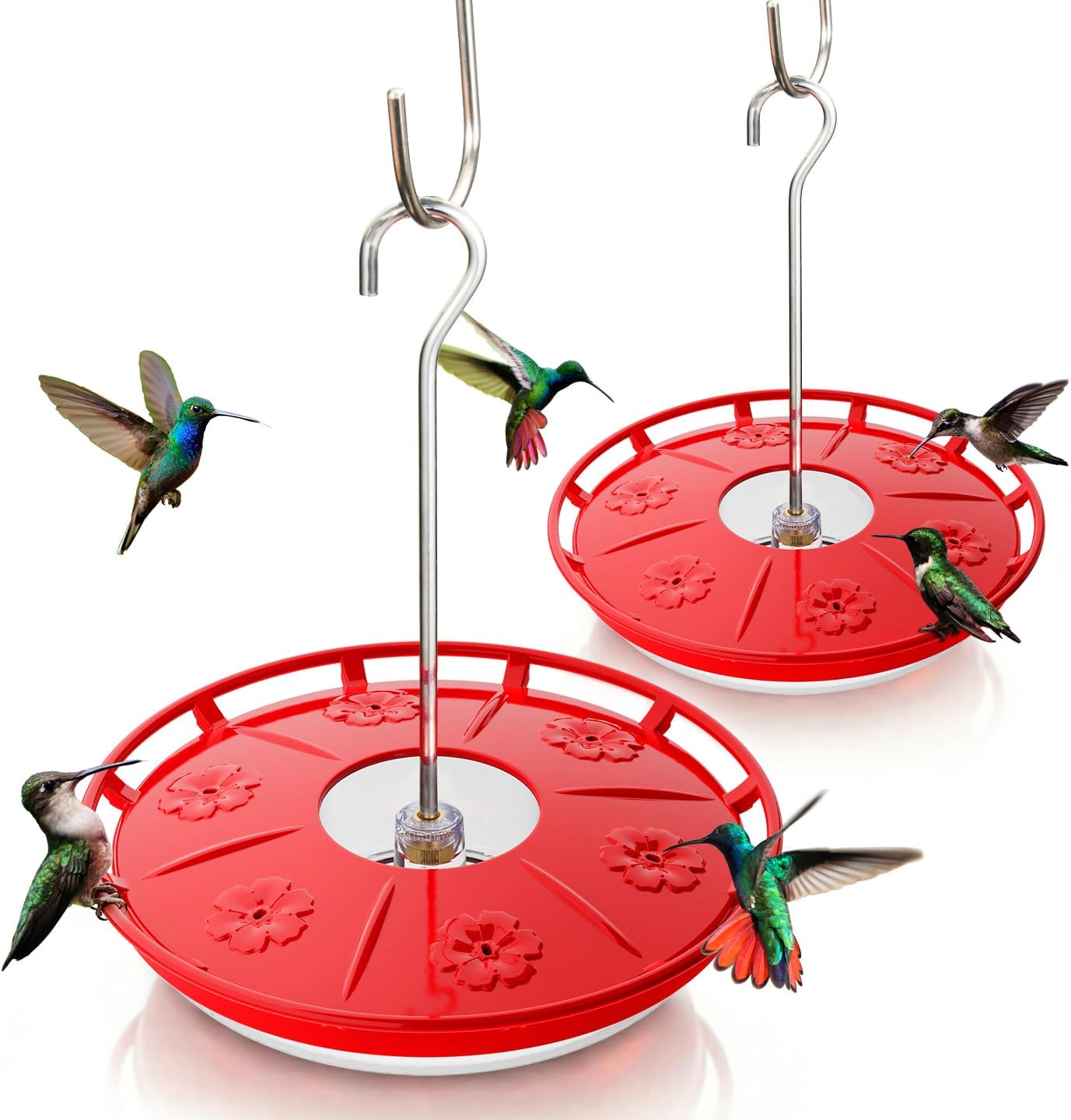
Kingsyard 2 Pack 6 Ports Saucer Hummingbird Feeders for Outdoors Hanging
Two saucers mean one hangs while the other dries, and six ports per basin suits a loud late-summer yard
Nectar is a maintenance job, not a fill-and-forget job, and saucers need rinsing every few days in heat
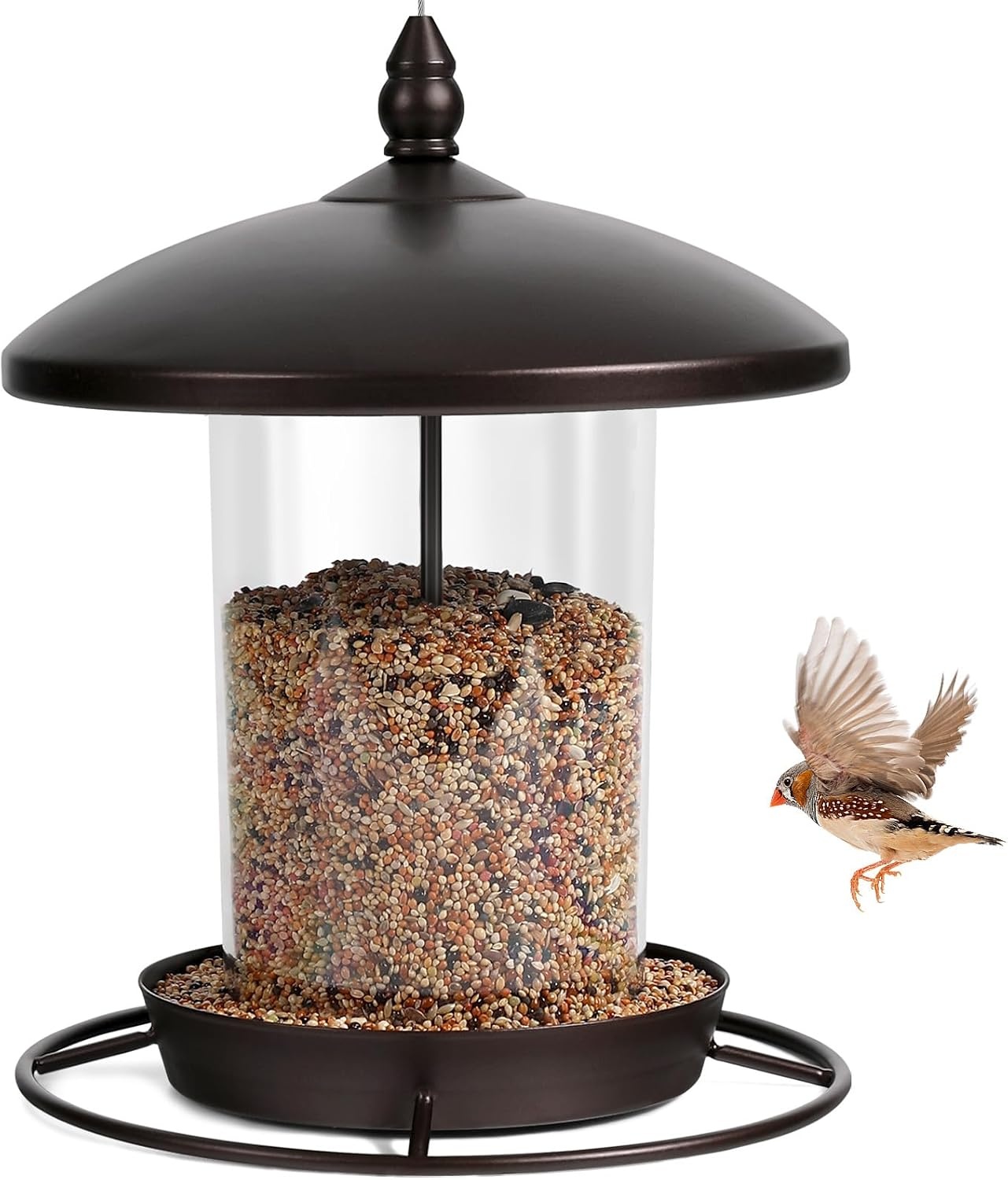
Metal Roof Bird Feeder - Chew Proof for Outdoor
The metal roof is the feature that matters, shedding rain and taking squirrel teeth better than plastic
Heavier than a tube, and it will not stop a squirrel that can reach the perch
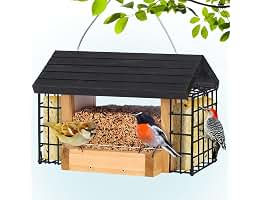
Gbekery Wooden Bird Feeder with Double Suet Metal Cage for Outdoors Hanging
Two suet cakes at once is the right call for woodpeckers and nuthatches in February, and metal cages outlast plastic
Wood needs watching in wet weather, and suet draws more than birds in some yards
Prices and availability were captured from Amazon Creators API and may change.
How I compare feeders, and why the log decides
Every feeder I write about gets judged on four numbers, and none of them are printed on the box. The first is draw: cups per week. A feeder that empties is a feeder birds use. A feeder that sits full for a month is a decoration. The second is cleaning time, measured with a brush and a sink, because a feeder you dread taking apart becomes a dirty feeder, and a dirty feeder is a disease vector with a perch. The third is squirrel weeks: how long a determined fox squirrel works on it before it reaches seed. One week means resistant. Three weeks with no seed taken means I will call it proof without a footnote. The fourth is February survival, which in Wisconsin means freeze, thaw, freeze, and a night at ten below.
Then there is the question that overrides all four: will birds actually use it? A feeder can pass every durability test and still lose, because the perch is wrong for the species in your yard or the ports are the wrong size for the seed you buy.
That is the frame. Here is how these four fit into it.
Lilyang window feeder: the close-up pick
Window feeders are the one design that changes how you watch birds, not just how many you feed. A feeder three feet from the glass is also the placement that prevents window strikes, because a bird leaving it cannot build up the speed that makes a strike fatal. My own placement rule came from a white-throated sparrow that survived a strike on my dining room glass, and it has not changed in twelve years.
What the Lilyang gets right is the format. A clear tray on the glass puts chickadees, house finches, and the occasional cardinal at eye level, which is the closest look most people will ever get at a feeder bird, and it works on an apartment window or a second-floor office pane.
The honest limitation is in the name. Suction cups are a warm-weather solution in a cold climate. The cup that let go on my porch at six below zero taught me that, and it is why my permanent window feeder is bolted through the sill with a metal bracket. If you buy a suction-cup feeder, put it where a fall will not matter, take it down before the first hard freeze, and clean the glass before you press the cups on. Use a no-mess blend or sunflower hearts in it, because hulls on a windowsill and in a window track are their own small misery.
Kingsyard 6 port saucer hummingbird feeders: the two-pack advantage
The first ruby-throated hummingbird of the year hits my yard on April 20th, two years running, and that date decides when the hummingbird feeders go up here. A saucer feeder is the design I recommend, and the reason is cleaning. A wide, shallow basin rinses in seconds. A tall tube with a narrow neck does not, and a hummingbird feeder that is a chore to clean becomes a mold experiment by August.
Six ports on a saucer is more than most yards need in May and about right in late July, when juveniles are on the move and the yard gets loud. The two-pack is the part that matters most. Two feeders mean one can hang while the other is drying, which is how you keep fresh nectar in front of birds through a hot stretch.
Nectar rules, since they are not optional: one part white sugar to four parts water, no red dye, and a rinse every two to three days when the temperature is above eighty. Skip the dye. It is unnecessary and it is not doing the birds any favors. If ants find the hanger, an ant moat helps only if you refill it, and in my experience moats dry out by Tuesday.
Metal roof bird feeder: the seed workhorse
Most of the seed my yard goes through in a year moves through a hopper or a tube, and the metal roof feeder is built for that job. The feature worth paying for is the roof itself. A metal roof sheds rain instead of pooling it, and dry seed does not mold, which means fewer cleanings and less seed dumped in the compost.
Chew proof is the claim to read carefully. Squirrel-proof is a marketing word. Squirrel-resistant is a real thing, and the difference is measured in weeks. A metal roof and metal ports will survive teeth that turn a plastic feeder into a pile of shards by week two, but no feeder stops a squirrel that can reach the perch. Pair it with a baffle on the pole, or hang it where a squirrel cannot make the jump from a branch or a fence rail.
The trade-offs are weight and capacity. A metal-roofed feeder is heavier on the hanger and usually holds more seed than a window tray, which is a plus in January and a minus when you are the one carrying it in for a weekly wash. Black oil sunflower or a no-mess blend both work here. Skip anything padded with milo or red millet, because filler sits in the tray, molds in the rain, and doubles your cleaning.
Gbekery wooden suet cage: the winter workhorse
Suet is the feeder that carries my yard through February, and it is built for a specific group of birds. Suet cages and mesh feeders serve the clingers: downy and hairy woodpeckers, red-bellied woodpeckers, white-breasted nuthatches, black-capped chickadees. Those birds feed hanging sideways or upside down, which is why the cage format works and a flat tray does not.
A double cage that holds two cakes at once is the right call for a cold snap. One cake in a busy yard can be gone by mid-morning, and the second cake means you are not refilling in the dark before work. Metal cages also outlast the plastic versions, which crack in the freeze-thaw cycle and then cut feet.
Two things to know about wood and suet. First, wood needs watching in wet weather, because a wooden tray that stays damp is a mold problem waiting to happen. Hang it where it gets air and check the underside. Second, suet draws more than birds in some yards. Raccoons work suet cages at night, and squirrels will chew the cage itself if they can reach it. If that happens, move the feeder rather than fight it.
Suet cakes are inexpensive, but rendering your own with peanut butter and mealworms is the version that gets the most traffic in my log, and it lets you control what is in the mix.
Cleaning is the spec nobody advertises
Every salmonella case I have seen come through rehab traced back to a dirty feeder that nobody had taken apart since fall, and house finch eye disease moves through feeders the same way. The rule I give everyone is simple: if you cannot take it apart and wash it in under ten minutes, you will not do it weekly, and weekly is the schedule that keeps a feeder from becoming a transmission point.
That means design matters more than material. A feeder with a base that twists off, a tray that lifts out, or a cage that opens without tools gets cleaned. A feeder with hidden seams and a narrow neck does not, no matter how good it looks on a pole. Wash with hot water and a brush, use a diluted bleach solution when a bird looks sick, and let everything dry completely before it goes back out.
I will admit the log shows a two-week gap every August, when the garden takes over and the feeders get rinsed instead of washed. It happens. What matters is that it is a gap and not a habit.
Trade-offs, and which one belongs in your yard
Here is the honest summary, in the terms the log uses.
The metal roof feeder is the one I would start with if you feed seed year round, because it holds the most, sheds weather, and takes squirrel teeth better than plastic. It costs you weight and a longer wash.
The Lilyang window feeder is the one that changes your daily viewing, and it is the right first feeder for an apartment, a dorm, or anyone who works at a desk by a window. It gives up cold-weather reliability and capacity, so treat it as a warm-season feeder in a northern yard.
The Kingsyard two-pack is the hummingbird answer, and the two saucers are the reason: fresh nectar always available, one always drying. It costs you a rinse every couple of days from May through September, and there is no way around that.
The Gbekery suet cage is the winter feeder that brings in the woodpeckers and nuthatches nothing else in this group will, and the double cage earns its keep in a cold snap. It gives up tidiness in wet weather, and it attracts raccoons in some neighborhoods.
If you can only hang two, make it the metal roof feeder and the suet cage. That combination covers seed eaters and clingers from October through April, and it is the pairing the log shows the most species on. Add the window feeder in spring for the close views, and hang the hummingbird saucers by the twentieth of April.