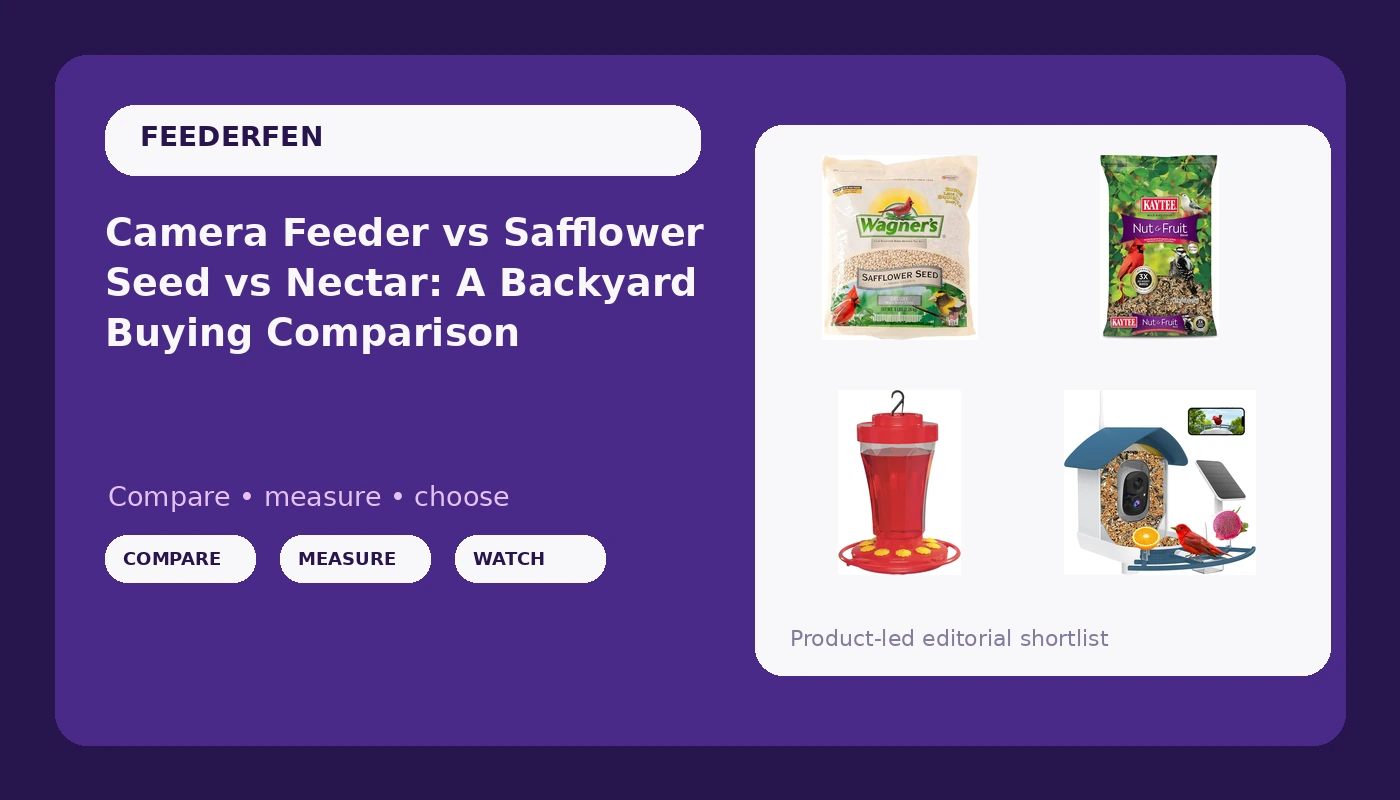
For twelve years I have fed birds in a Madison backyard, and for ten of those years I have kept the log: every species that visits, the first-of-season date for each migrant, and how many cups of seed each feeder draws in a week. The log is the reason this backyard bird feeder and seed comparison does not look like a top-ten list. Two of the four things here are seed, one is a hummingbird feeder, and one is a bird house with a camera, a solar panel, and AI identification built into it. They do not compete with each other. They fill four different slots on the same pole, and the order you should buy them in is not the order a store shelf puts them in.
Here is the honest framing. If you are starting from nothing, seed comes before hardware, because seed is what makes a yard worth watching and a feeder with nothing in it is a decoration. If you already feed birds and you want the one upgrade that changes what you know about your yard, it is the camera feeder, provided you have a spot with real sun. And if you hang one hummingbird feeder a year, hang a wide-mouthed one, because the entire job is cleaning.
The short answer: buy seed first, hang the hummingbird feeder in April, and buy the camera feeder only after you already know which birds use your yard.
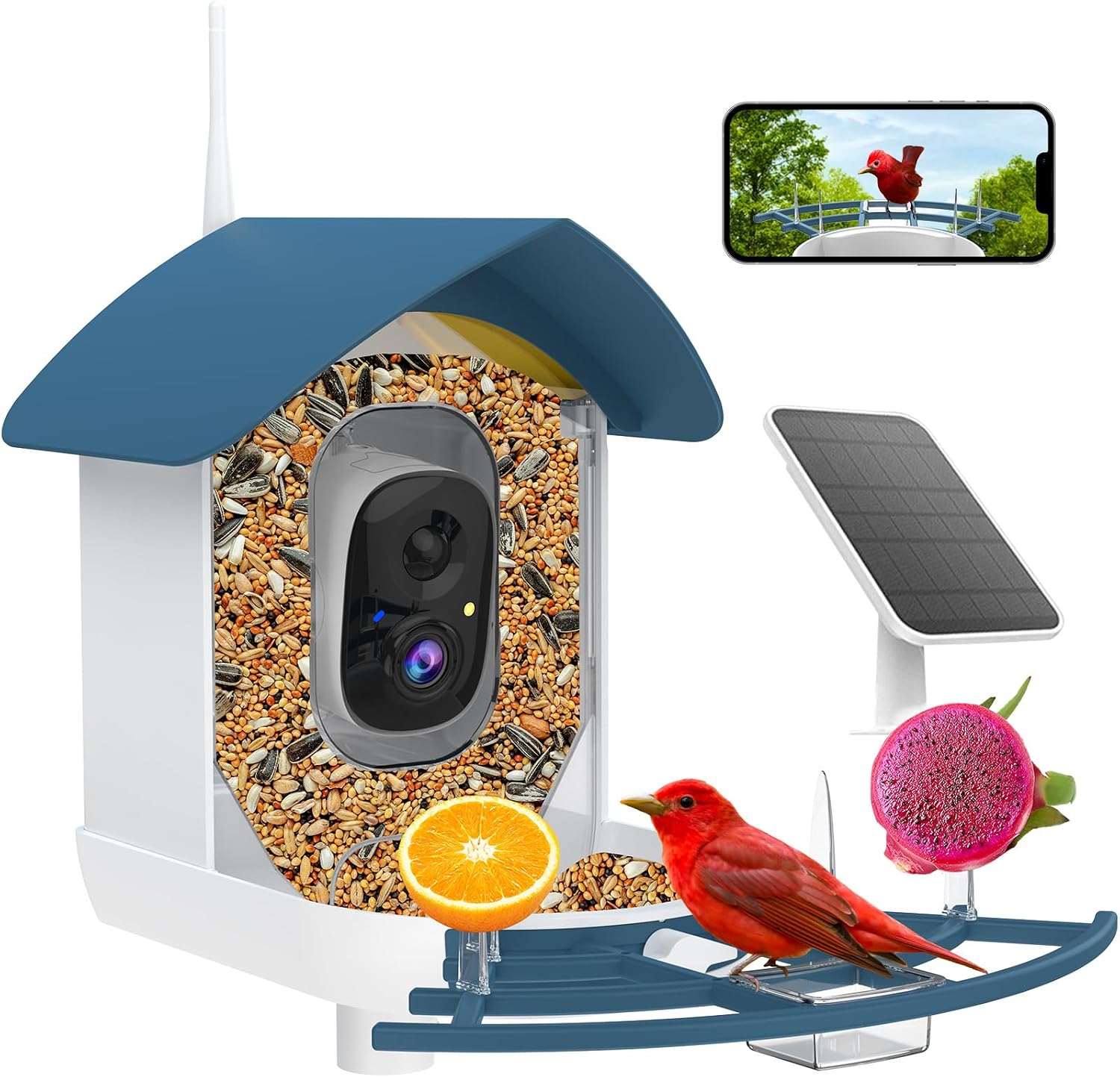
Fazoxo Bird Feeder with Camera, Birds House Camera, Solar Powered, AI Bird ID
Answers the question the log answers by hand: which species showed up, and when. Solar and an onboard AI ID mean no wiring and no separate camera to mount.
A camera housing has seams, a lens, and a battery to think about, and the panel needs sun. Shade in December is the failure mode.
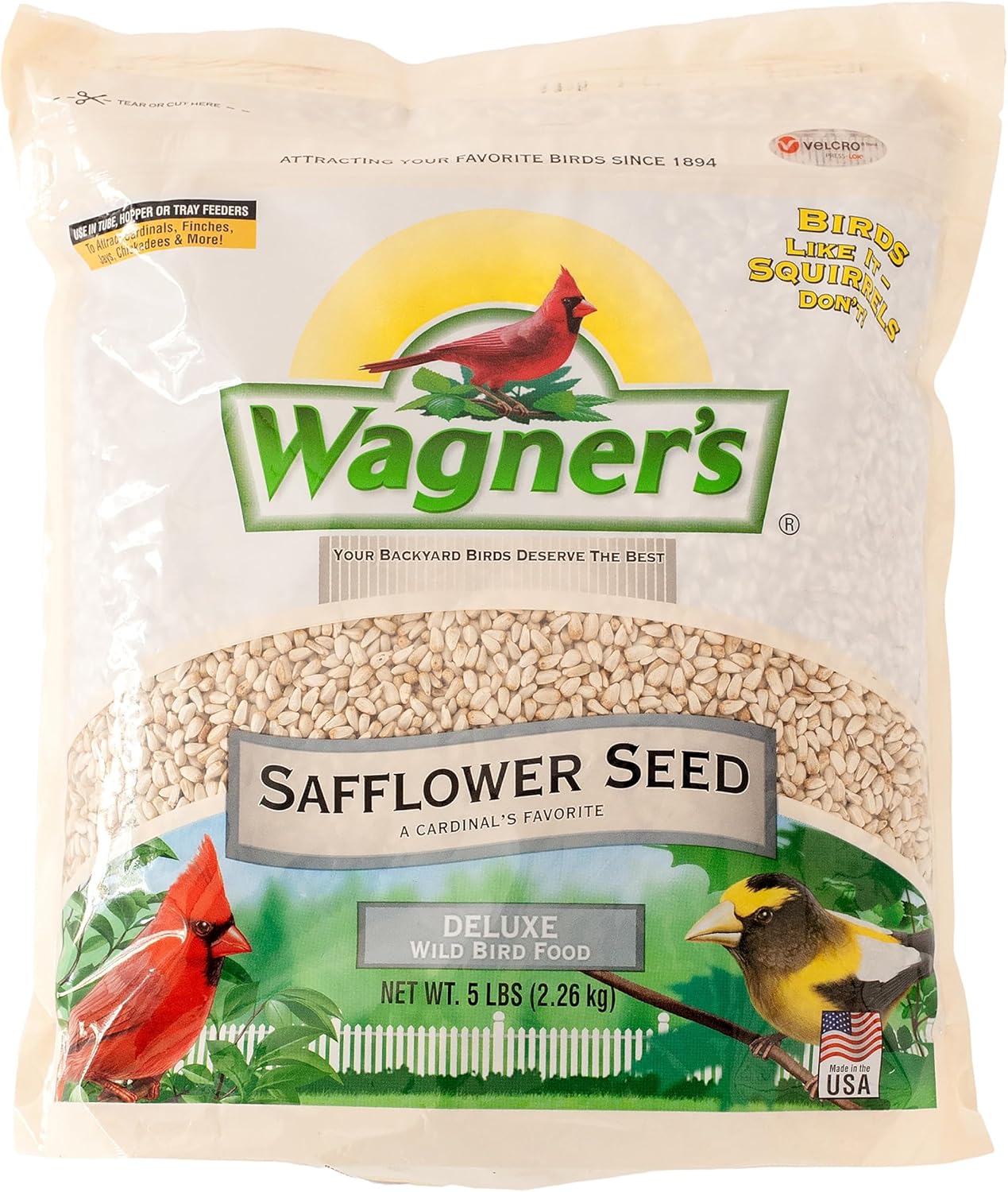
Wagner's 57075 Safflower Seed Wild Bird Food, 5 Pound (Pack of 1)
The single-ingredient seed I would hand someone who is tired of grackles and starlings emptying a tray. Cardinals, house finches, and doves take it.
Not every yard's birds eat it, and a 5-pound bag is a small bag for a winter of cardinals.
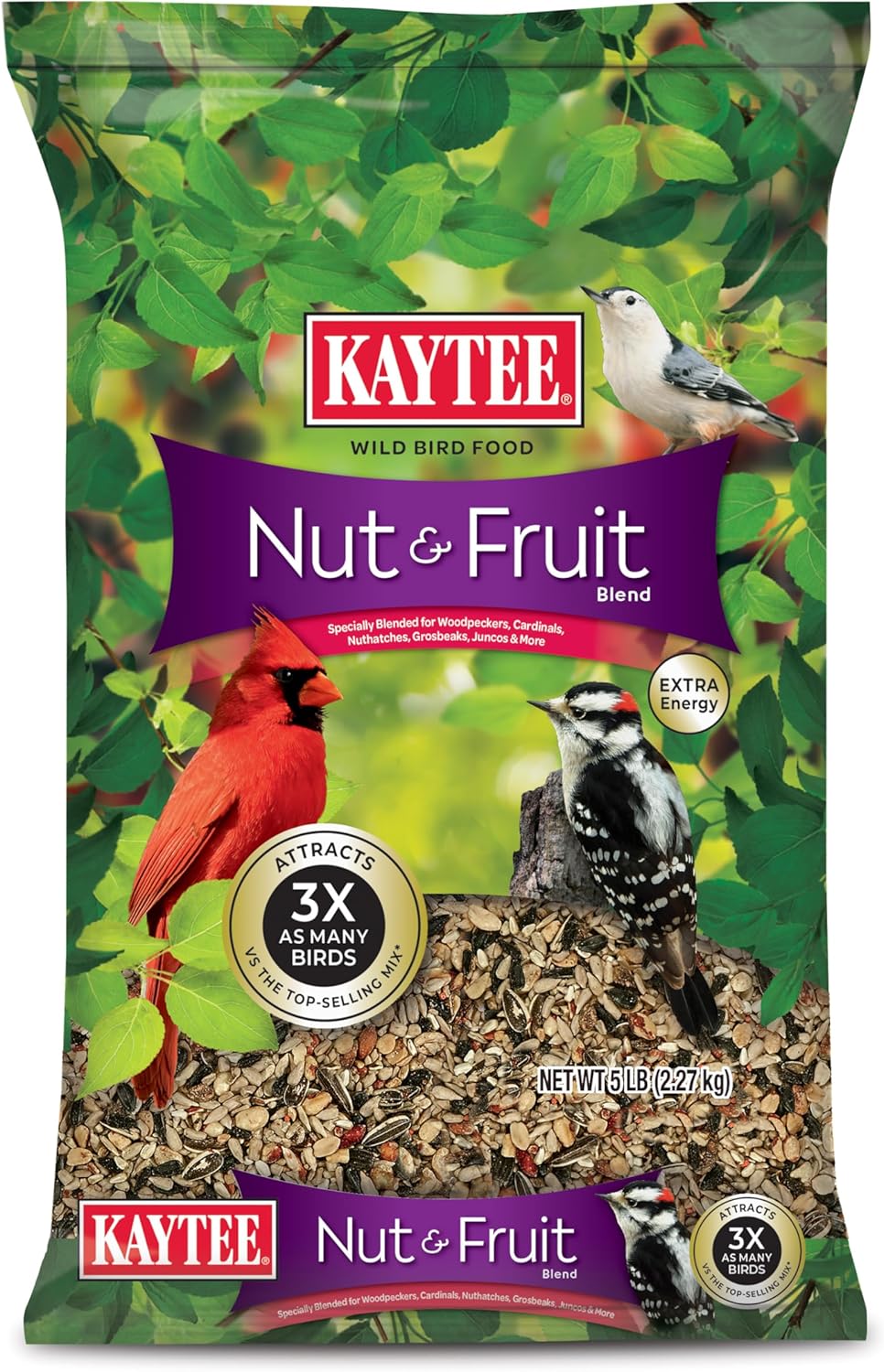
Kaytee Nut & Fruit Wild Bird Seed, 5 lb
Fat and protein in one bag, which is why woodpeckers, jays, and titmice work a tray of it hard in cold weather.
Fruit holds moisture. It clumps in humidity, freezes solid in January, and doubles your cleaning schedule.
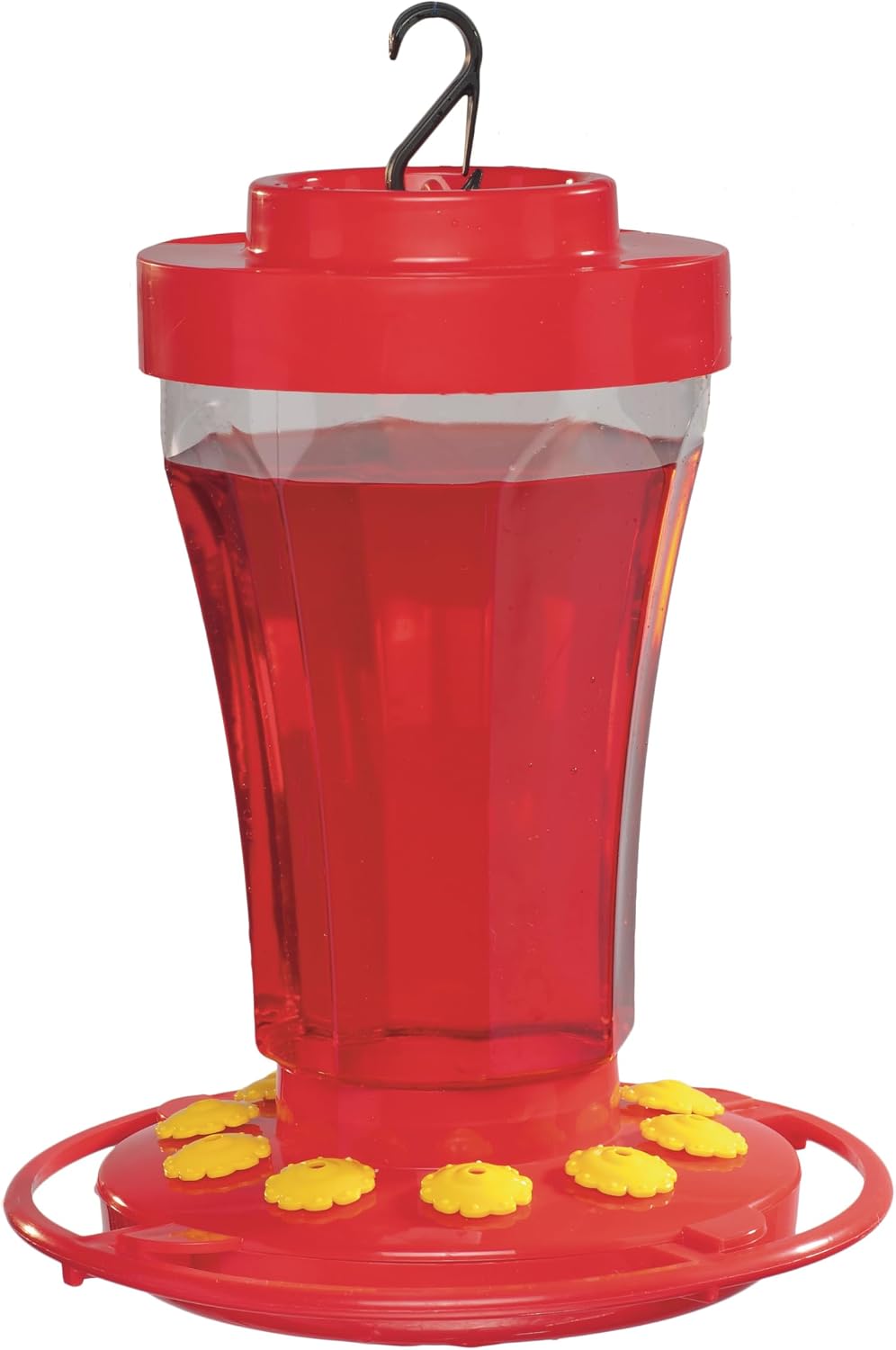
First Nature Hummingbird Flower Feeder - 32-Ounce - Wide-Mouth
A wide mouth you can rinse in under a minute, and enough capacity that you are not refilling every morning in August.
Nectar in a big reservoir sits longer than it should in July heat, and a hummingbird feeder is the highest-frequency cleaning job on the pole.
Prices and availability were captured from Amazon Creators API and may change.
How I judge anything that goes on the pole
Five questions, every time. Will birds actually use it, or will it sit pretty on the pole? Can I take it apart and clean it in under ten minutes? What does a determined fox squirrel do to it in week one? Will it survive a Wisconsin February, meaning freeze, thaw, freeze again? And would I still hang it after four seasons?
The cleaning question is not a matter of taste. I work rehab intakes, and every salmonella case and every house finch eye disease case I have seen traced back to a feeder nobody took apart since fall. A feeder that is hard to disassemble is a feeder that gets hosed off instead of cleaned, and hosing off is not cleaning. That single rule eliminates more products than any other test I run.
One caveat I owe you before we go further. My own boundary is that nothing gets a full recommendation from me without at least one season in my yard and an entry in the log. So read this as a buyer's map rather than a lab report: what each of these four is actually for, what it will cost you in maintenance, and the specific things to check before you buy.
The camera feeder: the log, without the pen
The Fazoxo Bird Feeder with Camera is a bird house with a camera inside, a solar panel on top, and onboard AI that tries to name what it sees. What it is for is the traffic you never witness: the 6:40 a.m. crowd that clears out before you have coffee, the dawn chorus of visits you only ever find in hindsight.
Treat the AI identification as a first guess, not a record. Confirm anything surprising against Sibley before you count it, because automated ID is weakest in bad light, which is exactly when the most interesting birds show up. The valuable data is not really the name anyway. It is the timing and the traffic: which port gets used, how often, and by how many birds at once. That is the same thing I write down by hand, and a camera does it without me standing at the window with a mug.
Solar changes your placement math. The panel wants a few hours of direct sun, so a shaded north wall is where a solar feeder goes to die, and a Wisconsin December is the honest test of any battery. Read what other owners say about winter battery life specifically, not about summer photo quality, because the two are unrelated problems.
Then there is the cloud question. Some camera feeders push everything to an app and want a subscription; others store locally and stay free. My honest position after running both kinds on the same pole: the photos are lovely, the subscription grates on me, and you should decide which of those two facts wins before you buy rather than after.
Mount it with window strikes in mind. A feeder goes either within three feet of glass or more than thirty feet out, and nothing in between. A camera feeder does not get an exception just because it is fun.
Safflower: the seed that keeps the bullies bored
Wagner's 57075 Safflower Seed is one ingredient in a five-pound bag, and that is the entire argument for it. Safflower has a thick, bitter hull that starlings, grackles, and most squirrels leave alone, while cardinals, house finches, doves, chickadees, and grosbeaks eat it happily. In a yard where a mixed bag disappears into grackle stomachs by Tuesday, safflower is the fix that stops the waste.
Read the ingredient list before anything goes in a hopper. It should be one word. If the list includes milo or red millet, put the bag back, because those two are the filler that sits in the tray uneaten, molds in the rain, and makes you clean the platform twice as often. Cheap seed is the most expensive seed you will buy, and that is not a slogan, it is a cleaning schedule.
The trade-off is that safflower is not universal. If your yard runs on goldfinches, sparrows, and juncos, a tray of safflower can sit there. And a five-pound bag is small. A cardinal pair working a hopper will go through it faster than the label suggests, so plan on buying more than one bag, or buying it in a larger size if one exists.
Store it dry, sealed, and off the garage floor. Wet seed clumps into a brick that birds will not touch, and moldy seed is a disease vector, not just a waste of money.
Nut and fruit blends: high draw, high maintenance
Kaytee Nut & Fruit Wild Bird Seed is the opposite bet from safflower. It is fat and protein in one bag, which is why woodpeckers, jays, titmice, chickadees, and wrens work a tray of it hard, and why it earns its place in February when everything on the pole needs calories.
The cost is maintenance, and it is a real cost. Fruit holds moisture. In humid July the mix clumps, in January it freezes into a block, and either way you are scraping the tray more often than you would with a plain seed. If you keep a strict weekly cleaning schedule, a nut and fruit blend is the product that turns it into twice a week.
It also draws the birds safflower repels. Starlings and house sparrows will find it, and squirrels are more interested in nuts than they are in safflower, so this is not the bag to buy if the grackle problem is the thing you are trying to solve.
Feed it in the right hardware. A nut and fruit blend belongs on a tray or a hopper with a wide opening, not in a tube with small ports. Big chunks bridge small ports, sit there, and rot in place. The same ingredient-list rule applies: if milo and red millet are padding the bag out, walk away.
The hummingbird feeder: wide mouth or nothing
The First Nature Hummingbird Flower Feeder is a 32-ounce, wide-mouth bottle, and the wide mouth is the whole point. My one-minute rule is simple: if I cannot rinse a hummingbird feeder in under a minute, it does not get recommended. A mouth wide enough for a bottle brush is what keeps a feeder from becoming a mold experiment by August, and nectar is the one thing on this list that spoils on a clock.
Capacity is a trade-off, not a feature. Thirty-two ounces is right for a yard with a crowd in August. In a yard with two hummingbirds in June, a big reservoir means you are dumping nectar you mixed, which is money and sugar down the drain. Nectar in heat should be changed every two to three days, so match the bottle to the birds you actually have.
Mix it plain: one part sugar to four parts water, no red dye. The dye is unnecessary and it is not doing the birds any favors, and there is no version of this where a colored bottle changes the draw. Hang it in shade, keep an ant moat topped up, and keep it well away from a window.
I hang mine on April 20, which is the first-of-season date for ruby-throated hummingbirds in my log two years running. That date is the deadline, not the suggestion.
How the four fit together
Think in order of operations rather than in order of excitement. Seed first, because a feeder with nothing in it teaches you nothing. Safflower is the low-maintenance winter bag: one ingredient, modest cleaning load, and a real chance of ending the grackle problem. A nut and fruit blend is the high-draw, high-maintenance bag you put out when you want woodpeckers and jays and you are willing to scrape a tray twice as often. The hummingbird feeder is the seasonal job that runs from late April to September and demands attention every couple of days in the heat. The camera feeder comes last, because it is the tool that tells you whether the other three are working.
Add up the maintenance and the ranking is clear. Safflower asks the least of you. A nut and fruit blend asks more. Nectar asks the most, on a fixed schedule, in the hottest weeks of the year. The camera asks for a battery, a lens, and a decision about whether you are comfortable with an app.
The rule that ties all four together is the one I will not bend on: every one of these is a surface that touches birds. Disease is the real risk in backyard feeding, and it does not care how good the product photos looked. Take the thing apart. Clean it more often in heat. If a bird looks sick at your feeder, take the feeder down, clean it, and leave it down for a couple of weeks.
What I would skip
Red dye in nectar. Blends padded with milo and red millet. Suction cups anywhere that freezes, because a cup that lets go at six below takes the tray with it. Anything with "squirrel-proof" printed on plastic and a two-week warranty, when squirrel-resistant is the honest phrase and it is measured in weeks, not claims. And a camera feeder hung on a shaded wall, where it will spend the winter being an expensive bird house.
The one thing I would add: do not buy the camera before you own a feeder the birds already use. Learn what your yard has first. Then the camera has something worth recording.
What is next on my bench
The winter log is in year ten, the fox squirrel is still working the pole and still has not reached the seed, and the dark-eyed junco arrivals are going into the FeederWatch submission. If you are setting up your first pole this fall, start with the seed, keep the receipt on everything else, and write down what you see. That is the whole method. The log decides, and the log starts with one line.