Whether you're hanging your first feeder or upgrading a tired setup, the backyard bird feeding essentials come down to three things: dependable seed, fresh water, and at least one feeder positioned where you can actually see the birds. Spend your whole budget on a fancy hopper and ignore the water bowl, and you'll wonder why the yard stays quiet in July. The log I keep on my own feeders, ten years of daily entries, says the same thing every season: birds show up for food and water, and they stay when there's safe cover nearby. This guide walks through the four pieces of a complete starter station, from a window-mounted feeder that puts birds at eye level to a solar fountain that turns a plain bath into a magnet.
Related: How to Choose a Backyard Bird Feeder →
Quick answer
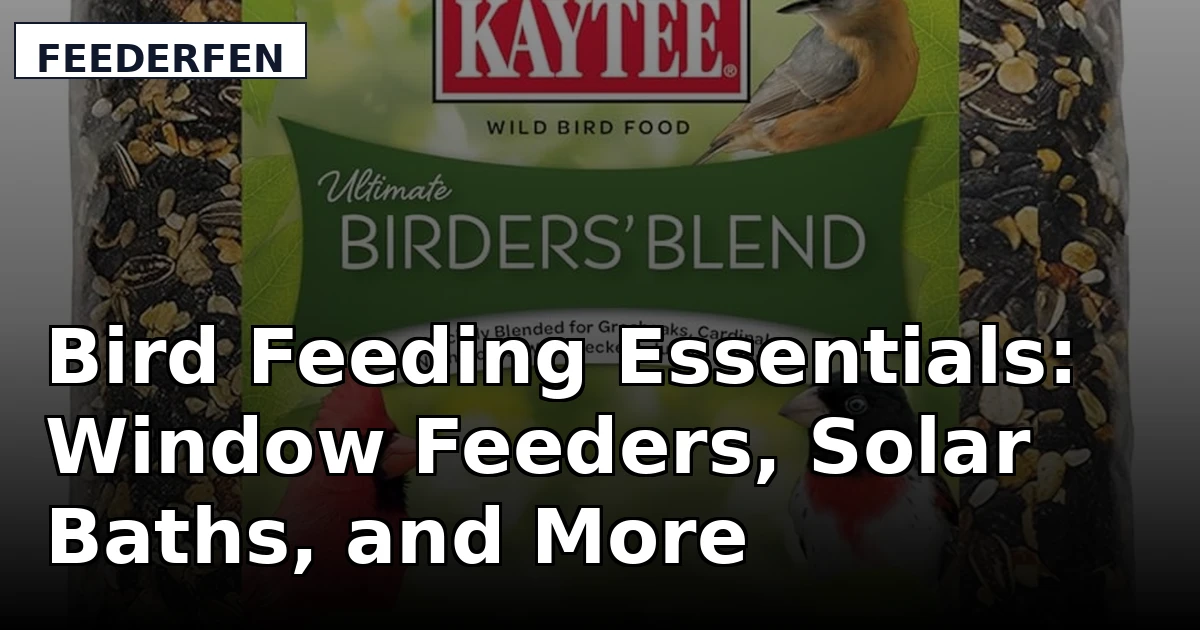
A complete backyard feeding station needs a seed source, a water source, and a viewing point. The Kaytee Ultimate Birder's Blend covers the seed side with a 10-pound bag of mixed wild bird seed. The Mademax Solar Bird Bath Fountains adds moving water with a 1.4W solar pump and eight nozzle options. The Clear Acrylic Window-Mounted Bird Feeder gives you a close-up view without luring birds into window strikes. And the eWonLife 2 Pack of 16 oz saucer hummingbird feeders brings in the migrants that skip the seed tray entirely. None of these is the single best option for every yard, but together they cover what most new feeding stations are missing.
4 useful options
| Model | Best fit | What stands out |
|---|---|---|
| Clear Acrylic Window-Mounted Bird Feeder | Up-close viewing without window strikes | Acrylic body with an easy-clean design |
| Kaytee Ultimate Birder's Blend Food | Everyday seed foundation for a mixed flock | 10-pound bag of wild bird seed |
| Mademax Solar Bird Bath Fountains | Adding moving water to a dry yard | 1.4W solar pump with 8 nozzles and 4 brackets |
| eWonLife 2 Pack 16 oz Saucer Hummingbird Feeders | Bringing hummingbirds to the garden | Two saucer feeders, 16 oz each |
The close-up pick: Clear Acrylic Window-Mounted Bird Feeder
A window feeder does something no pole feeder can: it puts birds at face height, which is why it belongs in every starter setup. The placement rule matters more than the feeder itself. Audubon and most rehab folks I know recommend putting a window feeder within three feet of the glass, because a bird that takes off from the tray hasn't built up enough speed to hurt itself on the glass if it flushes toward the house. That's the distance that prevents the worst kind of bird-feeding accident, the window strike. The trade-off with any window feeder is that you have to see the tray from inside to enjoy it, and that means cleaning the acrylic regularly so the view stays clear. Acrylic scratches if you scrub with anything rough, so a soft cloth and warm water are the right tools. This one's easy-clean design makes that a two-minute job instead of a chore.
The seed foundation: Kaytee Ultimate Birder's Blend Food
Seed is where most new feeding stations go wrong, and it's not the brand that matters, it's the filler. Cheap blends pad the bag with milo and red millet, and in most Northern yards those seeds sit in the tray uneaten, mold in the rain, and turn a platform feeder into a disease risk. The Kaytee Ultimate Birder's Blend is a mixed wild bird seed that gives you a solid starting point without forcing you to buy a separate bag of black-oil sunflower and a separate bag of millet. The 10-pound size is the right first purchase because it lets you figure out your yard's draw before you commit to a 40-pound bulk bag. Once you know which birds visit, you can shift to buying sunflower hearts in bulk for a better cost per pound and zero hull litter under the feeder. For week one of a new station, this blend covers the bases.
The water magnet: Mademax Solar Bird Bath Fountains
If the log has taught me one thing, it's that water brings more species to a yard than any seed blend. From June to August, the bath gets more entries than every feeder combined, because birds need water for drinking and bathing, and moving water is easier for them to spot than a still dish. A solar pump like this one adds that sparkle without an extension cord running across the yard. The honest trade-off is that a solar pump only performs at full strength in direct sun. On cloudy days the flow slows, and on overcast stretches it may barely dribble. That's fine for birds, a slow trickle still catches their eye, but don't expect a fountain show at dusk. Pair it with a shallow basin and add a flat rock or a few pebbles so birds have a perch that keeps their feet dry, and you've built the most reliable bird attractor in the yard.
The migrant pair: eWonLife 2 Pack 16 oz Saucer Hummingbird Feeders
Hummingbirds don't touch seed, so a station that wants the full species list needs a nectar feeder hung before the first ruby-throated arrives. In my yard the first-of-season date has landed on April 20th two years running, and the feeder has to be clean and full before that. The saucer style is the right shape for a reason: a wide, shallow reservoir is far easier to rinse than a long tube with tiny ports, and that matters because a hummingbird feeder that's a chore to clean becomes a mold experiment by August. The two-pack is the practical part here. One feeder hangs while the other soaks, dries, and gets fresh nectar, so the birds never wait through your cleaning day. Mix plain white sugar and water at four parts water to one part sugar, skip the red dye entirely, and change the nectar every few days in summer heat.
Prices and availability may change. Product images, names, and retailer links must be matched by verified ASIN. Do not state a current price, rating, stock status, or measured result without current evidence.
Why water brings more birds than seed
The science behind the water-first advice is simple. Birds lose water through respiration and need to drink daily, and they bathe regularly to keep feathers in working order for insulation and flight. A clean, accessible water source is a survival requirement, not a luxury, which is why a yard with a good bath outdraws a yard with only feeders, especially in the heat of summer when natural puddles dry up. Moving water is a stronger signal than still water because the glint and ripple are visible from higher in the air, and birds have learned that moving water is more likely to be clean and fresh. That's what a solar fountain adds: the motion that turns a quiet basin into a landmark. The practical limit is sunlight. Solar pumps are at their best on bright days, and the flow drops as clouds roll in, so position the bath where it gets the most hours of direct sun and don't expect much after dusk.
Feeder hygiene and disease prevention
A dirty feeder is a disease vector with a perch. In rehab intakes, I've seen house finch eye disease and salmonella, and both trace back to feeders that nobody took apart since fall. The fix isn't a hose spray, it's a real cleaning routine. Take the feeder apart completely, soak the pieces in a dilute bleach solution, about one part bleach to nine parts water, scrub away any mold or seed mush, rinse thoroughly, and let everything dry before refilling. In warm weather, do this weekly. In winter, every two to three weeks is usually enough, but check for wet seed and mold more often during thaws. Hummingbird feeders need the same discipline, with nectar changed every few days when temperatures climb. A clean station is the difference between birds that visit and birds that survive the visit.
- Start with one seed feeder and one blend, like the Kaytee Ultimate Birder's Blend, and hang it near cover but away from busy paths.
- Add a water source within a few feet of that cover, and keep the basin shallow with a rock or perch inside.
- Position any window feeder within three feet of the glass so birds can't build up strike speed.
- Clean every feeder weekly in warm weather, taking it fully apart and soaking it in dilute bleach.
- Keep a simple log of what visits and how fast the seed empties, then adjust the blend and placement based on what you actually see.
Practical guidance for a new station
- Place feeders within ten feet of shrubs or trees so birds have an escape route, but keep them far enough from dense cover that cats can't ambush the tray.
- Buy seed in bulk once you know your draw, and check the ingredient list for filler like milo and red millet before you buy.
- Change hummingbird nectar every three to four days in summer, and skip red dye entirely.
- Keep bath water shallow, no more than two inches deep, and add a flat stone so birds can bathe without submerging.
- Clean feeders with a dilute bleach soak, rinse until you can't smell bleach, and dry completely before refilling.
Which option should you choose?
Choose the Clear Acrylic Window-Mounted Bird Feeder when you want eye-level viewing from inside and you're willing to clean acrylic weekly. Choose the Kaytee Ultimate Birder's Blend Food when you're setting up a new station and need a solid seed foundation that covers a range of feeder birds. Choose the Mademax Solar Bird Bath Fountains when your yard lacks water and you want to draw more species than seed alone can bring. Choose the eWonLife 2 Pack 16 oz Saucer Hummingbird Feeders when hummingbird season is your priority and you want a second feeder ready for the cleaning rotation.
The honest caveat is that my log is a record of my yard, not yours. Your local species, climate, and squirrel population will change what works best, and a feeder that draws goldfinches in Wisconsin may sit quiet in Arizona. Start with one item from each category, watch what visits, and adjust from there.
The bottom line
A complete backyard feeding station doesn't need twenty feeders. It needs a dependable seed source, fresh water, and a way to watch the birds safely. The Kaytee blend covers the food, the Mademax solar fountain covers the water, the acrylic window feeder covers the viewing, and the eWonLife pair covers the hummingbirds. Set them up with clean habits and smart placement, keep a simple log of what shows up, and the yard will do the rest of the work for you.