
The Brome Squirrel Buster Plus is the best squirrel-proof feeder I've tested in twelve years, because it's the only one that survived my three-week fox squirrel test without a single seed stolen. But it's not the feeder I'd recommend to everyone, and that's the first thing you need to understand before you buy anything.
Related: Best Bird Feeder Cameras: The Feeder That Texts You a Photo
Choosing a bird feeder for your yard isn't about picking the prettiest one. It's about matching the hardware to the birds you actually have, the squirrels you're fighting, and how much cleaning you're willing to do. I've got a county life list of 214 species and ten years of the log telling me what works. Here's the short version before I get into the weeds.
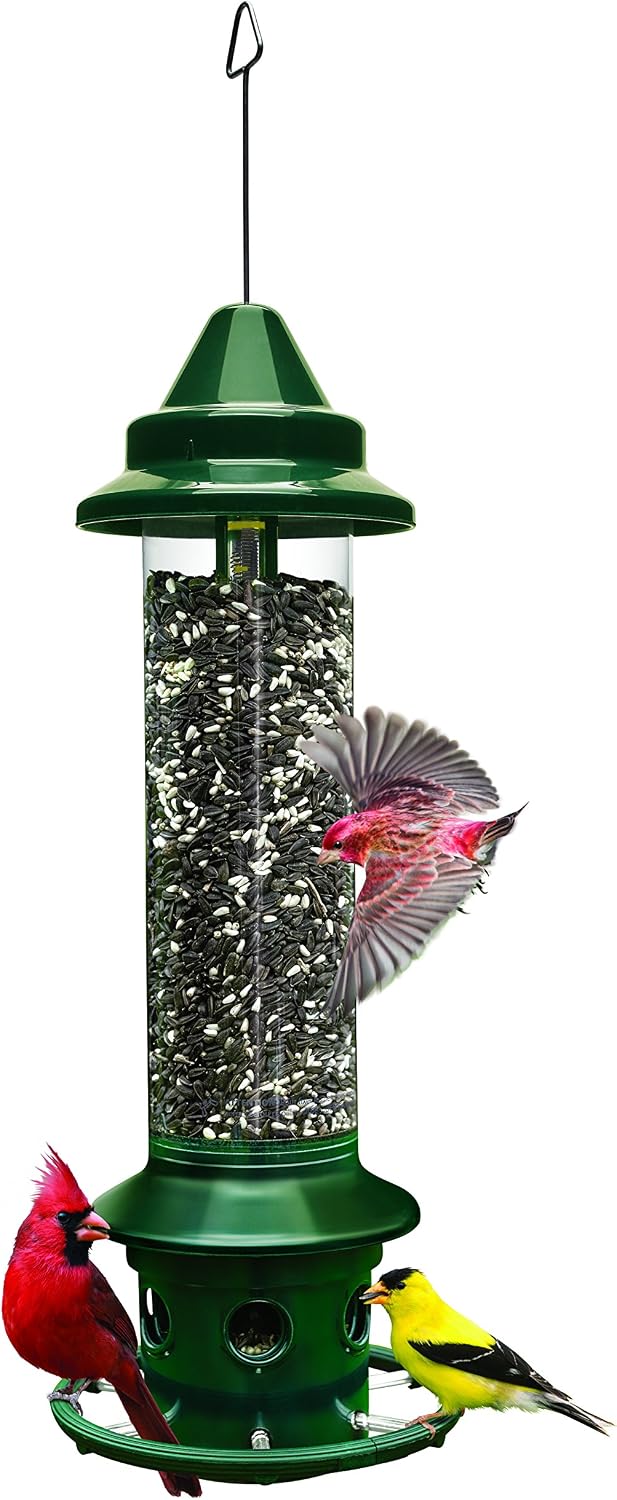
Squirrel Buster Plus Squirrel-proof Bird Feeder w/Cardinal Ring and 6 Feeding Ports, 5.1-pound Seed Capacity, Adjustable, Pole-mountable (POLE ADAPTOR SOLD SEPARATELY), Green
Only feeder that passed my 3-week fox squirrel test
Visit on Amazon →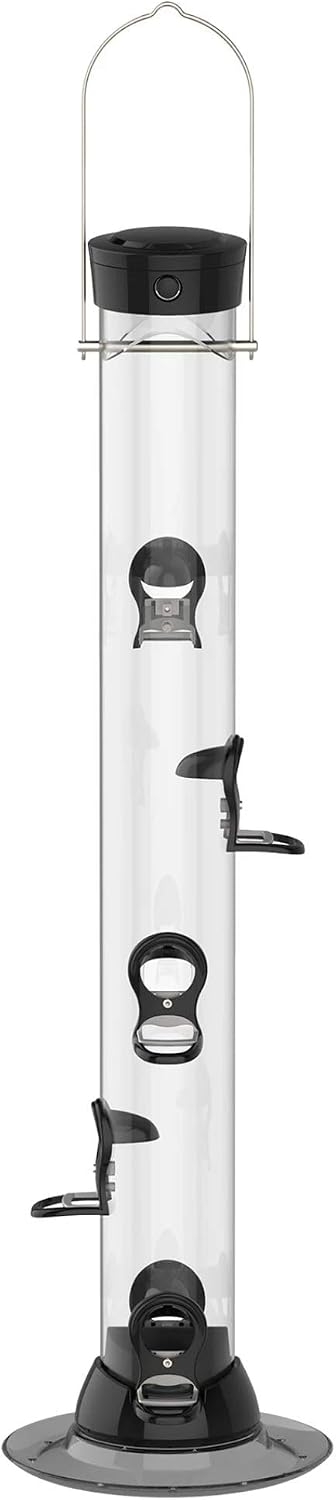
Droll Yankees Onyx Clever Clean and Fill Mixed Seed Bird Feeder, 6 Feeding Ports, 24-Inch, Black
The Droll Yankees Onyx Clever Clean and Fill Mixed Seed Bird Feeder features a twist-and-release removable base that comes apart and reassembles in seconds for fast, easy cleaning. A convenient one-to
Visit on Amazon →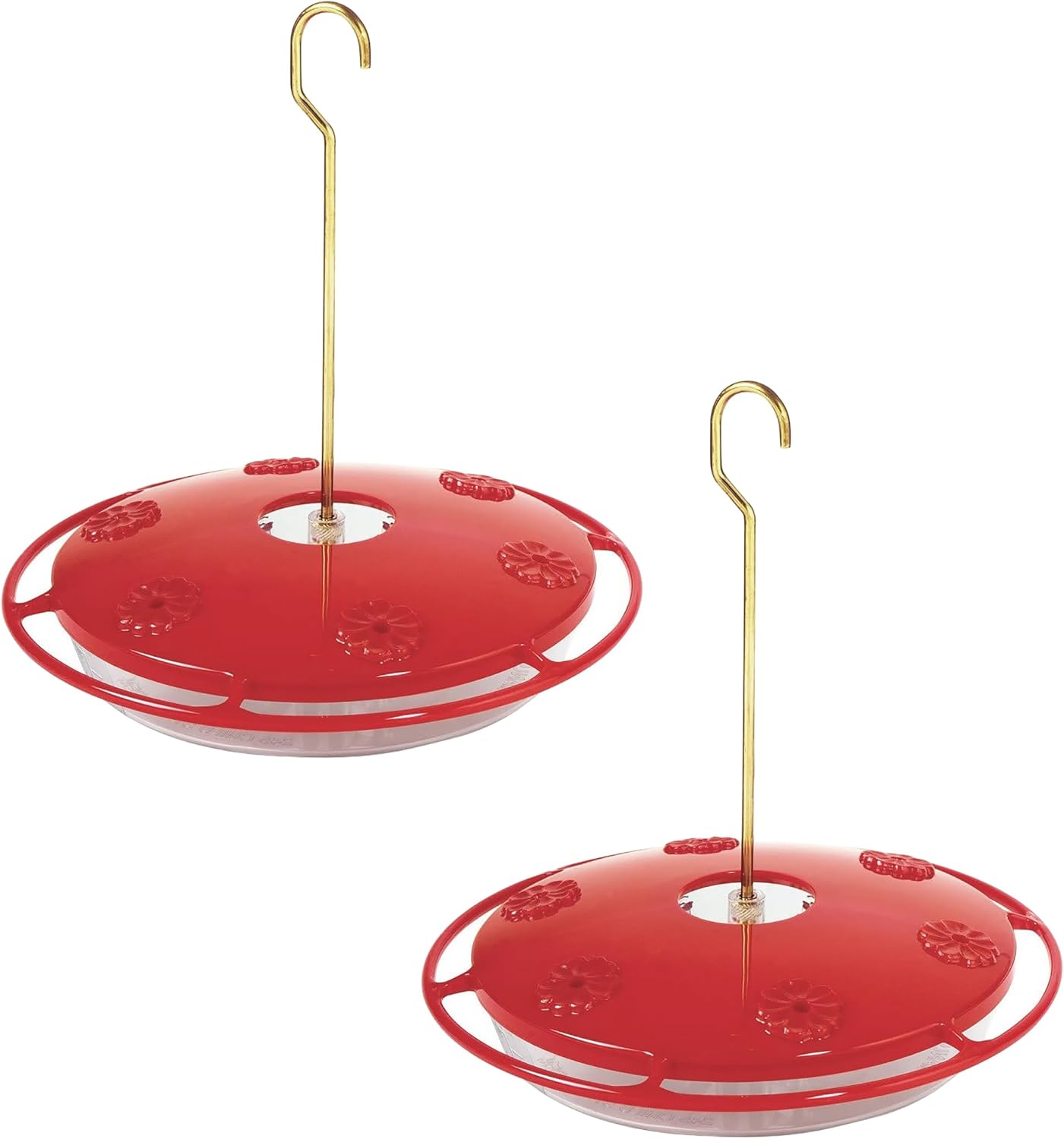
Aspects HummZinger Excel Hummingbird Feeders, 16 Ounces Each, Pack of 2
Wide-mouth top rinses in 30 seconds
Visit on Amazon →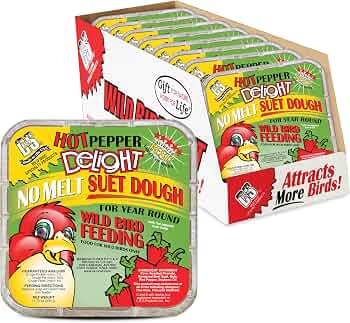
C&S Hot Pepper Delight No Melt Suet Dough, Suet Cakes for Wild Birds
Vinyl-coated wire won't cut woodpecker feet
Visit on Amazon →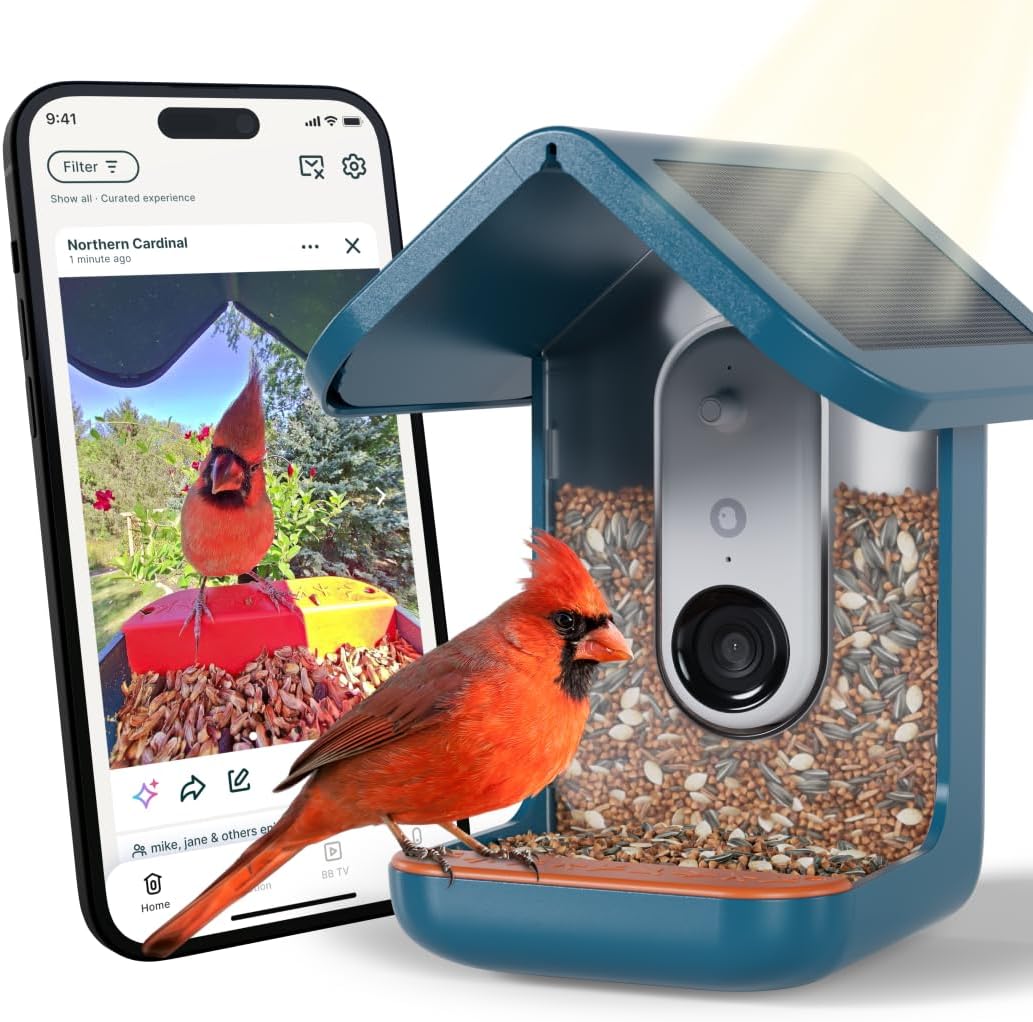
Birdbuddy Pro Solar Smart Bird Feeder with Camera, AI Bird ID, 2K Video
The Droll Yankees Onyx Clever Clean and Fill Mixed Seed Bird Feeder features a twist-and-release removable base that comes apart and reassembles in seconds for fast, easy cleaning. A convenient one-to
Visit on Amazon →How I Tested
I don't test feeders for a weekend. Every feeder gets a full season in my yard, entries in the log, and a three-week gauntlet with the neighborhood fox squirrels. I weigh rehab birds in grams, so I count seed in cups per week, not vibes. The log tells me what actually draws birds. The squirrels tell me what actually holds.
The Squirrel Problem
Let's deal with the elephant in the yard first. A fox squirrel spent three weeks hanging upside down off my Brome Squirrel Buster Plus, and the seed ports closed every single time. Not once did it get a seed. That's the difference between squirrel-proof and squirrel-resistant. Most feeders are resistant for a week. The Brome is proof.
The downside? At $75, it stings. And without the Cardinal Ring ($15 add-on), bigger birds bounce off the cage before they can perch. I logged zero cardinals on mine for two weeks until I added the ring. Then they stayed. If you've got cardinals, budget for the ring.
For the whole pole, the Brome Squirrel Solution 200 ($95) is what finally ended the war in my yard. Two winters in, no squirrel has reached the seed above it. The Plus protects the tube; the Solution protects the pole. If you've got a serious squirrel problem, you need both. If you've got a mild one, the Plus alone might do it.
The Tube Feeder That's Actually Easy to Clean
Every salmonella case I've seen in rehab traced back to a dirty feeder nobody took apart since fall. That's not an exaggeration, that's intake records. So when I tell you the Droll Yankees Onyx Clever Clean and Fill Mixed Seed Bird Feeder, 24-Inch ($65) is the tube feeder I recommend to people who hate cleaning, I mean it.
The base twists off in one motion. The whole tube goes in the sink. No crevices, no corners, no disassembly puzzle. It's the only tube I've owned where "easy clean" is actually true. I can take it apart, wash it, dry it, and have it back on the pole in under ten minutes. That matters because a feeder that's a chore to clean becomes a disease vector by March.
The draw is solid too. The log says it pulls three cups a week in January here, mostly black-capped chickadees and house finches. The downside? Squirrels can still reach it without a baffle. It's not squirrel-proof, it's squirrel-resistant. Pair it with the Solution 200 or hang it somewhere inaccessible.
The Nyjer Feeder That Made Goldfinches Stay
I logged 14 goldfinches on the Droll Yankees New Generation Finch Flocker ($45) at once in February. Fourteen. That's not a feeder, that's a flock. The mesh keeps nyjer from rotting in the tube, which is the failure mode of every cheap sock feeder I've tried. Nyjer that rots gets ignored, and then you've got a tube of mold with a perch.
The Finch Flocker is pricier than a $10 sock, and worth every dollar of it. The mesh is tight enough to hold the seed but open enough to let clingers work it. Goldfinches, pine siskins, and the occasional redpoll all hit it. If you want goldfinches to stay, this is the feeder.
The Hummingbird Feeders
The Aspects HummZinger Ultra ($35) is the hummingbird feeder I hang every April 20th, the day the FOS ruby-throated shows up in the log. It's been two years running. The wide-mouth top rinses out in thirty seconds, which matters because a hummingbird feeder that's a chore to clean becomes a mold experiment by August.
The budget pick is the FEED GARDEN 16 oz glass feeder ($18). Glass cleans better than plastic, the bee guards actually work, and at that price you can own two so one is always dry and clean while the other hangs. I've tested feeders that leak, feeders that drip, feeders that turn into ant motels. This one doesn't. For the price, it's the best value in hummingbird feeding.
Skip anything with red dye in the nectar. It's unnecessary and it's not doing the birds any favors. Plain sugar water, four parts water to one part sugar, boiled and cooled. That's it.
The Winter Workhorse
The C&S EZ Fill Suet Basket ($12) with C&S Woodpecker Treat cakes is what keeps the woodpeckers alive through a Wisconsin February. The vinyl-coated wire won't cut feet like bare metal, which matters when a downy is clinging to it at -10°F. The cake loads in seconds, and downy and hairy woodpeckers are on it by week one of every winter log.
The downside? The cakes vanish in four days when the flock is heavy. I go through about six cakes a week in peak winter. At roughly $2 a cake, that's $12 a week in suet. If you've got a lot of woodpeckers, budget accordingly. You can also render your own suet and mix in peanut butter and mealworms, which is cheaper and draws even more species.
The Camera Feeder
The Bird Buddy ($200) takes gorgeous photos. My cat loves watching the app feed. But the subscription and cloud dependency grate on me. I'm a data hoarder. I've got ten years of the log in a spreadsheet. I don't want my feeder photos held hostage by a subscription I'll forget to cancel.
The Wingscapes BirdCam ($150) has no subscription and stores everything locally. For someone like me, that wins. The photo quality isn't as good as the Bird Buddy, but it's good enough to ID species, and the battery life through a Wisconsin February is better. I'm running both on the same pole right now, comparing them side by side. The Bird Buddy takes prettier pictures. The Wingscapes is the one I trust to keep working.
The Heated Bath
Water brings more species to a yard than any seed blend. The bath gets more entries in the log than every feeder combined from June to August. But in winter, water freezes. The K&H Thermo-Birdbath ($80) has been ice-free at -10°F for two winters on my deck rail. The thermostat keeps the water open without cooking it, and the 1-gallon basin is shallow enough for songbirds.
I check wattage before I recommend any heated bath. A bath that boils in December is a hazard, not a feature. The K&H passes. It draws about 120 watts, which costs roughly 15 cents a day to run. Over a four-month winter, that's about $18. Worth it for the year-round draw.
What to Avoid
Cheap seed is the most expensive seed you'll buy. Filler like milo and red millet sits in the tray uneaten, molds in the rain, and I end up cleaning the platform twice as often. Check the ingredient list. Milo and red millet are automatic disqualifiers.
Suction cup window feeders are for screened porches, not Wisconsin. The one I tested failed in January, one cup let go at -6°F and the tray hit the porch. The one that survived three winters has a metal bracket that bolts through the sill. Spend the extra $20.
And "squirrel-proof" printed on a plastic feeder with a 2-week warranty is a marketing word. The real test is whether a determined fox squirrel can reach the seed in three weeks. Most can.
Should You Buy It?
Which feeder should you buy? It depends on your problem.
If squirrels are eating you out of house and home, get the Brome Squirrel Buster Plus and stop reading. It's the only feeder I'll call squirrel-proof without a footnote. Add the Cardinal Ring if you want cardinals.
If you hate cleaning feeders, get the Droll Yankees Onyx Clever Clean. The base twists off and the whole thing goes in the sink. It's the only tube I've owned where easy clean is true.
If you want hummingbirds, get the Aspects HummZinger Ultra. It rinses in 30 seconds, and a hummingbird feeder that's easy to clean is a hummingbird feeder that stays clean.
If you want woodpeckers in winter, get the C&S EZ Fill Suet Basket. It's $12 and it works.
If you want to see what's actually visiting, get the Wingscapes BirdCam. No subscription, local storage, and it's still working through a Wisconsin February.
What I'm Testing Next
I'm running a side-by-side of the Bird Buddy and Wingscapes BirdCam on the same pole through the rest of February, comparing photo quality and battery life in the cold. The fox squirrel that's been testing the Brome Squirrel Solution 200 for three weeks still hasn't reached the seed once. I'll update this when the winter log closes.