Twelve years of hanging feeders and ten years of keeping the log have taught me that a bird feeder and seed comparison is never really about how the hardware looks in a photo. The numbers that matter are cups per week, minutes to disassemble, and how many days a bag lasts before the tray turns into a mold experiment. My log is a spreadsheet with ten years of entries: species, first-of-season dates, and how fast each feeder empties. It has overruled more product pages than I can count.
The four items here get asked about in the same breath even though they do different jobs: a smart camera feeder, a 32-ounce hummingbird feeder, and two five-pound bags of sunflower. They compete for the same pole space and the same monthly budget, and choosing wrong costs you a season, not a week.
Related: Feeder Placement and Window Strikes: Where to Hang What
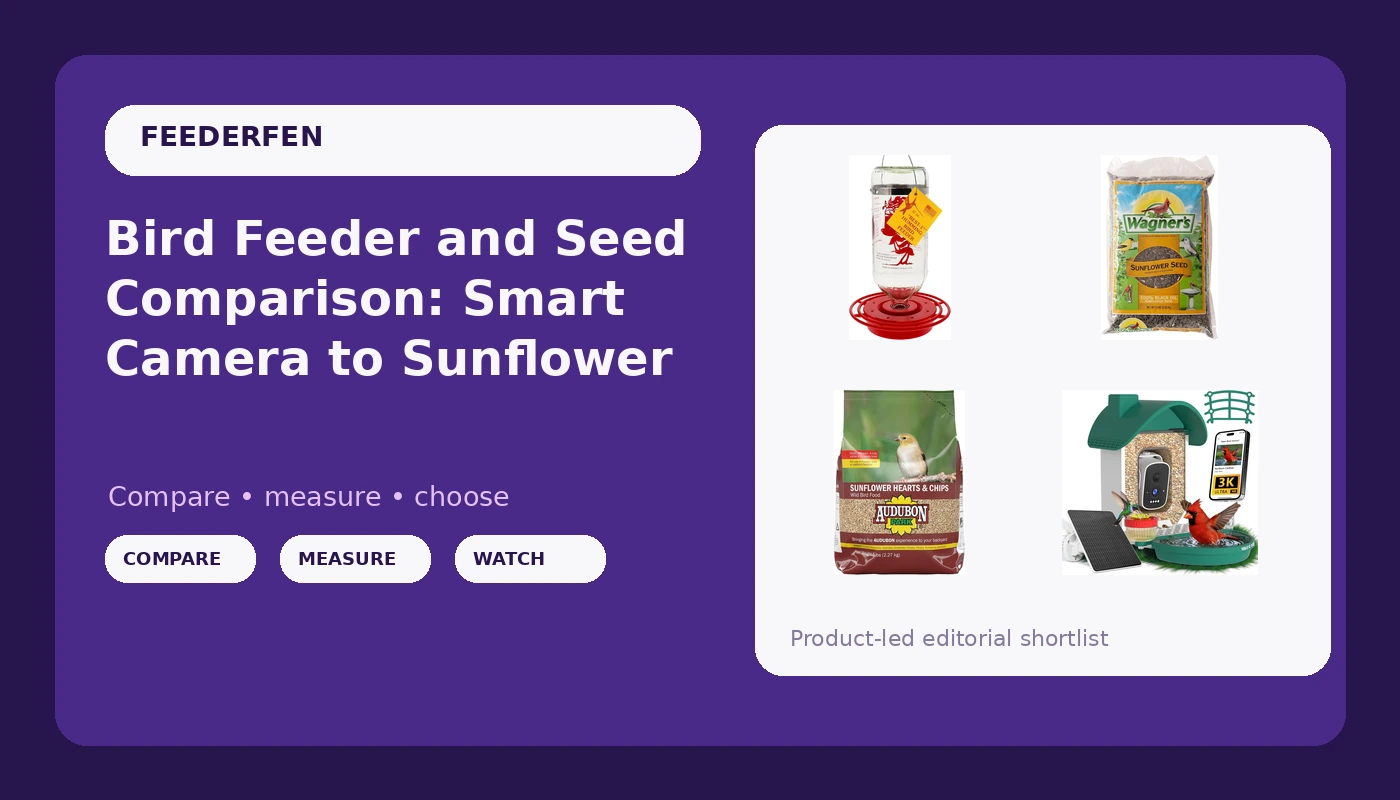
Best overall for most yards: the 3K Smart Bird Feeder with Camera if you want identification and photos, the Wagner's black oil sunflower if you want the most birds per dollar, the Birds Choice Best-1 if hummingbirds are the point, and the Audubon Park hearts and chips if you feed over a deck or under an HOA.
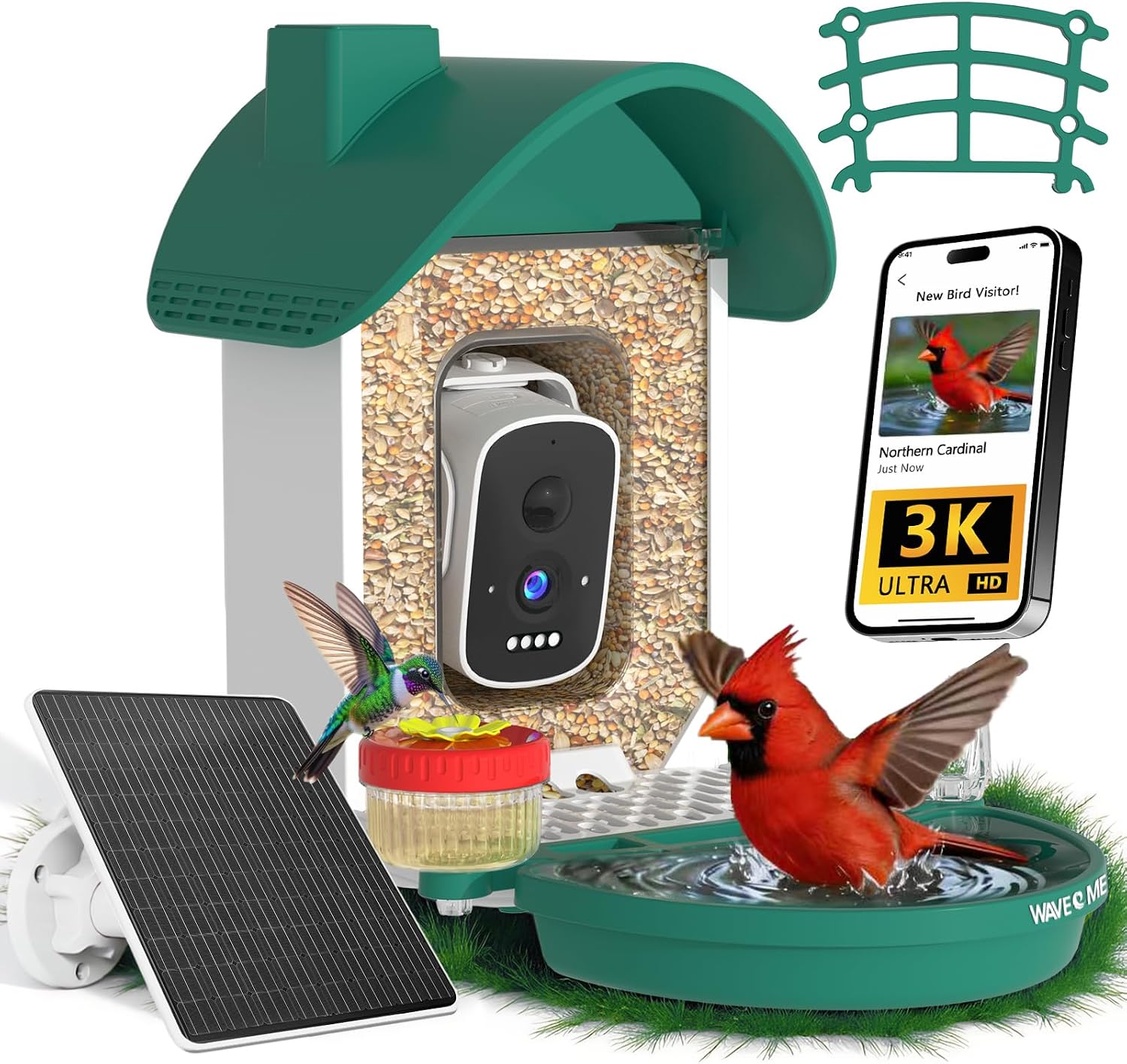
3K Smart Bird Feeder with Camera, AI Bird Recognition & Instant Alerts
Turns a feeder into a log that fills itself in, with alerts and names attached to visitors
Most expensive of the four, depends on wifi and an app, and the camera housing adds parts to clean
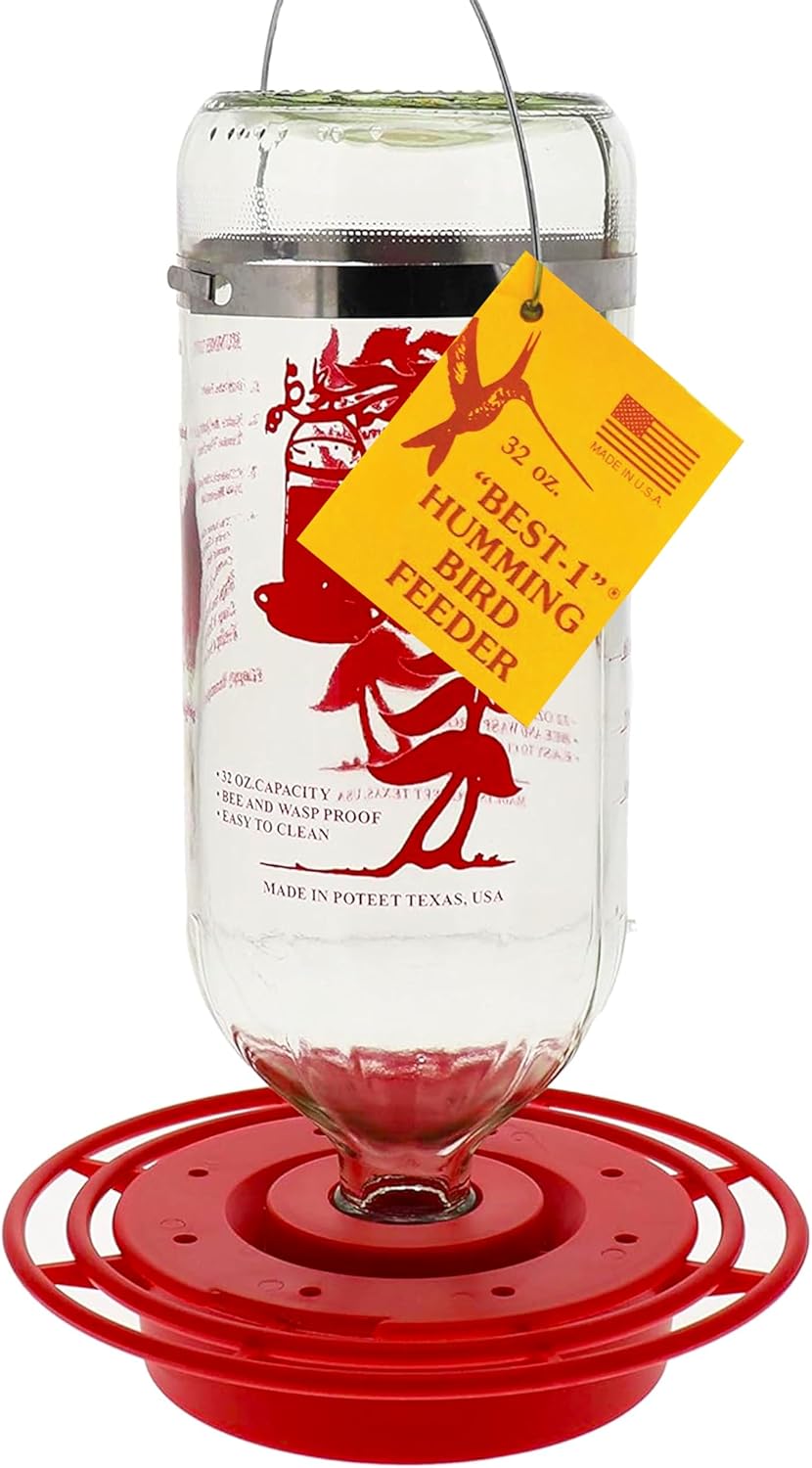
Birds Choice Best-1 Hummingbird Feeder | 32oz Nectar Capacity | Clear
32 ounces stretches refills through peak July draw, and the clear reservoir shows level and cloudiness at a glance
Seasonal in a cold climate, and a full reservoir can sit too long in a slow spring
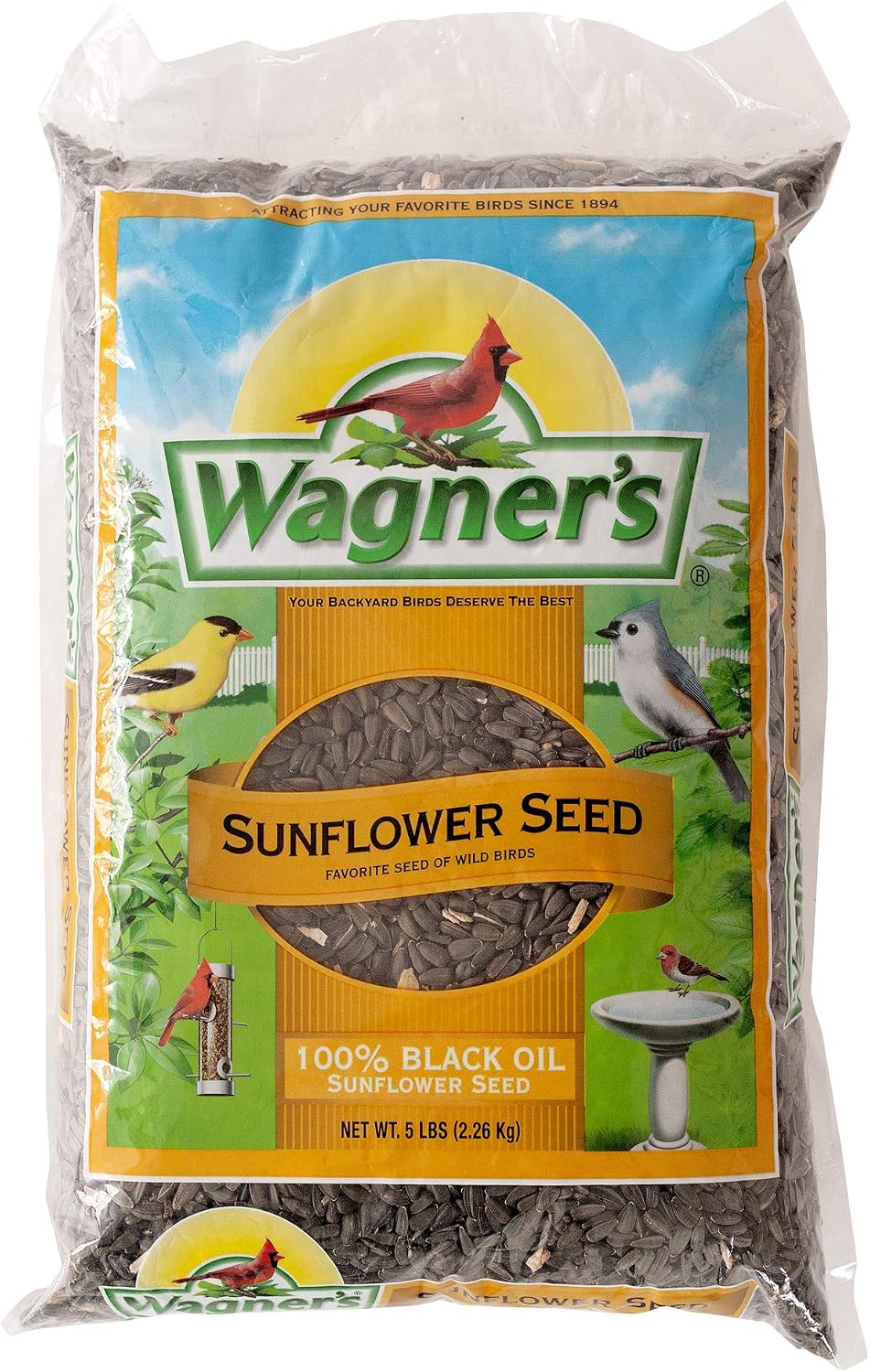
Wagner's 52023 Black Oil Sunflower Seed Wild Bird Food, 5-Pound Bag
Single-ingredient seed, highest draw per cup of anything I put out, works in every feeder type
Hulls litter the ground and sprout, and five pounds goes fast
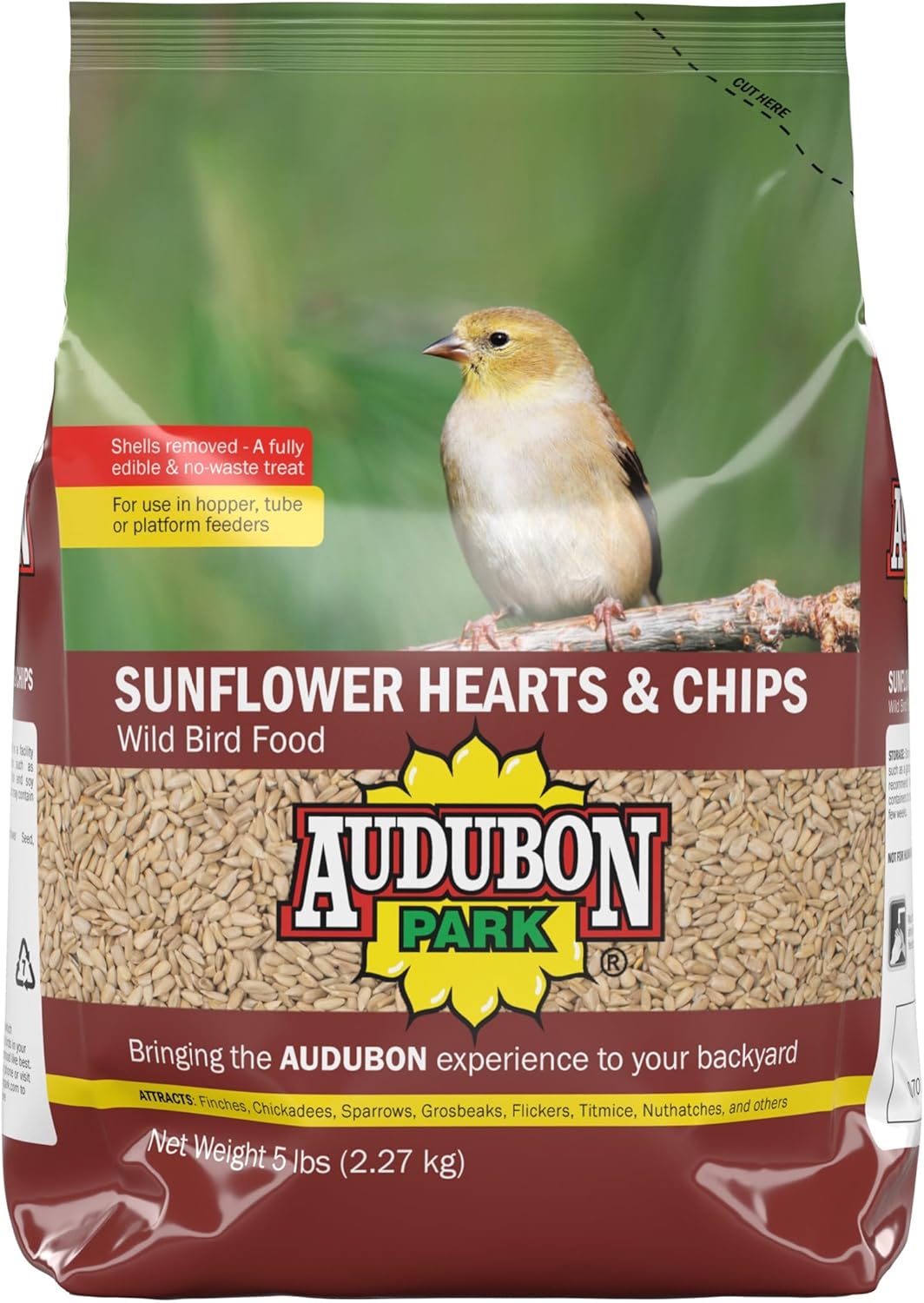
Audubon Park Sunflower Hearts & Chips Wild Bird Food, No Mess Sunflower Seeds for Birds, 5-Pound Bag
No hulls means no mess under the feeder, which is what decks and HOAs actually require
Higher price per pound, and exposed oil goes stale faster
Prices and availability were captured from Amazon Creators API and may change.
How I judge a feeder or a bag of seed
Every product that earns a spot on my fence answers five questions. Will birds actually use it, or will it sit pretty on the pole? Can I take it apart and clean it in under ten minutes? What does a determined fox squirrel do to it in week one? Will it survive a Wisconsin February, freeze, thaw, freeze? Would I still hang it after four seasons?
Two of those questions are non-negotiable for me. The cleaning question comes out of rehab intake records: every salmonella case I have handled traced back to a feeder nobody had taken apart since fall, and house finch eye disease spreads the same way, bird to bird at a dirty port. The squirrel question comes from three weeks of letting the neighborhood fox squirrels work on a feeder before I write a word about it. If a squirrel reaches seed once, the honest word is resistant, not proof.
For seed, I read the ingredient list before anything else. Milo and red millet are automatic disqualifiers, because filler sits in the tray uneaten, molds in the rain, and forces me to clean the platform twice as often. Single-ingredient bags are easy to judge. Blends are where the money disappears.
One honest note about this comparison: none of these four has run a full season in my yard, so this is not a season-long test report. What follows is the criteria I apply and the trade-offs the products themselves already reveal.
The smart camera feeder: a log that fills itself in
The 3K Smart Bird Feeder with Camera is the only item here that changes what you know rather than what you feed. The pitch is straightforward: a camera at the feeder, software that names what it sees, and a phone alert when something lands. For anyone who has squinted at a blurry shape on a tube feeder and guessed, that is a real upgrade.
Where it earns its place: identification and record keeping. My log takes ten minutes a day in May. A camera feeder that labels visitors and timestamps them does part of that work, and it does it while you are at work. If your birding happens in short windows before and after a job, that matters more than any feeder feature.
Where it loses: cost, dependency, and cleaning. It is the most expensive item in this comparison, and camera feeders generally push you toward an app, a wifi signal at the pole, and sometimes a subscription for the features you actually want. I have said for years that I love the photos my camera feeder produces and refuse to pay a monthly fee for them, and that tension does not disappear with a different brand. Check three things before buying: whether the useful features sit behind a subscription, whether the feeder body comes apart for cleaning the same way a plain tube does, and whether the camera can focus at the distance your birds actually feed, which for a window or deck mount is often under two feet.
The hummingbird feeder: 32 ounces is a July answer
The Birds Choice Best-1 Hummingbird Feeder, with its 32-ounce nectar capacity and clear reservoir, is built for the peak of the season. On April 20, when the first ruby-throated shows up in my log two years running, one hummingbird cannot empty a reservoir that size before the nectar spoils. By mid-July, with a dozen birds fighting over ports, 32 ounces is the difference between refilling every day and refilling every third day.
The clear reservoir is the underrated part. You can see the nectar level without taking the feeder down, and you can see when it starts to go cloudy, which is your cue to dump it, rinse it, and mix fresh. In heat, nectar is a two-to-three-day product. A feeder you can rinse in under a minute gets cleaned. A feeder that takes twenty minutes gets ignored, and an ignored hummingbird feeder is a mold experiment by August.
Where it loses: it is seasonal. From October to April in Wisconsin it hangs in the garage, which means its cost per month of actual use is far higher than a seed feeder's. Large capacity is also a liability in cool weather, when a full reservoir can sit for a week with two birds visiting. If your spring is slow, mix smaller batches rather than filling it to the top.
Also: skip the red dye. Clear nectar in a feeder with red parts is enough, and dye is one of the few things in this hobby with no upside at all.
Black oil sunflower: the baseline everything else is measured against
Wagner's 52023 Black Oil Sunflower Seed comes in a five-pound bag, and black oil sunflower is the seed I use as the control in every comparison. In my log, black oil and the store-brand equivalent draw the same cups per week, which tells me the brand matters far less than the seed type. Chickadees, nuthatches, cardinals, house finches, and grosbeaks all work it, and it runs in every feeder I own: tube, hopper, platform, and tray.
Its advantage is that it is a single ingredient. No filler, nothing to pick through, nothing that molds while the birds sort around it. The draw per cup is the highest of anything I put out.
Its disadvantage is the hulls. Black oil sunflower leaves a carpet of shells under the feeder. On a lawn that is fine, on a deck it is a chore, and in a bed of mulch it means volunteer sunflowers in June. The five-pound bag is also small. If you feed more than a couple of cups a week, you will be buying constantly, and the per-pound math only works in your favor at larger sizes. Buy the small bag to try it, then move up.
Sunflower hearts and chips: the no-mess trade-off
Audubon Park Sunflower Hearts & Chips is the same seed with the hull already removed, broken into hearts and smaller chips. The practical result is zero hull litter. Nothing sprouts under the feeder, nothing blows onto the neighbor's driveway, and nothing gets tracked into the house. For a deck, a balcony, or any yard with an HOA that counts complaints, that is worth real money.
The chips are also easier for small beaks. Goldfinches and chickadees that would otherwise work around a whole seed can take a chip on the first visit, and the bag gets used down to the last cup instead of leaving a layer of dust at the bottom.
Two costs come with it. First, price per pound: hulled seed costs more than the same weight of black oil, because you are paying for the part you used to sweep up. Second, shelf life. Once the hull is off, the oil is exposed, and exposed oil goes rancid. Hearts and chips need an airtight container, a cool spot, and a bag size you can finish in a month or two. If you buy big and store it in a hot garage all summer, you will pour stale seed into a tray and wonder why the birds leave.
Cleaning, disease, and the August gap
Every item in this comparison lives or dies on the same schedule, which is mine: once a week, disassemble, wash in hot soapy water, rinse in a diluted bleach solution, dry completely before refilling. A camera feeder gets the same treatment as a plain tube, plus the camera housing and any port the birds touch. A hummingbird feeder gets it every two to three days in July heat. A seed feeder gets it weekly, and more often in a wet stretch.
I admit the log shows a two-week gap every August when the garden takes over. That gap is exactly why I care so much about the cleaning question at purchase time. A feeder that comes apart in one motion gets cleaned on a busy Tuesday. A feeder with six screws and a hidden seam waits until the weekend, and sometimes until the next weekend.
Wet seed is the other failure mode. When a bag sits open in a humid garage, or a tray gets rained on for three days, the seed clumps and starts to smell. That is when the platform needs a full scrub, not a hose spray. Keeping seed in a sealed container and putting out only what the birds clear in a few days solves most of it.
Water, and the part of the budget nobody plans for
If you are building a yard from scratch, know that water brings more species than seed does from June through August. My bath gets more entries in the log in those months than every feeder combined. If your budget only stretches to one purchase this fall, a feeder and seed is the right call for winter, but plan for a bath by spring.
If you go heated for winter, check the wattage and the thermostat before you buy. A bath that runs wide open in December is a hazard, not a feature, and the good ones hold water open without cooking it.
Which one for which yard
Four items, four jobs, and the honest answer is that they are not substitutes for each other:
- You want photos, alerts, and identification help, and you will pay for it: the 3K Smart Bird Feeder with Camera.
- You want hummingbirds, and you want to refill less often in July: the Birds Choice Best-1.
- You want the most birds per dollar and you do not mind sweeping: Wagner's black oil sunflower.
- You feed over a deck, a balcony, or under an HOA, and you want no mess: Audubon Park Sunflower Hearts & Chips.
The combination I would actually run: a camera feeder on the pole where I sit with coffee in the morning, a plain tube with black oil sunflower for volume, a hummingbird feeder on the deck rail from April to September, and hearts and chips in a window feeder three feet from the glass, which is where a window feeder belongs if you want to prevent strikes. That is four spots and one weekly cleaning session, and that is the number that keeps me honest.
What I'm watching next
Two things, both of which will end up in the log. First, I am running hearts against black oil side by side on the same pole for a month to see whether the draw per cup really differs, or whether it is the litter that changes how often I refill. Second, the camera feeder category keeps moving, and the question I care about is not image quality. It is whether the useful features stay free, because a feeder that needs a subscription to identify a chickadee is a feeder with a monthly bill attached.
The dark-eyed juncos are due any week now, and the FeederWatch counts start again the second weekend of November. That is the real test of anything you hang: does it still draw birds in February, and do you still feel like taking it apart and cleaning it?