
Well, is a heated bird bath really a water feature, or is a water feature really a bird bath? I’ve been keeping the log for ten years now, and I can tell you the difference matters less than the marketing suggests, but the practical choice matters a whole lot. I’ve run a K&H Thermo-Birdbath on my deck rail for two Wisconsin winters, and I’ve had a small recirculating water feature on the ground for three summers. The birds use both. But they use them for different reasons, and one of them is a whole lot more work than the other.
Related: Bird Seed Types Explained And Which Birds They Attract
The short version: birds need water every single day, year-round. They don’t need a waterfall. A shallow, safe, clean water source is the thing that brings the most species to my yard, and it beats every seed blend I’ve ever poured into a tube. The log backs this up. From June to August, the bath gets more entries than every feeder combined. The water feature, on the other hand, gets used, but it’s a maintenance hobby, not a bird magnet.

K&H Pet Products Thermo-Birdbath for Outdoors Heated Gray 1 Gallon 17 X 23.5 X 4 Inches
Ice-free at -10°F, shallow basin, low wattage
Visit on Amazon →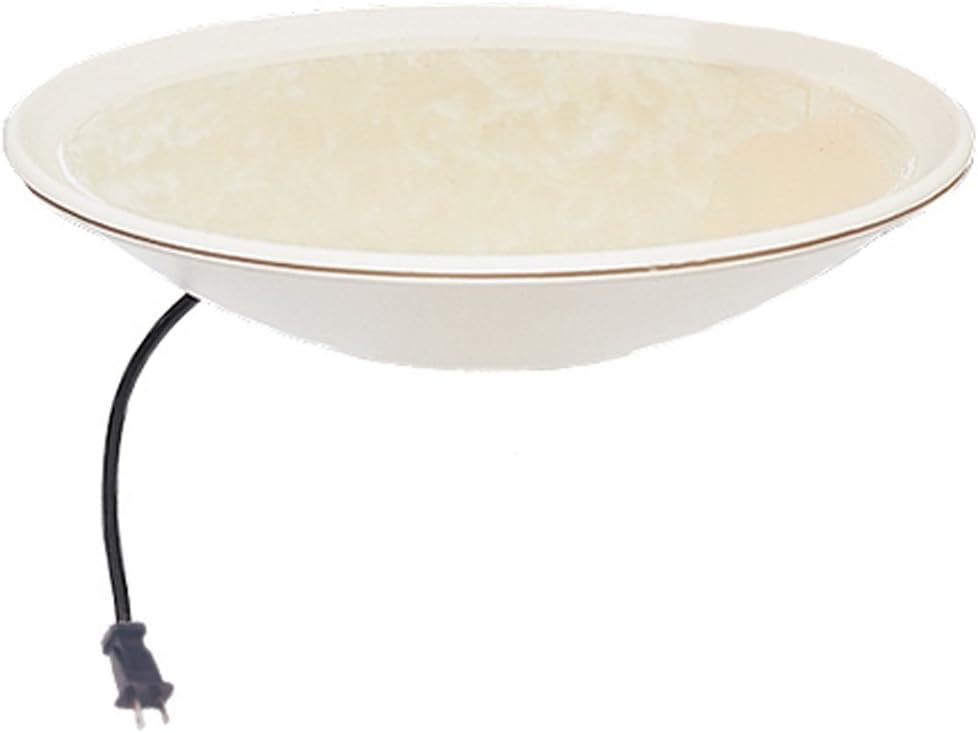
Allied Precision Industries API 600 20-Inch Diameter Heated Bird Bath Bowl (no stand), Light stone color
Cheap, works down to about 20°F
Visit on Amazon →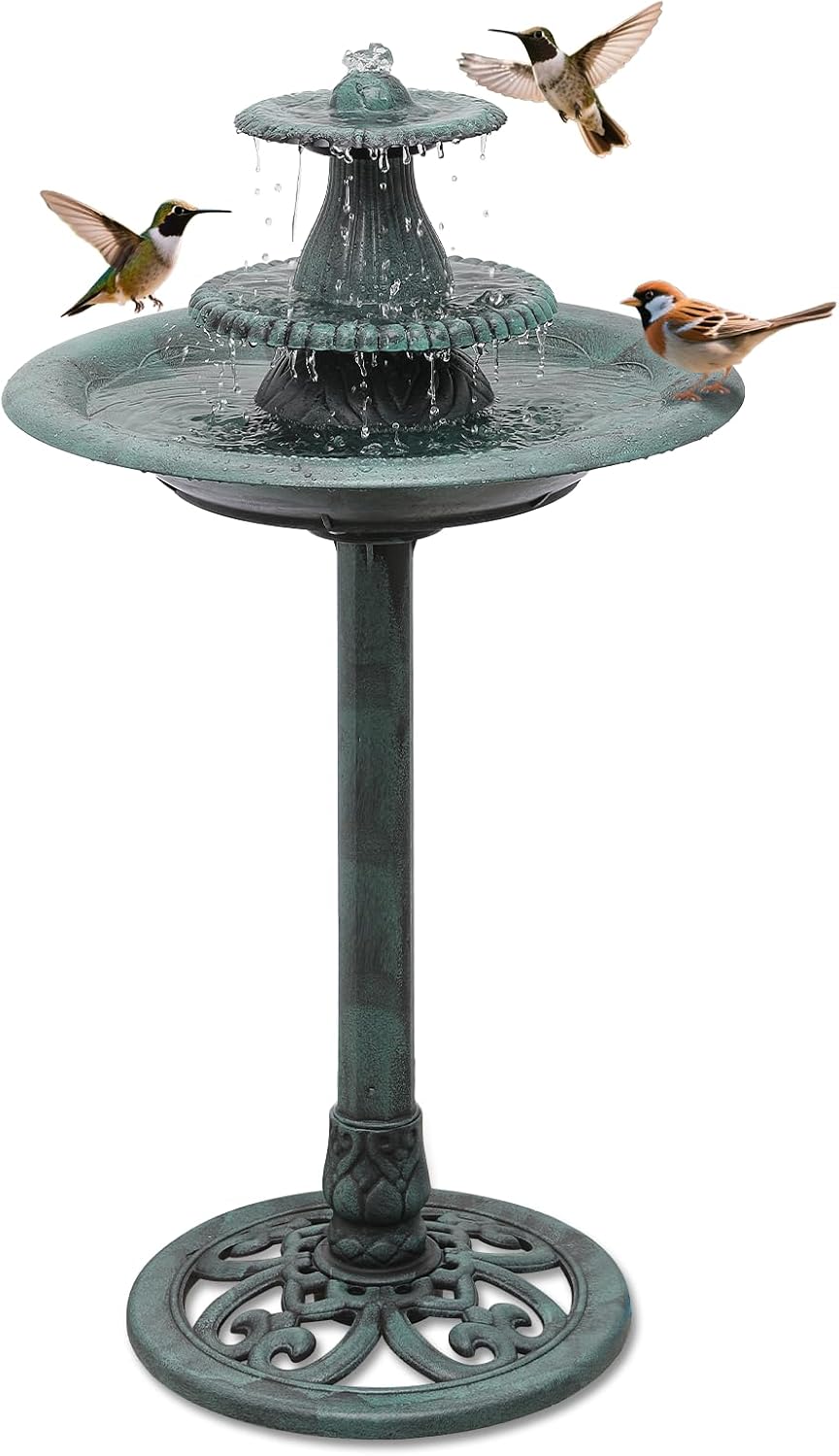
Athena Collection 37" Bird Bath for Outside with Recirculating Pump, Green
20''H Garden Plastic Urn 27'' Waterfall Fountain 27'' Waterfall Fountain 27'' Waterfall Fountain 37'' Height Bird Bath
Visit on Amazon →Athena Collection 37" Bird Bath for Outside with Recirculating Pump, Green
20''H Garden Plastic Urn 27'' Waterfall Fountain 27'' Waterfall Fountain 27'' Waterfall Fountain 37'' Height Bird Bath
Visit on Amazon →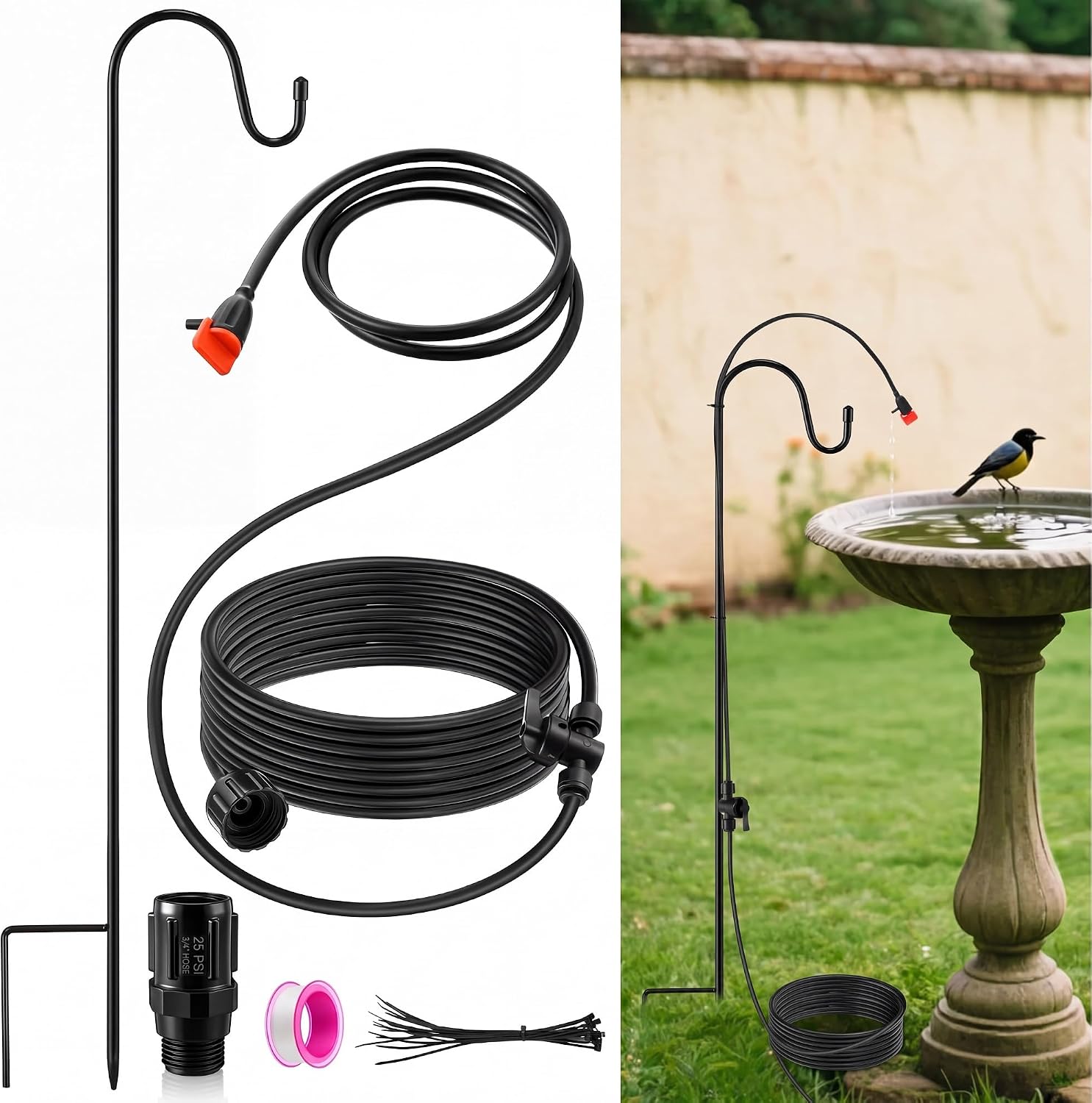 Visit on Amazon →
Dripper Attachment | ~~$15 | Adds sound to any bird bath, cheap | Needs a full sun spot to work with solar |Here is the thing about the marketing. The word “feature” implies it’s better for the birds. It’s not. A water feature is better for you, if you like the sound of running water and the look of a little fountain in the garden. The birds just want a drink and a bath. They don’t care if it’s a ~$200 copper basin or a ~$20 plastic tray from the hardware store. What they care about is depth and safety.
The K&H Thermo-Birdbath, the one that earns its spot
I’ll lead with the flaw. The K&H Thermo-Birdbath is plastic. It looks like a big black saucer on a post, and it’s not going to win any garden design awards. My neighbor has a cast stone pedestal bath that looks like it belongs in a botanical garden, and mine looks like a dog bowl on a stick. I don’t care. It has been ice-free at -10°F for two winters running, and that is the only spec that matters in February.
The basin is 1.5 inches deep at the center, which is shallow enough for songbirds. A robin can bathe in it without drowning. The thermostat keeps the water at around 50°F, which is open water without cooking anything. I checked the wattage before I bought it, and it pulls 120 watts, which is about what a couple of light bulbs draw. It costs me maybe a dollar a week to run in the coldest months. The log shows dark-eyed juncos and house finches on it every day of January.
The cleaning is easy. The basin lifts off the base and rinses out in under a minute. I scrub it with a stiff brush every three days during the winter, because a dirty water source is the same disease vector problem as a dirty feeder. I’ve seen salmonella in rehab intakes, and I don’t want it in my yard.
The generic heated bath, the one I won’t recommend
I tested a cheaper heated bath one winter, a $35 unit from a big box store. The thermostat was the problem. It clicked on and off erratically, and on a mild 35°F day, the water got warm enough to feel like soup. On a cold night, it froze solid. The K&H holds a steady temperature. The cheap one did not. I returned it in February and never looked back.
The other issue was the basin depth. It was 2.5 inches deep, which is borderline for smaller birds. A golden-crowned kinglet is not going to get in there. The K&H is shallow enough that even the tiniest clingers can use it. That matters if you want more than just robins and blue jays.
The recirculating water feature, the pretty one that fights back
I bought a recirculating water feature three summers ago, a small cascading stone number that sits on the ground near the garden. It sounded lovely and the migrants loved it. The log shows a Wilson’s warbler bathing in it in May, which was a FOS for the yard and a real highlight. But the maintenance is relentless.
The pump clogs with algae every two weeks. The basin needs a full scrub and rinse every three days in July, or the water goes green and slimy. Mosquitoes breed in the reservoir if I don’t stay on top of it, and I have to empty the whole thing and store it indoors by October or the freeze will crack the pump. It’s a chore, and by August, the log shows a two-week gap where I let it go because the garden took over. The birds went back to the K&H and the tray on the ground.
For the money, the recirculating feature costs about $130, and I’ve spent another $40 on replacement pumps. The K&H cost $60 once and has run for two winters with zero issues. The cost per day on the water feature is higher, and the birds don’t care about the sound of running water. They care that the water is there.
The solar water feature, the one that quits
A solar water feature is a nice idea until the sun goes behind a cloud. The pump on the one I tested died after one season, and the water stagnated in the shade within a week. I don’t track prices day to day, so I won’t pretend to know what they cost next month, but the ones in the $40 range are not built to last a Wisconsin summer. The K&H has outlived two of them.
The dripper attachment, the cheap trick
If you want the sound of moving water without the pump maintenance, a dripper attachment is the move. It screws onto a regular bird bath and drips water into the basin, which catches the birds’ attention and keeps the water from going stale. It costs about $15, and it turns any shallow bath into a better draw. I ran one on a tray bath for a summer and the goldfinches found it within a day. The downside is it needs a garden hose or a nearby spigot, which means it’s a warm-weather tool.
What the log actually says
The data is clear. The K&H Thermo-Birdbath has the most entries in the log from November through March, and the recirculating feature has the most from May through June. The difference is that the K&H works every day without asking me for anything, and the water feature works only when I keep up with it. If you want to attract the most species, put out a shallow, clean, ice-free bath and keep it clean. If you want a garden ornament that also happens to water birds, get a feature, but know you’re signing up for pump maintenance.
The bottom line
Choose the K&H Thermo-Birdbath if you want birds on your deck every day of the year and you don’t want to think about it. Choose a recirculating water feature if you want the sound of running water and you’re willing to scrub a pump every two weeks. The birds will use both, but the bath is the workhorse and the feature is the hobby. I’ve lived with both for years, and the log doesn’t lie: the bath gets the birds.