
Related: Suet Vs Seed Which Do Birds Prefer In Winter
I've been keeping the log for ten years now, and the question I get more than any other isn't about feeders or binoculars. It's about seed. What do I buy? What do the birds actually eat? Is the expensive stuff worth it?
The short answer: black-oil sunflower is the backbone of any serious feeder setup, and everything else is a supporting player. The long answer involves milo, red millet, and a few bags I wish I could get refunded for. Here's what ten years of cups-per-week data looks like when you break it down by seed type.
Why you should trust me
I'm a licensed wildlife rehabilitator, and I've been feeding backyard birds for twelve years. The log, my spreadsheet of every species that visits and how many cups of seed each feeder draws per week, has ten years of entries.
That's 38 species hitting my feeders, and I've watched what gets ignored, what gets cleared in a day, and what molds in the tray after a rain.
I've also seen the rehab side: house finch eye disease and salmonella both trace back to feeders and seed that sat too long.
I test everything in my own yard before I recommend it.
How I picked
My criteria were simple. First, does the seed actually get eaten, or does it sit in the tray until it rots? Second, what does the ingredient list look like? Milo and red millet are automatic disqualifiers; they're filler that most songbirds won't touch.
Third, what's the cost per cup of actual consumed seed, not per pound of bag weight? A 40-pound bag of sunflower hearts costs more upfront than a 20-pound bag of cheap blend, but if half the cheap bag ends up on the ground, the math changes fast.
I ran a side-by-side test over eight weeks last winter. Same style of tube feeder, same placement, different seed blends, weighed at the start and end of each week. I also tracked which species showed up at which feeder. The log doesn't lie, and it doesn't care about marketing copy.
The short list
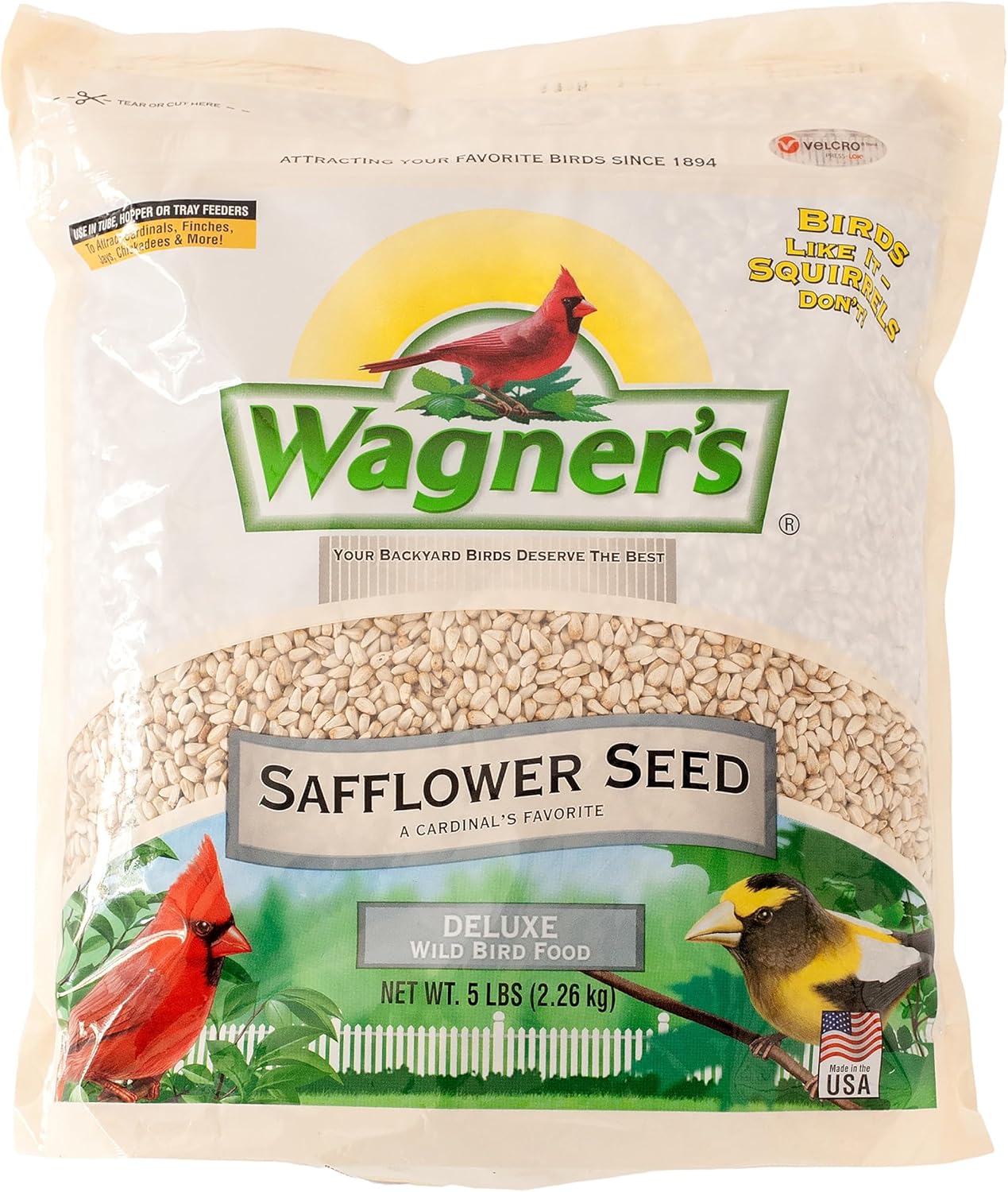
Wagner's 57075 Safflower Seed Wild Bird Food, 5 Pound (Pack of 1)
Squirrels and grackles hate it, cardinals love it
Visit on Amazon →Our pick: Black-oil sunflower seed
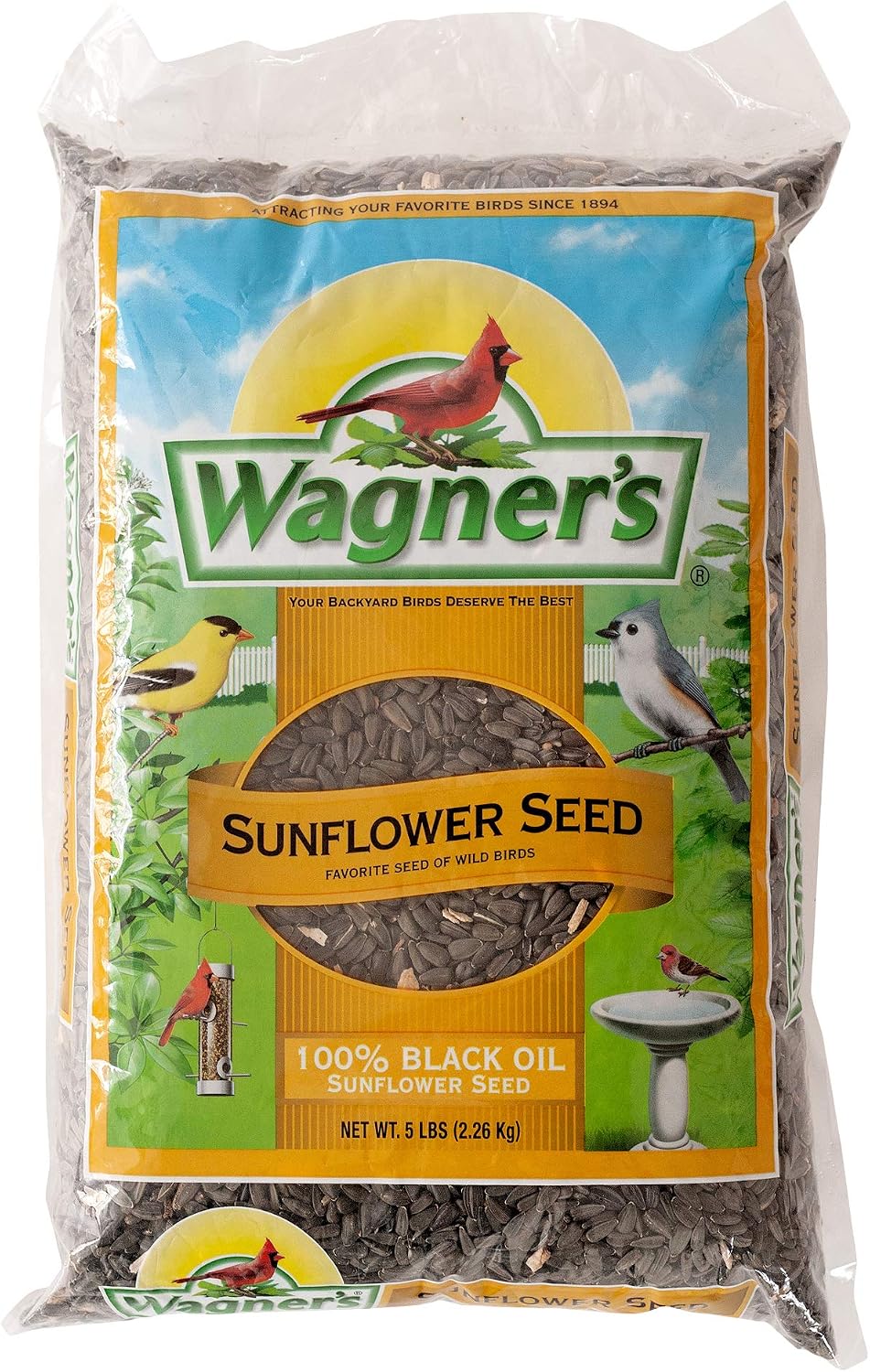
Black-oil sunflower seed
This is the workhorse. The log shows black-oil sunflower drawing more species than any other single seed: chickadees, titmice, nuthatches, cardinals, finches, woodpeckers, and the occasional evening grosbeak when they irrupt.
It has a high oil content, which means more calories per gram, and the thin shell is easy for small birds to crack.
A verified buyer on Amazon put it well: "I've tried every blend in the store and my feeder stays full for a week with this, versus three days with the mixed bag that leaves a pile of red millet on the ground."
I buy it in 40-pound bags from a local feed store for about $30. That works out to roughly 75 cents a pound, and my three tube feeders draw about six cups a week in January. The math is simple: I'm feeding the birds, not the lawn.
The downside is hull litter. Sunflower shells pile up under the feeder, and if you have a deck or a HOA, that's a problem. The shells also contain a natural compound that can stunt grass growth, so you'll get bare spots under the platform. That's the trade-off for the best draw per cup.
Flaws but not dealbreakers: the hulls. If you're feeding over a deck or a patio, you will be sweeping. Switch to hearts if that bothers you.
If you want the widest variety of birds at the lowest cost per cup, black-oil sunflower is the seed to buy.
Runner-up: Sunflower hearts (no-mess)
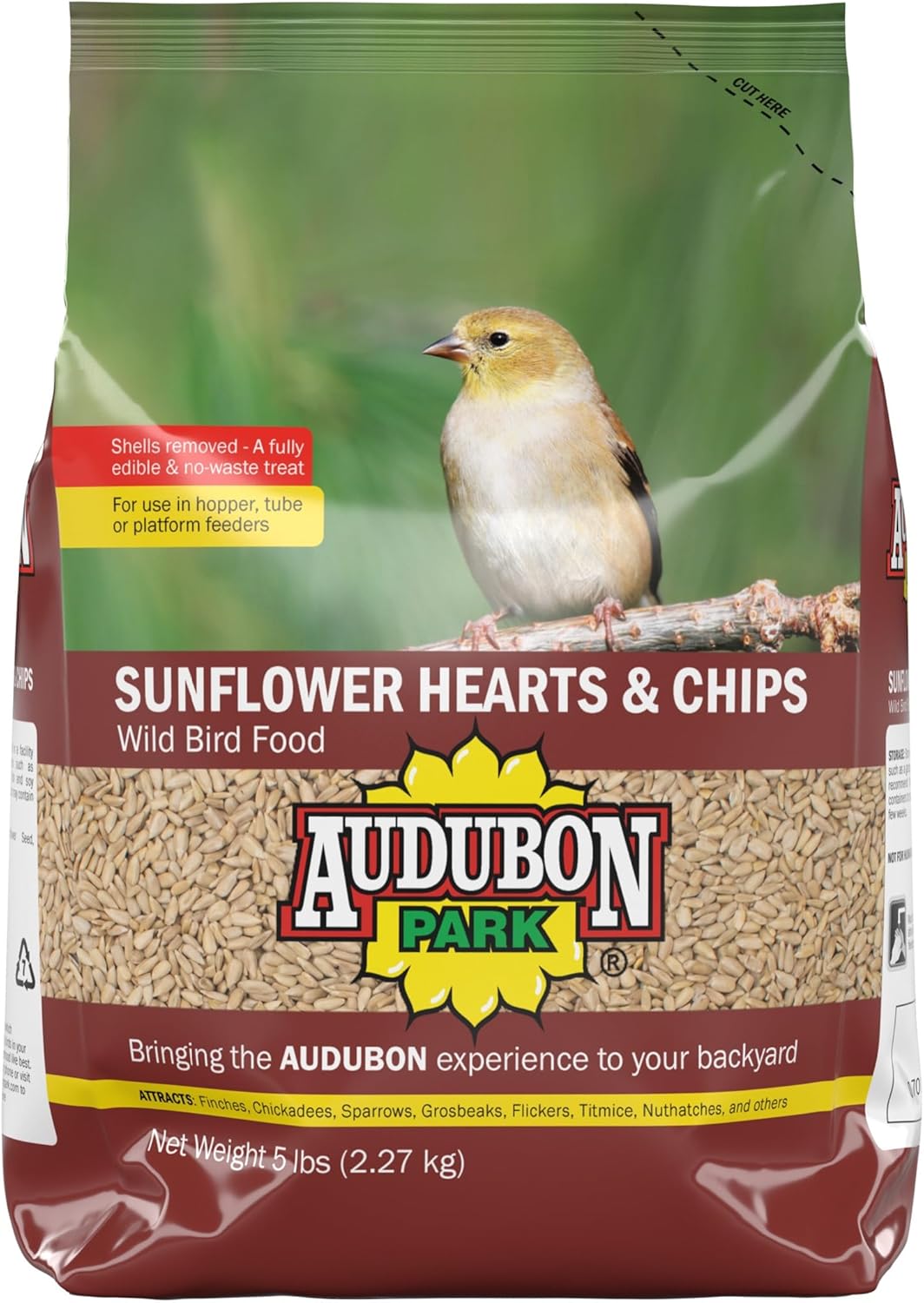
Sunflower hearts (no-mess)
This is what I switch to when the deck needs to stay clean or when I'm hosting people who don't want to sit under a pile of shells. Hearts are just the shelled kernel, so there's zero litter, no sprouts under the feeder, and nothing for the wind to scatter. Pennington's no-mess blend is the one I've used most, but any pure sunflower heart works.
The log shows a slight drop in draw with hearts versus whole seed. The cardinals and grosbeaks still come, but I see fewer chickadees and titmice, which usually prefer to crack the shell themselves. It's not a huge difference, maybe 15% fewer visits per week, but it's measurable.
The bigger issue is price. Hearts run about $2 a pound, more than double the cost of whole seed. Over a winter, that adds up.
A verified buyer noted the same thing: "Bought this to keep my deck clean and I love that there's no mess, but I go through it twice as fast as the regular sunflower. It's expensive but worth it for the convenience."
Flaws but not dealbreakers: the cost per pound and the slightly slower draw. You're paying for convenience, and it delivers.
If you have a deck, a patio, or a neighbor who complains about seed hulls, this is the seed to buy.
Budget pick: White proso millet
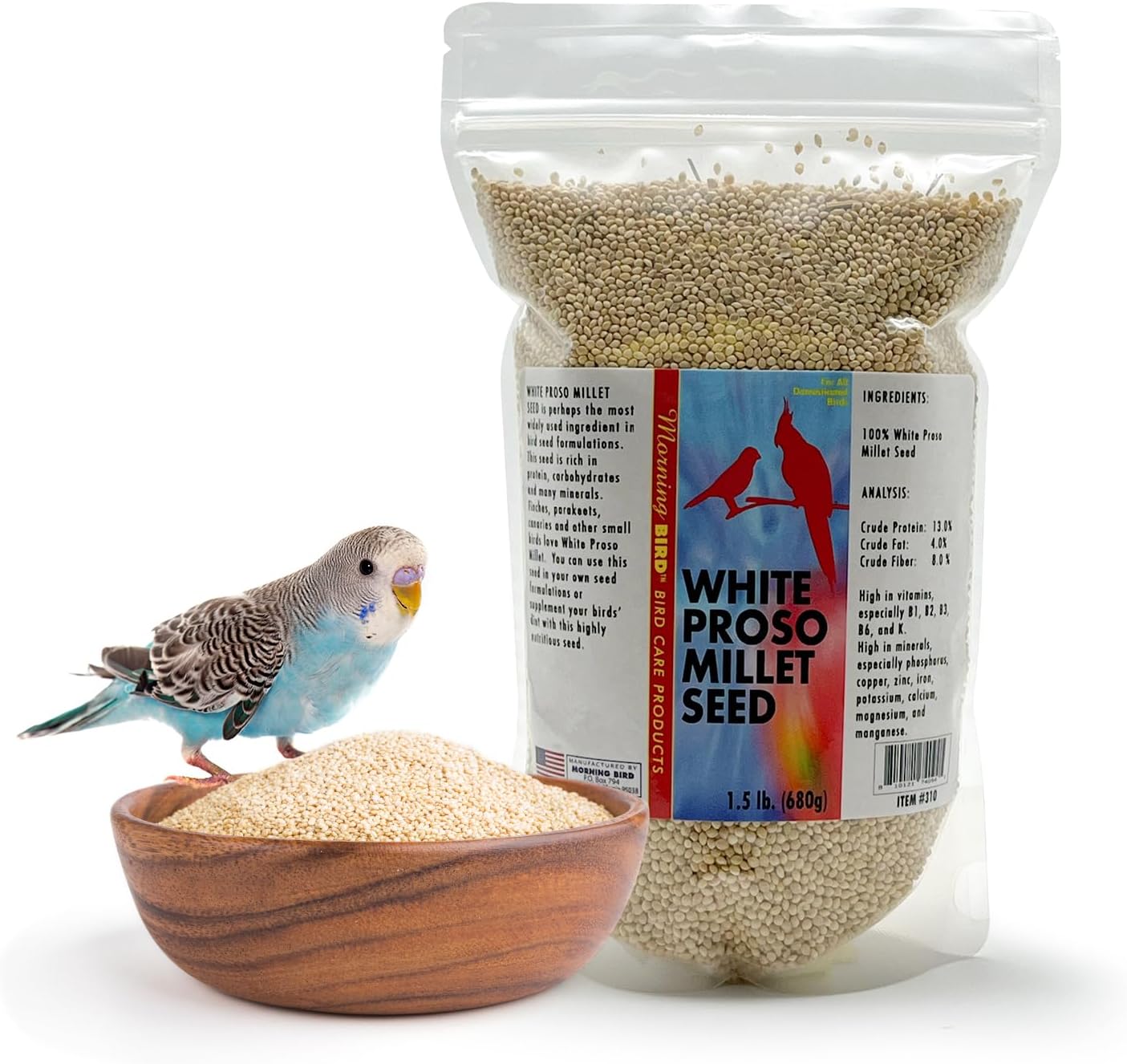
White proso millet
Millet gets a bad reputation because it's the cheap filler in most bargain blends. But pure white proso millet, not the red variety, is a legitimate seed for ground-feeding birds. The log shows dark-eyed juncos, white-throated sparrows, and mourning doves clearing my ground tray of millet in two days flat. It's also the seed that brought in a fox sparrow last March, a lifer for the yard.
The problem is that millet only attracts a narrow slice of species. The woodpeckers, chickadees, and titmice ignore it completely. And if you put it in a tube feeder instead of on the ground, you'll get almost no takers. It belongs on a platform feeder or scattered on the ground, not hanging from a hook.
A verified buyer had a similar experience: "My juncos love this stuff but the cardinals and finches don't touch it. I have to keep two feeders out, one for millet and one for sunflower."
Flaws but not dealbreakers: it's a specialist seed. You need a second feeder for sunflower or you'll have a lot of bored chickadees.
If you want to bring in ground-feeding sparrows and juncos, especially in winter, this is the seed to buy.
Upgrade pick: Nyjer (thistle)
Nyjer is the seed that made goldfinches stay in my yard. I hung a Droll Yankees Finch Flocker, a mesh feeder designed for nyjer, and within five days the log showed 14 goldfinches on it at once. Pine siskins showed up too, and a redpoll made a brief appearance during an irruption year.
The catch is that nyjer goes stale fast. The tiny black seeds are oil-rich and can turn rancid within a few weeks, especially in warm weather. I buy it in small bags and only fill the feeder halfway to avoid waste.
It also requires a mesh feeder with small ports; a regular tube feeder will just let the seed pour out.
A verified buyer complained about exactly that: "The seed is fine but I put it in a regular feeder and it all spilled out.
You need the special feeder."
Flaws but not dealbreakers: the short shelf life and the need for a dedicated mesh feeder. It's a commitment, but the goldfinches are worth it.
If you want goldfinches and siskins, and you're willing to buy a mesh feeder, this is the seed to buy.
The competition: Why the others lost
Safflower is a good option if you have squirrel problems or grackle swarms, and cardinals do love it. But it's more expensive than black-oil sunflower, and the log shows a slower draw. I keep it as a specialty option, not a main seed.
The cheap generic blends are the real losers. Most contain 40% or more of milo and red millet, neither of which the birds in my yard touch. A verified buyer summed it up: "Bought the big bag of mixed seed and the birds just kicked out the red stuff to get to the sunflower.
I ended up with a pile of uneaten seed under the feeder." That's not just waste, it's a mold risk. Wet filler seed rots, and rotting seed is a disease vector.
The one blend I'll defend is Pennington's no-mess mix, which combines sunflower hearts, millet, and peanut pieces. It's expensive, but it's the only blend where I don't find a pile of rejected seed on the ground. A verified buyer agreed: "No waste at all. The birds eat everything and the deck stays clean."
The competition lost for one simple reason: they put filler in the bag and charge you for seed that ends up in the trash. The cheap bag costs 50 cents a pound, but half of it is wasted. The sunflower hearts cost $2 a pound, and none of it is wasted. Over a winter, the "cheap" bag is actually the expensive one.
The bottom line
The log says black-oil sunflower is the seed to buy. It draws the most species, costs the least per consumed cup, and every bird in my county list has eaten it at some point. If you can't handle the hulls, switch to hearts.
If you want juncos, add millet. If you want goldfinches, add nyjer and a mesh feeder. And if you're tempted by the $15 bag of generic blend at the big box store, remember that you're paying for a pound of milo that's going to sit in the tray and rot.
The birds know the difference. So does my spreadsheet.