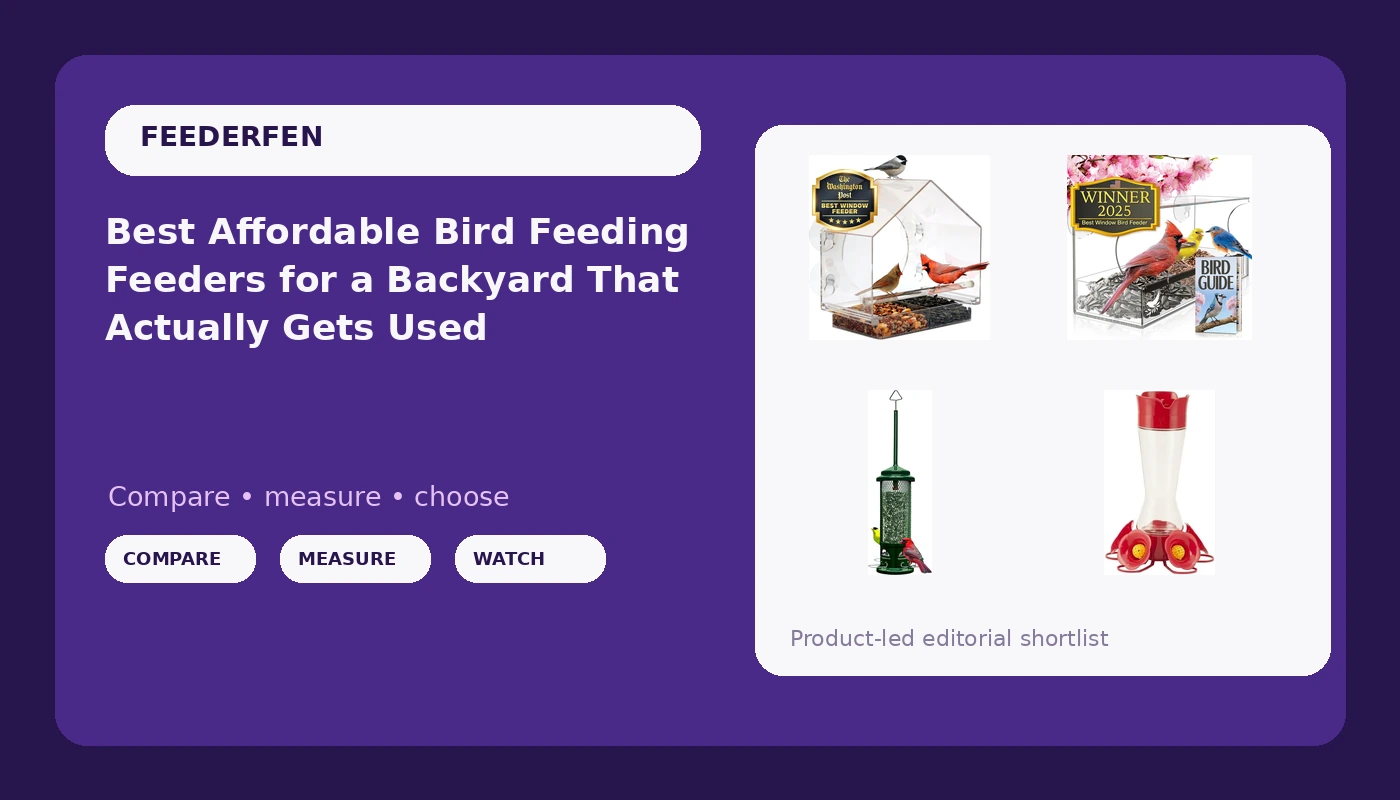
Most of us do not start with a plan. You hang one feeder, a chickadee finds it in about four minutes, and by the next weekend you are standing in the seed aisle trying to decide whether you need a tube, a tray, a window mount, or all three. That is the moment when a cheap feeder stops being cheap, because the wrong one empties too fast, grows mold in a corner you cannot reach, or gets chewed apart in a week. This guide to the best affordable bird feeding feeders is about spending carefully the first time: six feeders that cover the jobs a backyard actually has, from a window mount for close looks to a large-capacity tube for a pole, with notes on what each one is genuinely good at and where it gives ground.
Related: Squirrel-Proof Bird Feeders: What Survives Three Weeks of Fox Squirrels
Quick answer
The Youvip Metal Roof Bird Feeder is the strongest fit for a first feeder on a budget because the metal roof and chew-proof body address the two failures that end cheap feeders early: squirrel teeth and a plastic base that splits after a freeze. Choose the Squirrel Buster Legacy instead when squirrels have already cleaned out everything else you have hung.
What makes affordable bird feeding feeders worth comparing
A feeder earns its place only if it holds seed that local birds actually eat, comes apart far enough to be washed properly, and survives a winter without cracking at the base. Everything below clears those bars in different ways, and the differences that matter most are mounting style, port count, and how much of the body is metal rather than plastic.
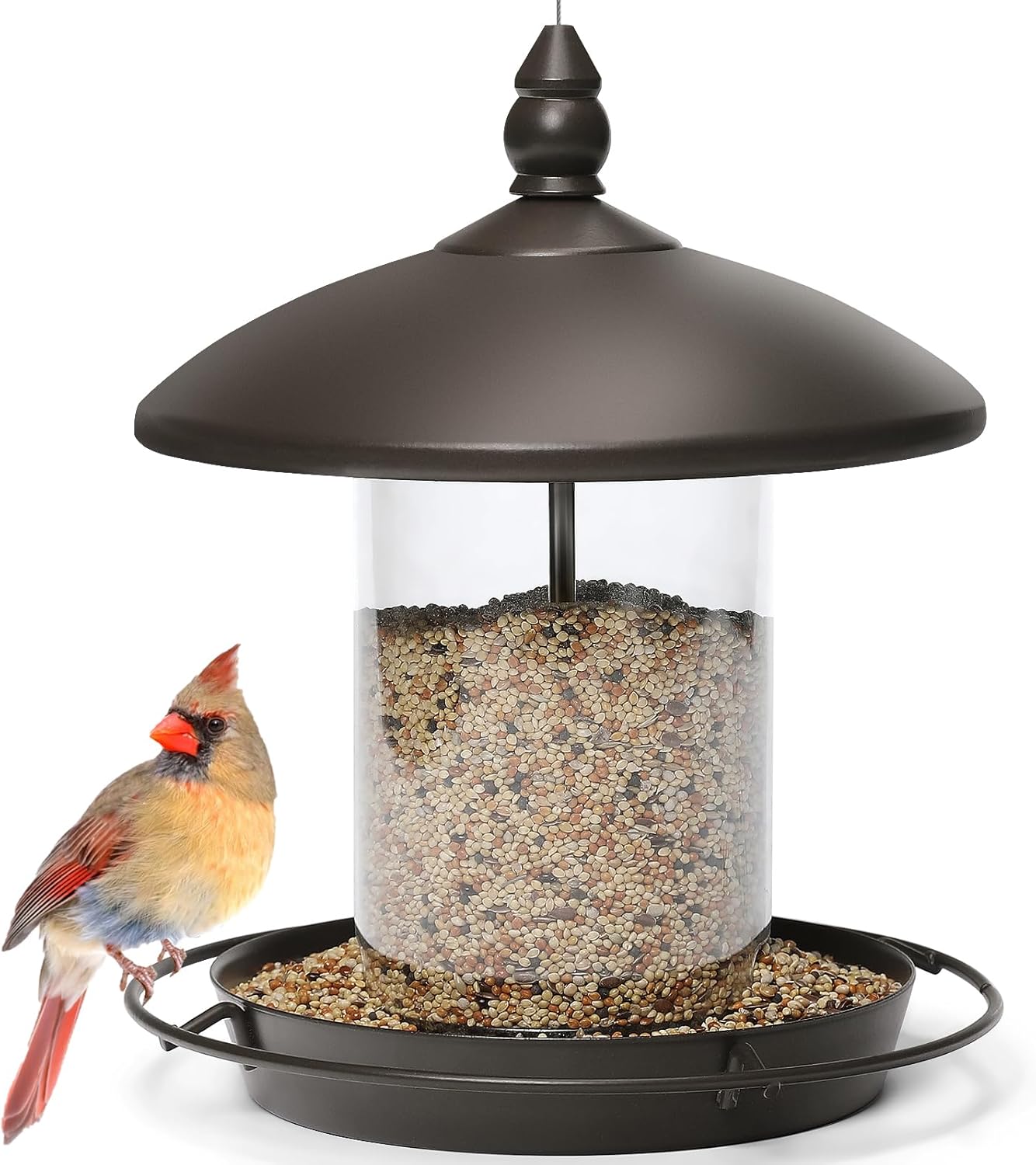
Youvip Metal Roof Bird Feeder - Chew Proof for Outdoor Hanging Wild Bird Seeds. Bronze
A hanging feeder built around a chew-proof body and a metal roof in a bronze finish. The most straightforward budget entry here, and the one least likely to be destroyed in its first season.
Visit on Amazon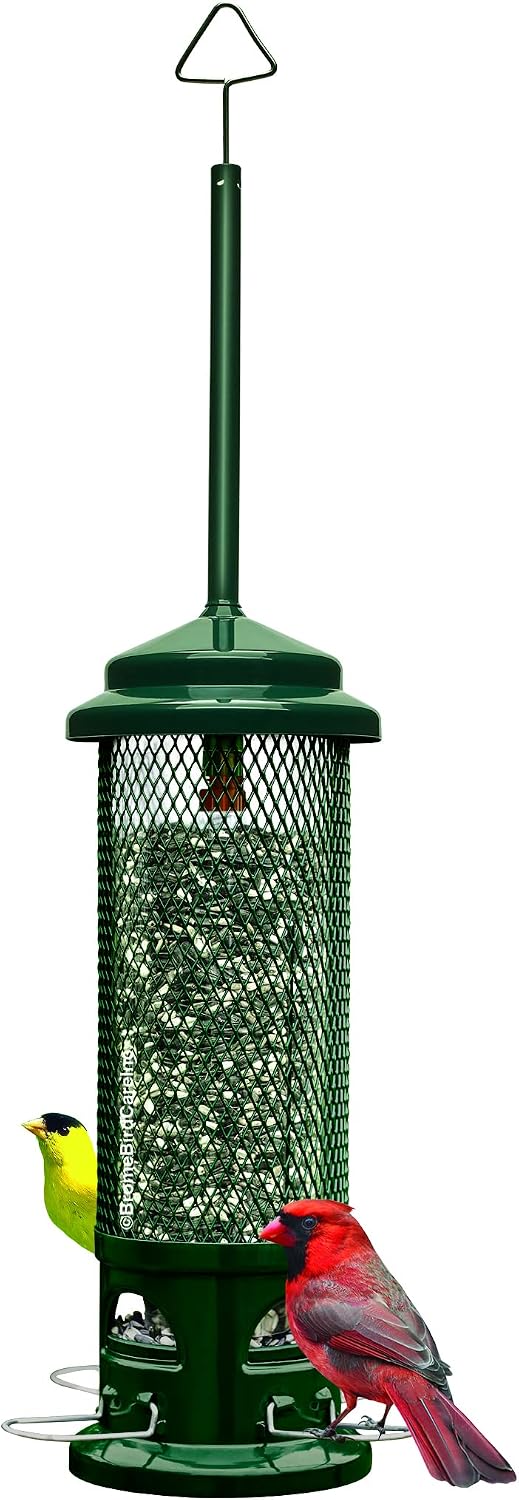
Squirrel Buster Legacy Truly Squirrel-Proof Bird Feeder
A weight-activated cage feeder: the shroud drops and closes the seed ports when something heavy lands on it. The pick when squirrels have already beaten a plastic tube and a pole baffle.
Visit on Amazon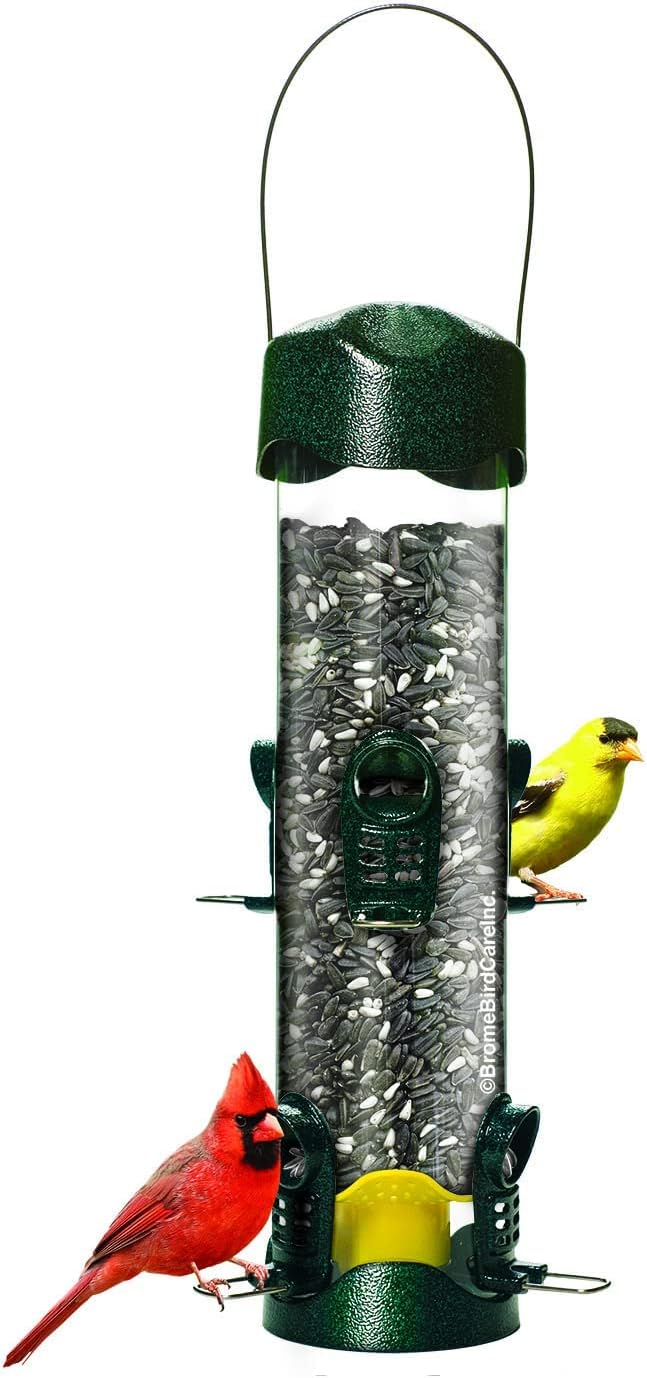
Brome Mega 600 Bird Feeder, Large Capacity Tube Feeder for Wild Birds, 6 Feeding Ports, 4 lb Seed Capacity, Easy to Clean, Metal Ports, Extendable Perches
A four-pound tube with six metal ports and extendable perches, sized for a pole in a yard that empties a feeder in days. The easy-clean build is the reason it sits above the budget tier.
Visit on Amazon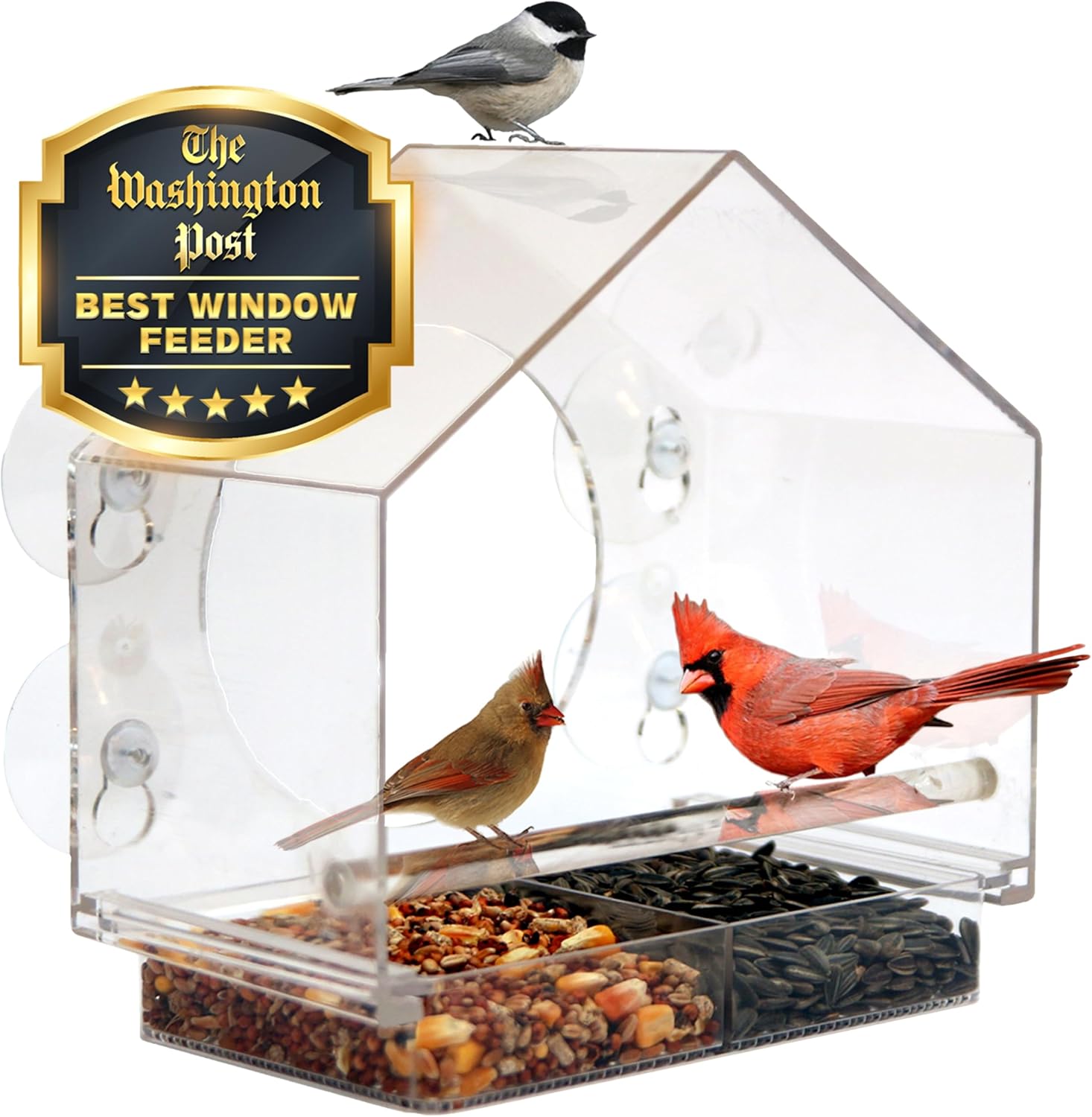
Window Bird Feeder with Strong Suction Cups, Bird Feeders for Outdoors
A clear window mount that puts birds a foot from the glass, which is the fastest way to learn your local species. Best on a sheltered pane where cups are not fighting wind and ice.
Visit on Amazon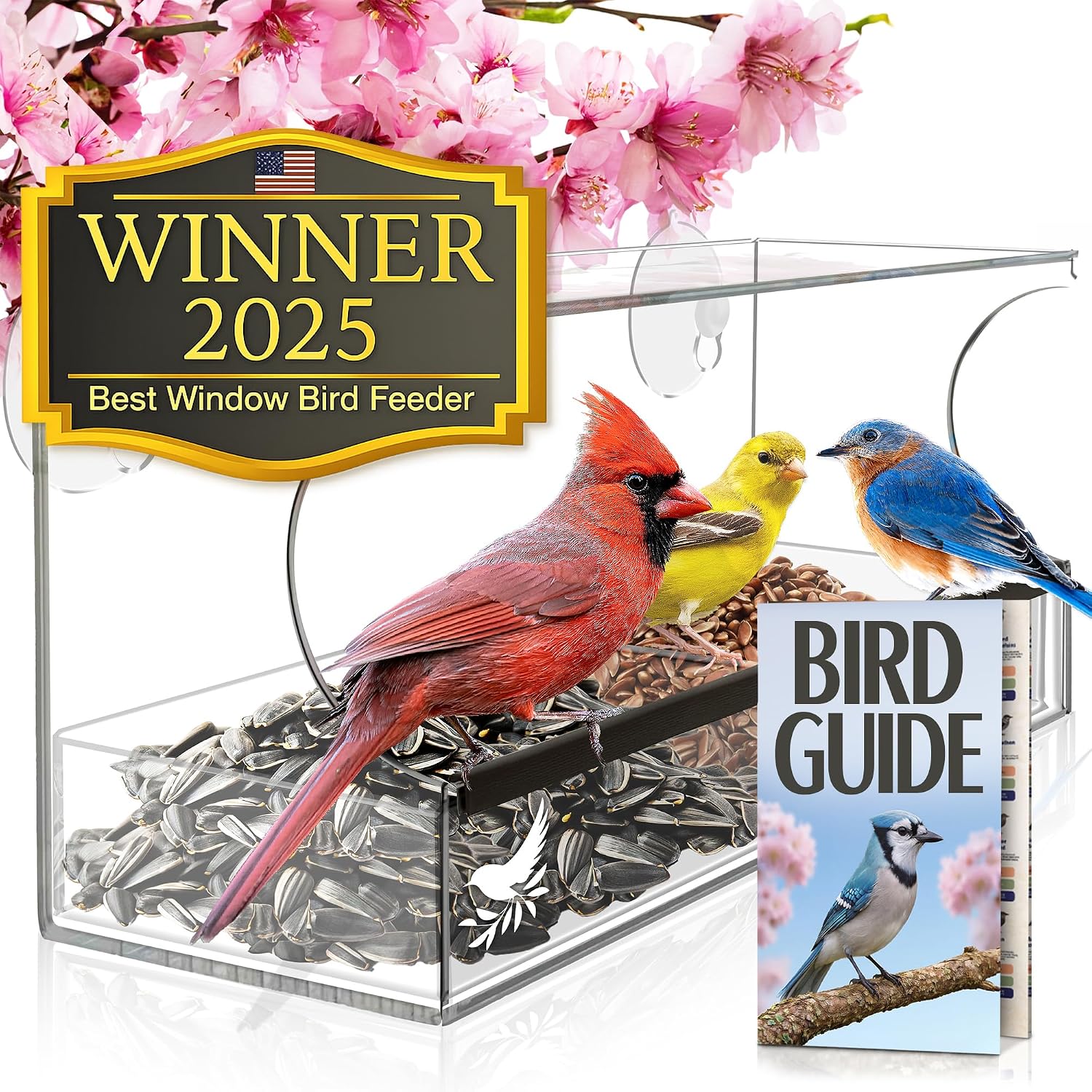
Window Bird Feeder by Nature's Hangout - No Assembly, Strong Suction Cups
Comes out of the box ready to mount, with no assembly step before it goes on the glass. A second window option for a shaded pane or for a household that wants the feeder up in five minutes.
Visit on Amazon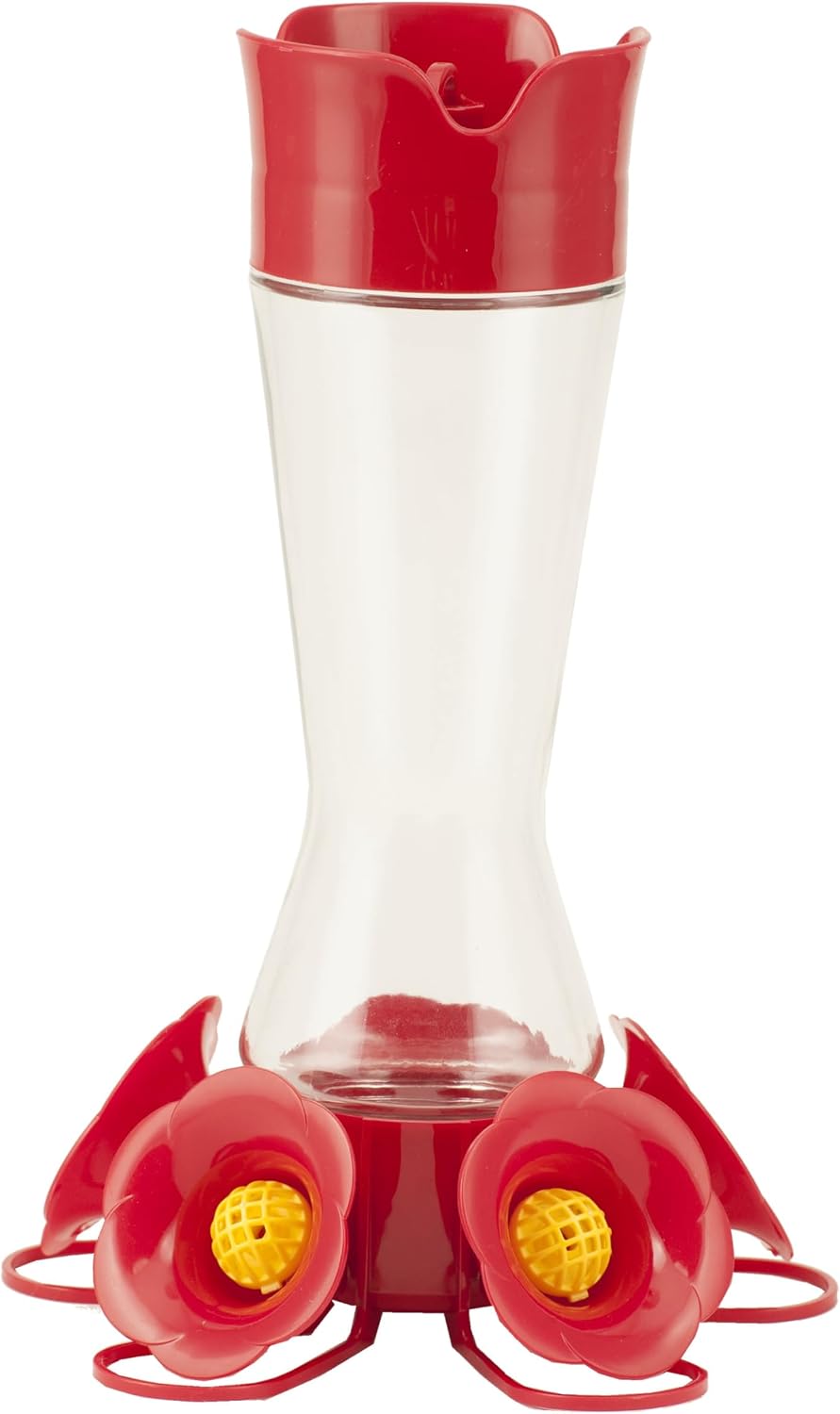
Perky-Pet Favored Pinch-Waist Glass Hummingbird Feeder, 16 oz Capacity
A 16 ounce pinch-waist glass feeder. Glass rinses cleaner than plastic and does not hold onto the residue that turns old nectar into a mold problem by August.
Visit on AmazonPrices and availability may change. Check the retailer for current details.
How these products were compared
This guide compares mounting style, seed capacity and port count, body materials and chew resistance, how far each feeder comes apart for cleaning, and which birds each design actually serves. Product names, images, and retailer links are matched by ASIN, so every card points to the exact feeder described in it.
Nothing here is presented as hands-on testing. The comparisons rest on the specifications each manufacturer publishes and on how those specifications line up with the jobs a backyard feeder has to do: hold seed, shed weather, come apart for washing, and resist whatever is climbing the pole. Where a claim such as squirrel-proof or chew-proof appears, it is reported as the maker's claim, and the sections below explain what that claim is worth in practice. Price is not printed here because it moves; use the link on each card to confirm the current figure and availability before you buy.
How to choose the right bird feeder
Start with placement, not with the feeder. A window mount is the right first purchase if you want to watch birds at close range and you have a pane you can reach without a ladder. A pole or hanging feeder is the right first purchase if you have squirrels, because you can add a baffle and move the whole setup away from a jump-off point. The honest test for affordable bird feeding feeders is not what they look like on the shelf but what they cost you across a year in seed, cleaning time, and replacements.
Then think about seed. Black-oil sunflower and sunflower hearts pull the widest range of species in most of the Midwest and Northeast, and hearts leave no hull litter under the feeder. Nyjer needs a mesh feeder to stay dry. If you are buying a tube, match capacity to your draw: a four-pound tube makes sense on a pole in a yard that empties a small feeder in three days, and it is wasted in a yard where one bird visits a week, because the seed sits and stales.
Cleaning access is the specification people skip and regret. A feeder that cannot be fully disassembled gets rinsed instead of washed, and rinsed feeders are where mold and disease take hold. If you already own a tube you dread taking apart, the cleaning routine for a tube feeder is worth reading before you buy another one.
Finally, decide whether you are shopping for seed or for nectar. Hummingbird feeders are a separate purchase with a separate maintenance rhythm, and a glass body that rinses in under a minute will get cleaned far more often than a plastic one with narrow ports.
Youvip Metal Roof Bird Feeder
This is the feeder in the group that treats metal as the default rather than the upgrade. The roof is metal, the body is described by the maker as chew proof, and the whole thing hangs from a single point in a bronze finish that does not look like a bargain-bin purchase. For a first feeder, that combination covers the two failures that end most cheap feeders early: a squirrel working on a plastic edge, and a base that splits after water gets in and freezes.
The trade-off is that it is a hanging feeder with no squirrel mechanism of its own. Nothing here closes a port when something heavy lands, so the feeder is only as squirrel-resistant as the pole, baffle, or location you give it. Plan on hanging it where a squirrel cannot make a short jump from a fence or a branch, or accept that you are feeding them too. Capacity is also modest compared with a four-pound tube, which means more refills in a busy yard in January. Neither of those is a defect at this level; they are the reason it stays in the budget tier.
Alternatives to consider
The Squirrel Buster Legacy is better suited to a yard where squirrels have already defeated a tube and a baffle, because the weight-activated cage closes the ports rather than relying on a barrier. The Brome Mega 600 is a stronger fit when you are filling a pole feeder twice a week and want six metal ports, extendable perches, and a body that comes apart for cleaning without a fight.
The Window Bird Feeder with Strong Suction Cups, the Nature's Hangout window feeder, and the Perky-Pet glass hummingbird feeder cover the other three jobs. The two window mounts are for close observation from indoors, with the Nature's Hangout version saving the assembly step out of the box. The Perky-Pet is the nectar feeder for anyone who wants glass rather than plastic, and 16 ounces is a sensible size for a single yard.
Day-to-day use and maintenance
Plan on a weekly wash for seed feeders and more often in humid stretches. Take the feeder fully apart, scrub the ports and corners with a brush, soak in a dilute bleach solution, rinse thoroughly, and let every piece dry before refilling. Feeders that only get hosed off are the ones that turn into disease vectors, and the rehab cases that stick with me most are the ones that trace back to a feeder nobody disassembled since fall.
Seed storage matters as much as feeder hygiene. Keep seed in a sealed container, discard anything clumped or musty, and do not top off a feeder over old seed. For hummingbird feeders, use plain sugar water at roughly one part sugar to four parts water, with no red dye, and change it every two to three days in heat. Rinse the glass body every refill rather than waiting for the weekend.
Suction cups deserve their own warning. They hold well on clean, smooth glass and poorly on cold, dirty, or textured surfaces, and a hard freeze is when they are most likely to let go. If your winters drop well below freezing, bring a window feeder in during cold snaps or plan on a bracket-mounted alternative. Check the cups for hardening and replace them before they fail rather than after.
Buying checklist
- Measure the space: window width, pole height, and the clearance between the feeder and any jump-off point for squirrels.
- Choose seed capacity based on your normal weekly draw, not on the biggest feeder you can find.
- Confirm that the exact model includes the feature you are paying for, whether that is metal ports, a weight-activated cage, or a body that fully disassembles.
- Read the cleaning and maintenance instructions before purchase, and check that replacement parts are available.
- Verify the current retailer price, availability, and return terms through the product link.
Final recommendation
Choose the Youvip Metal Roof Bird Feeder when you want a durable hanging feeder at the entry level and you are willing to place it thoughtfully. Choose the Squirrel Buster Legacy when squirrels are the deciding problem, or the Brome Mega 600 when capacity and cleaning access matter more than the lowest entry point. If you are still sorting out which of the affordable bird feeding feeders fits your yard, buy for the job you have this month and add the second feeder in spring, when the migrants arrive and the yard gets loud.