I have hung a window bird feeder three feet from my dining room glass for twelve years, and the first one is still the reason I write about placement before I write about hardware. A white-throated sparrow hit that window, spent three days in a shoebox in my laundry room, and taught me the rule I now repeat to anyone who asks: a window bird feeder belongs within three feet of the glass, or more than thirty feet away. Anything in the middle is a runway.
The four products below are the ones people ask me about most heading into winter. One is the food itself, a 15-pound bag of variety seed. Two are clear window feeders that hold on with suction cups. One is a carbonized pine birdhouse with a feeder built into it. They are not competing for the same job, and that is exactly the point. Two of them feed birds at the window, one gives birds a place to nest, and one is what goes inside all of it.
If you are starting from nothing, buy the seed and one window feeder, in that order. Seed decides whether birds show up at all. The window feeder decides whether you get to see them. The birdhouse is a late-winter project, and the suction cups are a conversation we need to have before you hang anything on glass somewhere that freezes.
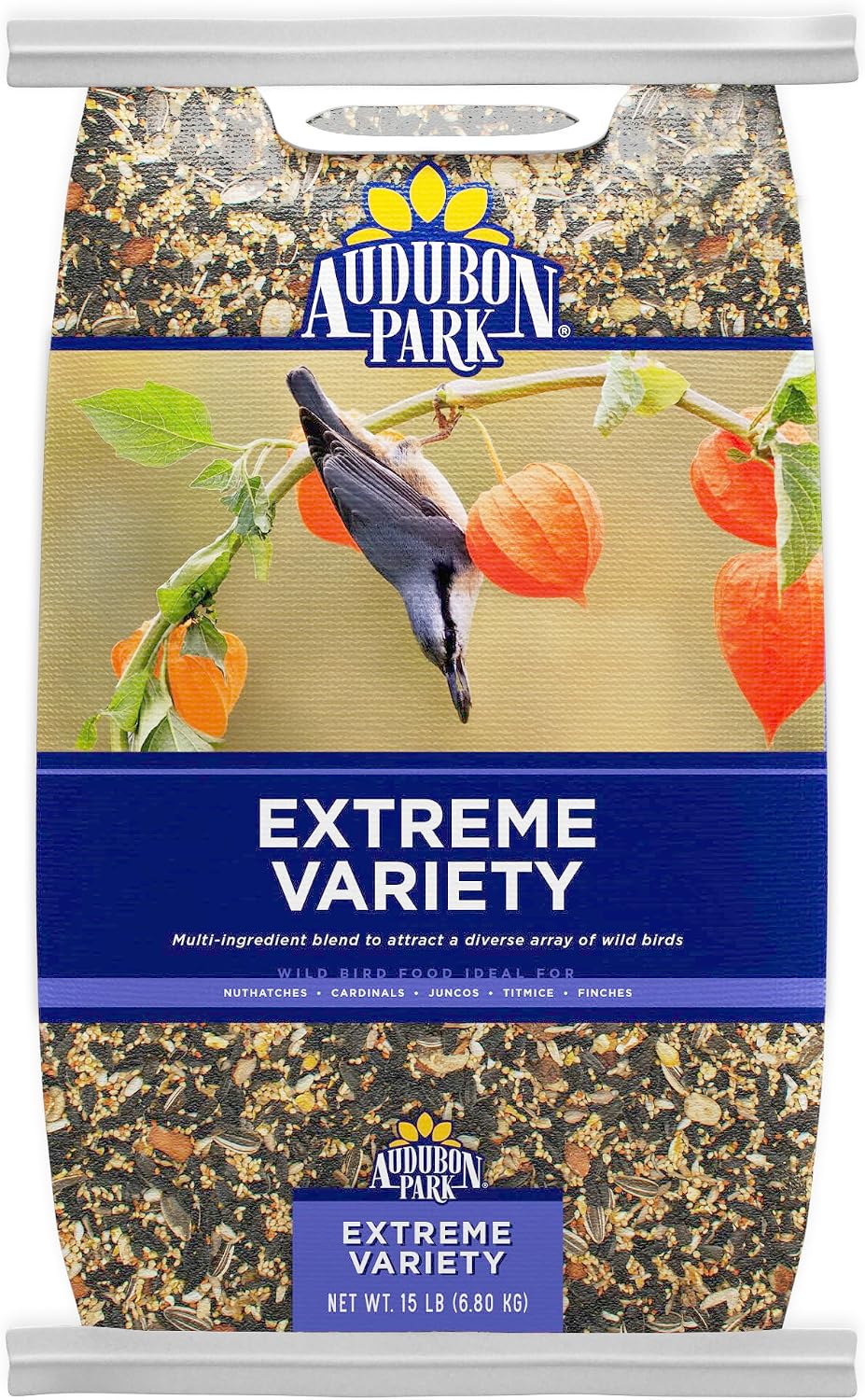
Audubon Park Extreme Variety Wild Bird Seed for Outside Feeders, 15-lb. Bag
The cheapest way to find out which birds you actually have; a sensible size for one platform plus one hopper
Variety blends bring in generalists first, and seed goes stale fast if you only feed a small tray
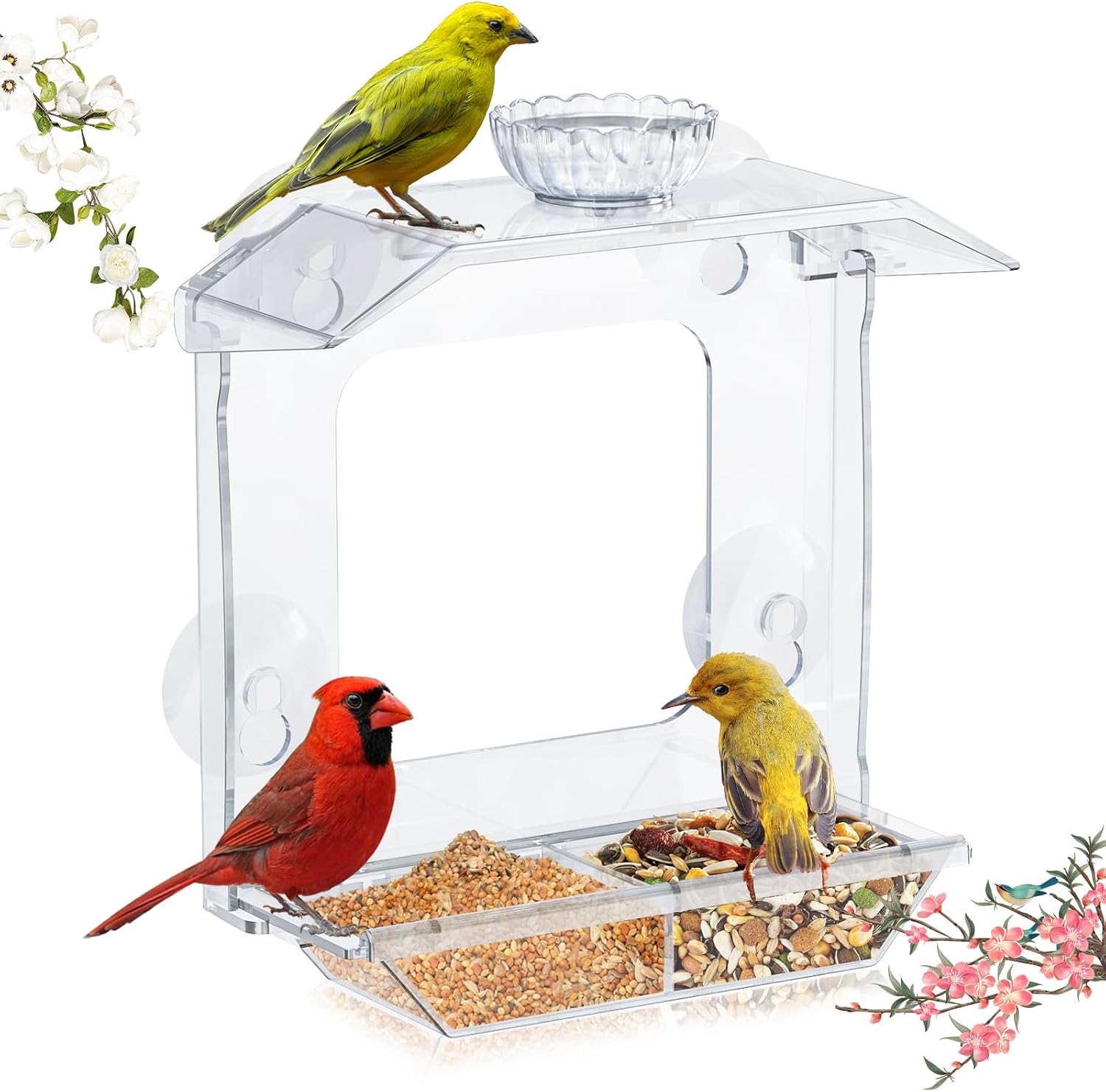
Clear Window Bird Feeder with Strong Suction Cups, Clear Bird Feeding Station with Dual Seed Tray & Water Bowl, Easy to Install and Clean for Outdoor Viewing
The water bowl is the highest-value feature in this group; two trays let you run a real seed comparison
Suction cups plus acrylic plus a hard freeze is the combination that fails first
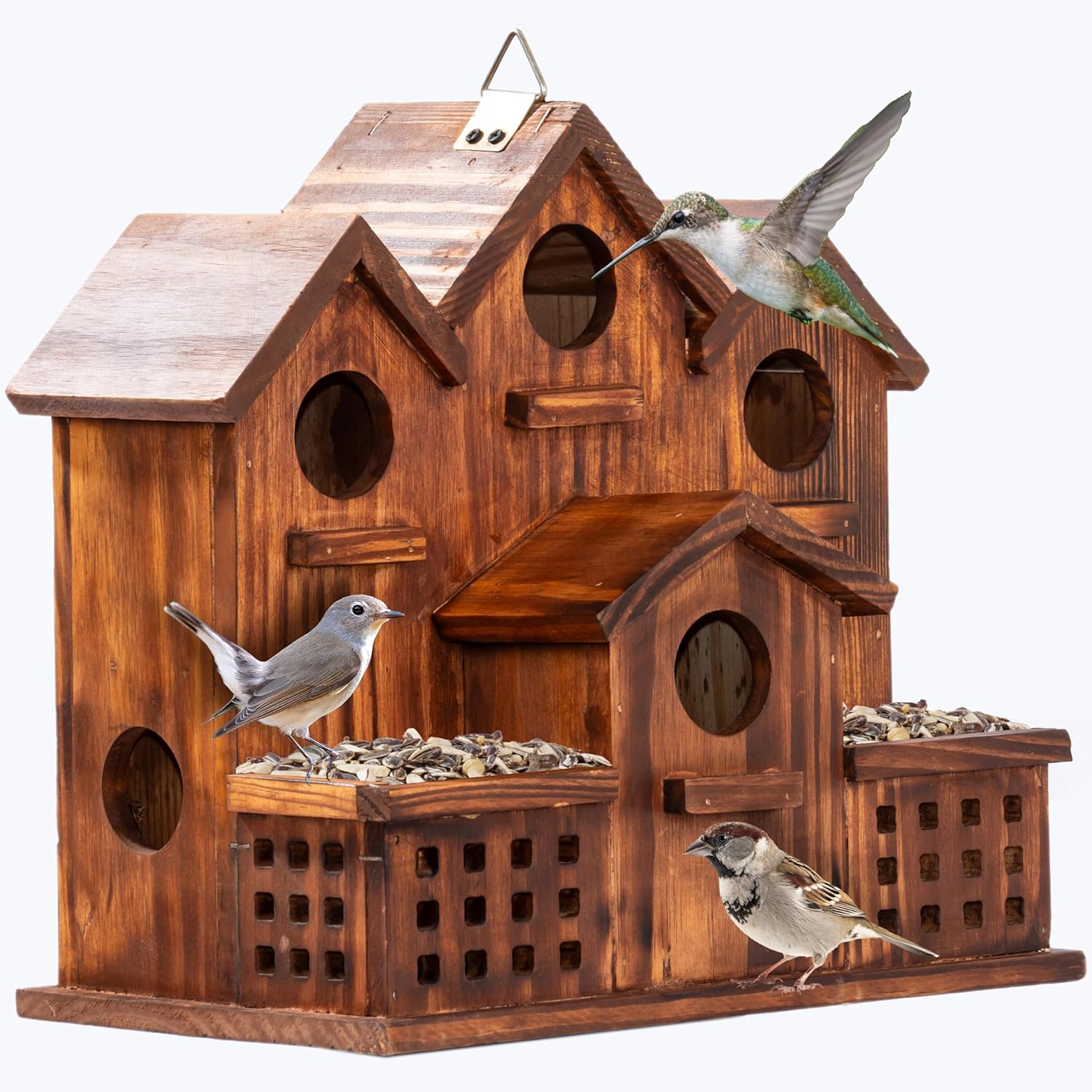
MIXUMON Bird House Outdoor with Feeder, 6-Room Wooden Birdhouse for Outdoors & Outside, Carbonized Pine Wood Bird Houses with 1.57” Entrance & Easy Clean-Out Doors (Natural Wood Door)
Carbonized pine resists rot and insects, the 1.57 inch entrance keeps out bigger birds, and the clean-out doors make hygiene possible
It is habitat, not a feeding station; expect one or two rooms used, not six
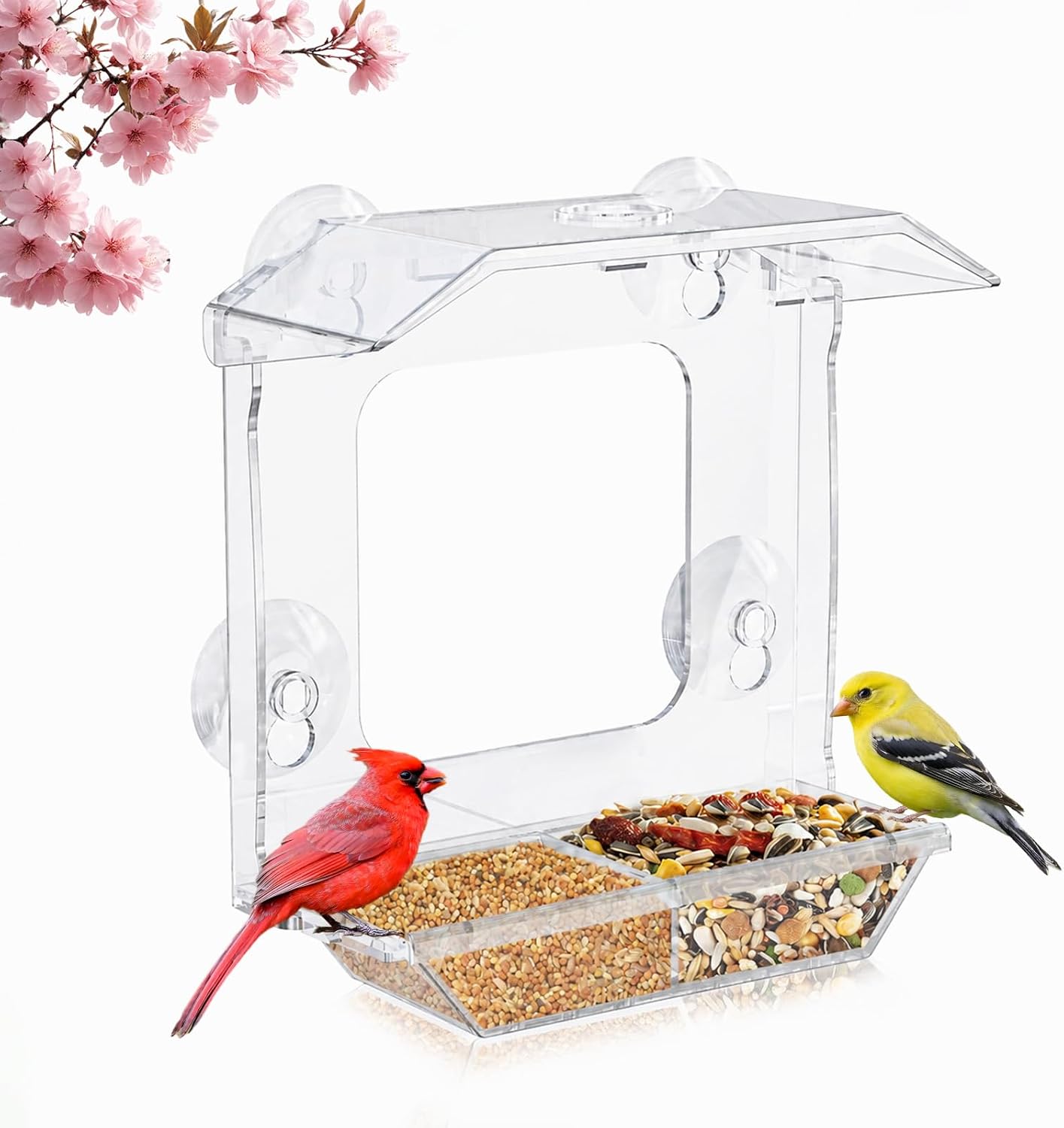
Window Bird Feeder with 4 Extra Strong Suction Cups (2.5 Inch)
Four large cups spread the load and give you redundancy, which is how suction mounts fail: one at a time
No water bowl and no second tray, so you learn less about what your birds prefer
Prices and availability were captured from Amazon Creators API and may change.
What the log says about feeders that hang on glass
A tube feeder on a pole tells you how much seed disappeared. A window feeder tells you who ate it, in what order, and at what time. My log has ten years of cups-per-week entries, and the window feeder column is the only one that also carries behavior notes: which chickadee grabs a seed and leaves, which one sits and shells it on the perch, which junco scratches the tray clean before it eats.
The cost of that view is maintenance. A window feeder is small, which means it empties fast, and small also means it gets dirty fast. In a wet October, a two-cup tray can go from fine to fuzzy in four days. That is not a reason to skip a window feeder. It is a reason to buy one you can take apart and rinse in the sink, and to buy two so one can dry while the other hangs.
Placement is the other thing the log taught me. Cornell and every rehabber I know say the same thing: put the feeder within three feet of the glass so a bird leaving it cannot build up speed, or push it past thirty feet so there is room to change course. My sparrow hit a window with no feeder near it at all. The feeder came after.
Seed first, because nothing else works without it
The Audubon Park Extreme Variety Wild Bird Seed for Outside Feeders comes in a 15-pound bag, which is a sensible size for one platform feeder plus one hopper. Before any blend goes into my feeders, I read the ingredient list, and you should too. My automatic disqualifiers are milo and red millet. Both sit in the tray uneaten, both get wet, and both turn into a cleaning job. The birds in my log ignore them, and the log is the only vote that counts.
A variety blend does something a single-seed bag cannot. It is a starter kit for a yard that does not have a crowd yet. Mixed seed brings in the generalists first, and the generalists are what make a yard feel alive while the specialists are still deciding whether to show up. Once you know what you have, you can move to black-oil sunflower or sunflower hearts and cut the waste.
The 15-pound size makes sense for one reason: you go through it. If you feed a single small window tray, a bag this size will sit in the garage and go stale, and stale seed draws nothing at all. Store it in a metal can with a lid, keep it dry, and use it up. If you run a platform and a hopper, this is the right size.
The clear window feeder with a dual tray and a water bowl
This is the more interesting of the two window units, because of the water bowl. I will say this until people stop asking me: water brings more species to a yard than any seed blend. From June through August, the bath gets more entries in my log than every feeder combined. A window station that puts a water dish two feet from your chair is worth more than its seed capacity suggests.
The dual seed tray is the practical half. Two trays mean you can run a variety blend in one and sunflower in the other, then find out in a week which one your birds actually prefer. That is a better experiment than anything you can read, including this.
The suction cups are the part I would watch. Clear acrylic on glass looks great in the product photos, and it looks great in the window. What it does in a Wisconsin February is a different question. Suction cups depend on a seal, and freeze-thaw cycles break seals. If you live where it drops below freezing, plan on bringing this inside during cold snaps, or hanging it on a screened porch, or reinforcing the mount. Clean the glass before you press the cups down, because a cup that goes on over a film of dust is a cup that lets go.
The window feeder with four extra-strong suction cups
This one takes the opposite approach. No water bowl, no second tray, just four 2.5-inch cups doing the holding. If you want the strongest suction mount in this group, this is the one that reads that way. Four large cups spread the load and give you redundancy, and redundancy matters here, because window feeders do not fail gradually. They fail one cup at a time until the last one quits.
The trade-off is what you give up: the water and the second tray. For pure viewing of seed birds, that is a fair trade. For a yard where you are still trying to figure out what shows up, the dual-tray unit hands you more information for the same hanging space.
My rule for both of them is the same. Hang the tray just below your eye line from your chair, and hang it where a dropped tray lands on grass instead of concrete. I watched a suction cup let go at minus six degrees. The tray survived because it landed in mulch. It would not have survived the porch steps.
The carbonized pine birdhouse with a feeder
The MIXUMON house is a different animal. It is a six-room carbonized pine birdhouse with a 1.57 inch entrance and clean-out doors, and the feeder is the bonus, not the main event. That 1.57 inch hole is sized for small cavity nesters and it keeps out the bigger birds that would otherwise take over the box. That number is the most important spec on the page, more important than the roof style or the wood finish.
Carbonized pine is a real choice and not just a color. Heat treatment drives moisture out of the wood and makes it more resistant to rot and insects than raw pine, which is what you want in a house that hangs outside through a Wisconsin winter. It will still weather. It will still need to come down and be checked.
The clean-out doors are the feature I care about most. A nest box that cannot be opened is a box you cannot clean, and an uncleaned box is where next spring's problems start. After the season, open it, pull the old nest, scrub it with a mild bleach solution, let it dry in the sun, and store it or close it up. That is the whole protocol, and it takes ten minutes per room.
One honest note about the six-room layout: a multi-room house is not a colony site. Birds want their own box and their own territory. Expect one or two rooms to be used and treat the rest as structure. If you want more nesting birds, more boxes spaced apart beats one big house every single time.
Trade-offs, and the February question
The seed feeds birds anywhere. It has no moving parts, no suction cups, and no wood to inspect. Its weakness is storage and staleness.
The two window feeders buy you the view, and the view is the whole reason most people feed birds. The dual-tray unit adds water, which is the highest-value feature in this entire group. The four-cup unit adds holding power. Both are acrylic, and both will need to come inside when the temperature drops hard.
The birdhouse is habitat, not a feeding station. It serves a different season and a different purpose. If your goal is birds in the yard year round, you want a feeder first and a house second. If your goal is a nest box you can watch from the kitchen, buy it in late winter and hang it by early March.
The February question decides most of these purchases for me. Anything with a suction cup gets a hard look in a climate with freeze-thaw cycles, and anything made of wood gets checked for cracks in the spring. Neither is a flaw in the product. It is a fact about where I live, and you should run the same test on your own zip code before you order.
Cleaning is the spec nobody lists
Every salmonella case I have seen come through rehab traced back to a dirty feeder. Every one. That is why I put cleaning time ahead of capacity, ahead of looks, and ahead of cost.
The routine is the same for all of these: take them apart. A hose spray is not cleaning. On the window feeders the trays lift out and the acrylic wipes down with warm soapy water, then a rinse. Once a month in warm weather, and once a week when birds are crowded, use a diluted bleach solution, rinse thoroughly, and let everything dry completely before it goes back up. Wet seed in a wet tray is how you grow mold.
For the birdhouse, the clean-out doors are the entire point. Do it once the last brood is out, not in the spring.
And if you see a sick bird at the feeder, take everything down, clean it, and leave it down for two weeks. That is not caution. That is the protocol that stops house finch eye disease from moving through a yard.
What I would buy first
If you are buying one thing, buy the seed. Nothing else on this list matters if there is no food in the yard, and a 15-pound bag of variety blend gets you to the point where you know which birds you have.
If you are buying two things, add the dual-tray window feeder with the water bowl. Water brings species that seed alone will not, and the second tray lets you run a real comparison instead of guessing.
If you already have a feeder and you want a window station that hangs hard and holds, the four-cup unit is the one I would look at. If you have trees and you want birds to stay through the season, add the carbonized pine house in late winter, and check the entrance size before you hang it, because 1.57 inches is the number that decides who gets in.
Buy the seed, hang the feeder where you can actually see it, clean it more often than feels necessary, and keep a log. Ten years in, the log is the only review I trust, including mine.