Related: How to Clean a Bird Feeder So It Never Becomes a Disease Vector
Twelve years of feeding backyard birds and ten years of keeping the log have taught me that a feeder's real specifications are three things no product page lists: how fast it empties, how easily it comes apart for cleaning, and what a determined fox squirrel does to it in week one. I'm a licensed wildlife rehabilitator in Madison, Wisconsin, and the feeders on my fence have to survive a real February, a real squirrel population, and a real Sunday cleaning routine. When people ask me to compare squirrel resistant bird feeders, the answer is never about the powder-coated finish.
Capacity is the number everyone shops by, and it's the least interesting one. What matters is draw, the cups of seed a feeder pulls per week, because a feeder the birds ignore is an ornament with a perch. Cleaning matters more than anything else here, since every salmonella and house finch eye disease case I've handled in rehab traced back to a feeder nobody took apart. And squirrel-proof is a marketing word. Squirrel-resistant is a real thing, measured in weeks of squirrel pressure, not in the claim printed on the box.
The four feeders below cover the four jobs my yard actually has: a guarded seed feeder on the pole, a suet cage for the clingers in February, a pair of tube feeders for the perch-and-wait crowd, and a window hummingbird feeder for the birds that never touch seed at all. Each one gets judged against the same five questions before it earns a permanent spot on the fence.
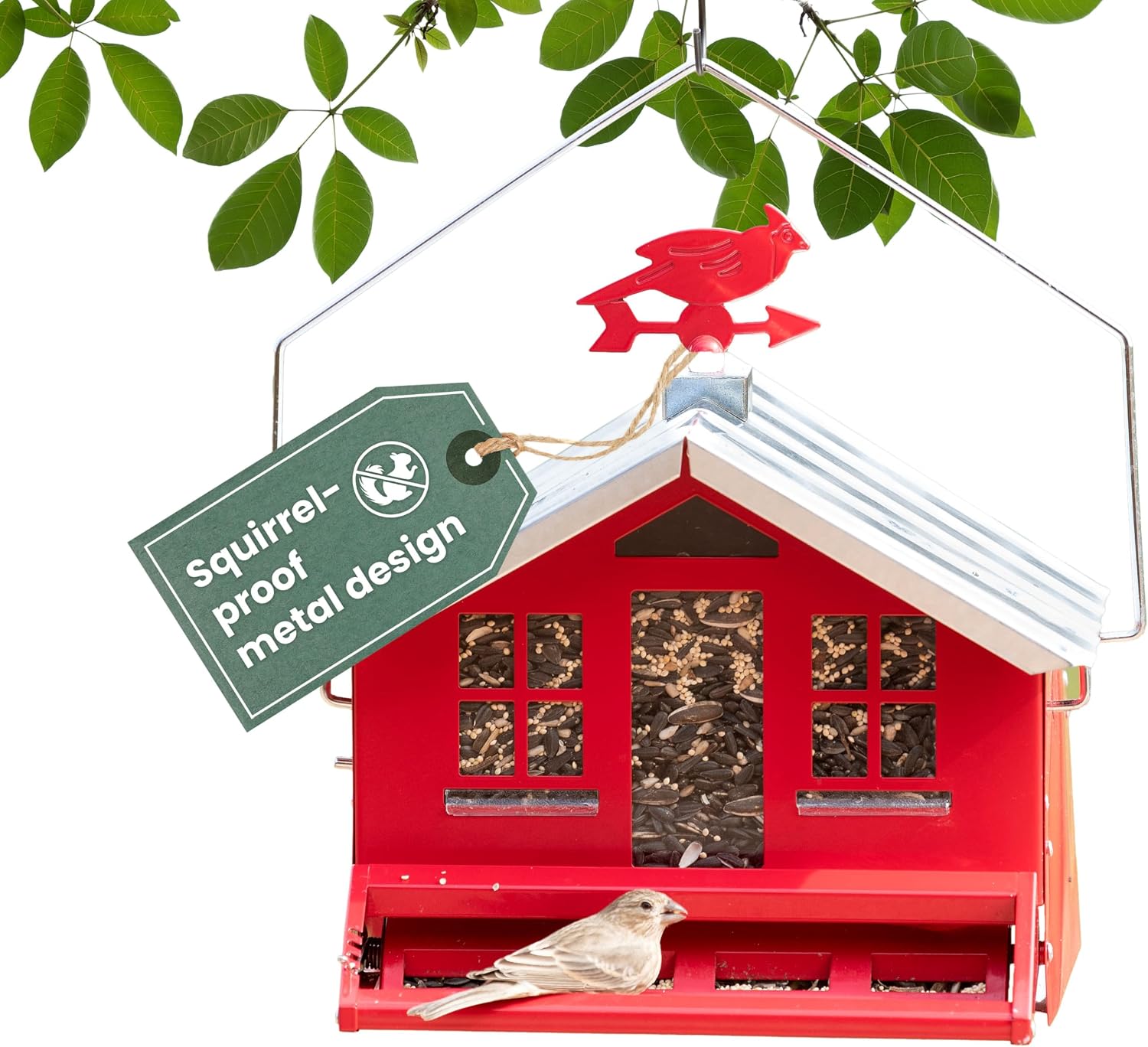
Best Squirrel Deterrent: Perky-Pet Squirrel-Be-Gone II Country Style Bird Feeder
The name on this one makes a promise, and my rule is that no squirrel claim gets repeated in this space until a neighborhood fox squirrel has had three weeks alone with the feeder. What I can tell you is that the guard around the seed is the part doing the work here, and the 8 lb seed capacity is the part that changes your week. Fewer refills is a genuine kindness in January, when the pole is a sheet of ice and the seed bin in the garage is frozen shut.
The trade-off is freshness. A big hopper holds a lot of seed, and in a wet Wisconsin spring that seed sits there. If your draw is slow, capacity is a mold risk rather than a convenience. I check the seed at the bottom of the hopper at every refill, and if it clumps or smells musty, the whole thing comes down, gets emptied, and gets washed. That's true of every large feeder, and it's why capacity should follow your bird traffic instead of leading it.
Cleaning is the usual routine: empty, take it apart, hot soapy water, rinse, dry completely in the sun before it goes back up. A feeder that can't survive being taken apart twice a month doesn't belong on my pole.
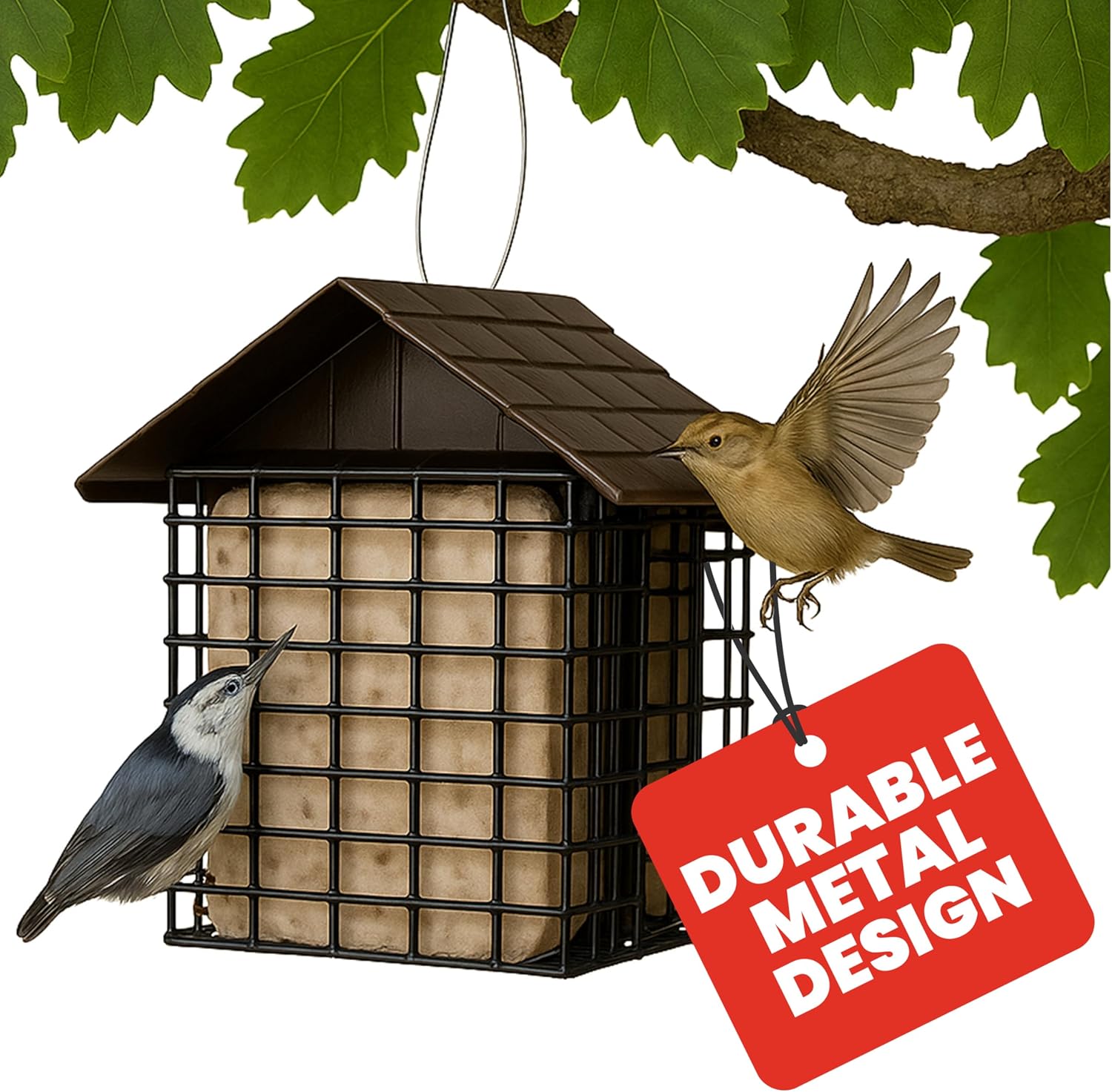
Best Winter Workhorse: More Birds Double Suet Cake Feeder
Suet is the winter feeder that pays for itself. Woodpeckers, nuthatches, and chickadees are clingers, birds that feed hanging sideways or upside down, and a cage is built for exactly that posture. The steel construction and the weather guard matter more than they sound like they do, because a suet cake that soaks through in a January thaw goes rancid, and rancid suet draws nothing but starlings and a mess.
Two cakes at once is the feature I didn't know I wanted. In a hard freeze the draw doubles, and having a second cake hanging means one less trip out to the pole with bare hands. I render my own suet and mix cakes with peanut butter and mealworms in the cold months, and this holds a homemade cake as well as a store one.
The cleaning is the part nobody talks about. Suet cages collect grease, seed hulls, and feather dust in the corners of the grid. I scrape the cage with a stiff brush, wash it in hot soapy water, rinse, and let it dry completely before the next cake goes in. A suet feeder that never gets washed is a disease vector with a perch, same as any other.
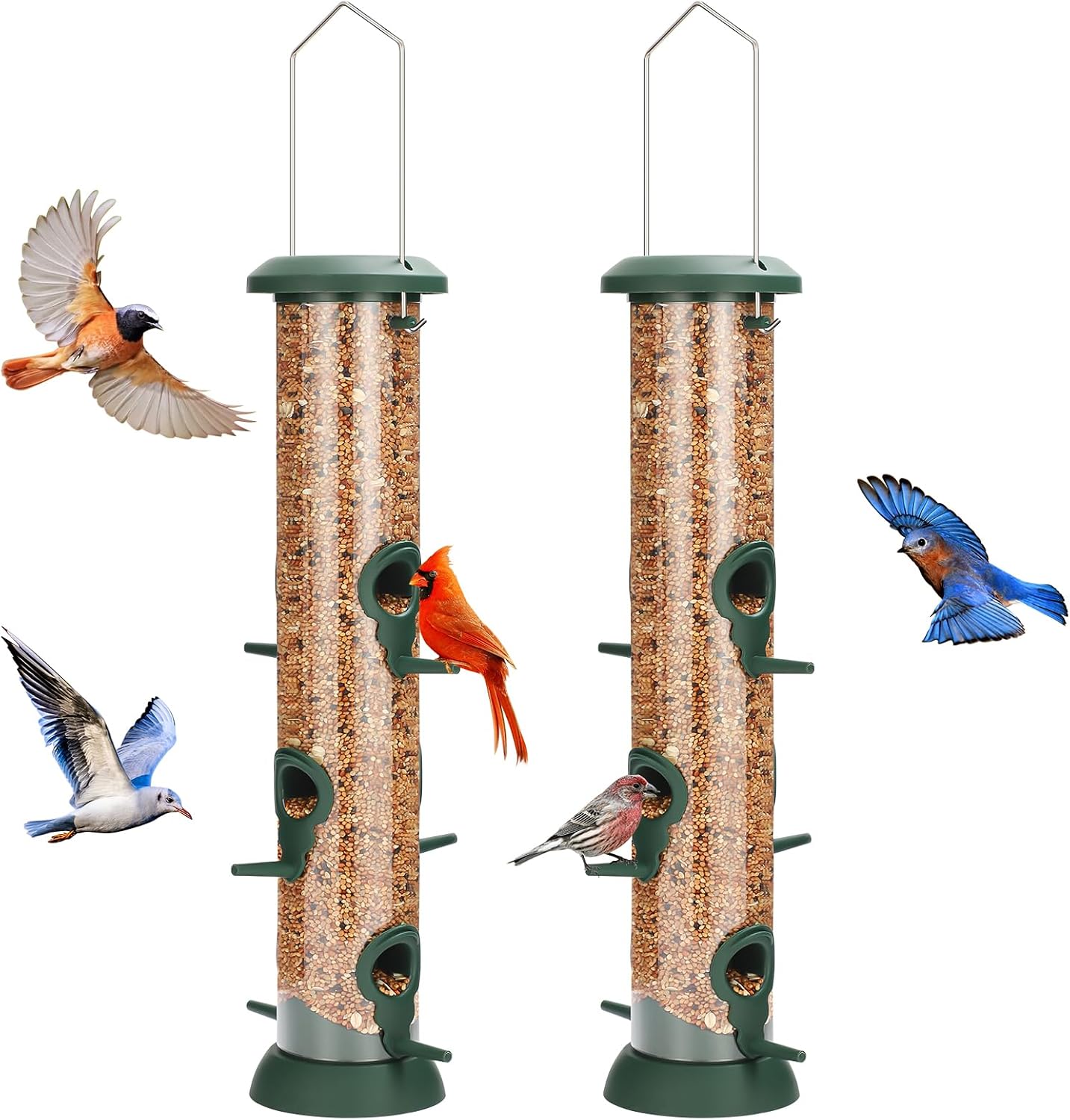
Best Budget Pair: FEED GARDEN Tube Bird Feeder 2 Pack
Two 15 inch hanging tubes for the price of one decent feeder is the kind of math I like, but the two pack isn't really about money. It's about the cleaning schedule. My rule is that a feeder gets washed weekly in warm weather, and if you own one tube, that means the pole sits empty while the feeder dries. With a pair, one hangs while the other is in the sink, and the birds never notice you did anything at all.
These are plastic, and I want to be straight about what that means in a northern yard. Plastic survives the freeze-thaw cycle fine as long as it dries fully between soakings, and it fails fast if it goes back up wet with seed still packed in the bottom of the tube. That's a user problem, not a feeder problem, but it's the reason tube feeders get the reputation they have. Take them apart, rinse the ports, shake them out, and let them dry in the sun.
The draw on a tube like this is steady rather than dramatic. Chickadees, finches, and the occasional sparrow work it all day, and the port design keeps seed moving down instead of sitting in a wet clump. For a second pole, a gift for a new birder, or a yard where you want seed in two places so the crowd spreads out, this pair does the job without asking you to think about it.
Best Window Pick: Window Hummingbird Feeder with Strong Suction Cups, 2 Pack 2.6 oz
A window feeder within three feet of the glass is the single best thing you can do for window strikes. Birds can't build up speed across three feet, so they land instead of hitting. I learned that the hard way, with a white-throated sparrow that spent three days in a shoebox on my dining room table. That's also why the first feeder I ever hung went on the window three feet from that glass, and why I hang one every April.
The 2.6 oz capacity reads small on paper, and small is the point. Nectar spoils fast in summer heat, and a feeder you have to refill often is a feeder that gets cleaned often. The easy-clean and easy-refill design means this one is a thirty-second job rather than a project, and the bee resistant ports keep the feeding end clear. Two in the pack means one is always dry and clean while the other hangs, which is exactly how I run every feeder in the yard.
One honest caveat, and it's the same caveat I give about every suction-cup feeder: cups and a Wisconsin February do not mix. Suction cups are for screened porches and mild climates, not for a window at six below. This hangs from the first hummingbird of spring through the first hard freeze and comes inside for winter, which is the season it's built for anyway. And mix your own nectar, four parts water to one part plain sugar. Red dye isn't doing the birds any favors, and the feeder is already red.
How I judge a feeder before it earns a spot
Five questions, every time. Will birds actually use it, or will it sit pretty on the pole? Can I take it apart and clean it in under ten minutes? What does a determined fox squirrel do to it in week one? Will it survive a Wisconsin February, freeze, thaw, freeze? And would I still hang it after four seasons? If it passes all five, it earns a spot on the fence. If it fails the cleaning question, nothing else matters, because a dirty feeder is a disease vector and I've seen where that ends.
The feeder reference table
| Feeder | What it holds | Best for | Cleaning | Notes |
|---|---|---|---|---|
 Visit on Amazon → Perky-Pet Squirrel-Be-Gone II |
Seed, 8 lb capacity | A pole under real squirrel pressure | Empty, take apart, hot soapy water, sun dry | Check the bottom of the hopper for clumping. Check current Amazon price |
 Visit on Amazon → More Birds Double Suet Cake Feeder |
Two suet cakes | Woodpeckers and other clingers | Scrape the grid, wash, dry fully | Weather guard keeps rain off the cakes. Check current Amazon price |
 Visit on Amazon → FEED GARDEN Tube Bird Feeder 2 Pack |
Seed, two 15 inch tubes | Perch birds, and always having a dry spare | Take apart, rinse the ports, dry in the sun | One hangs while the other dries. Check current Amazon price |
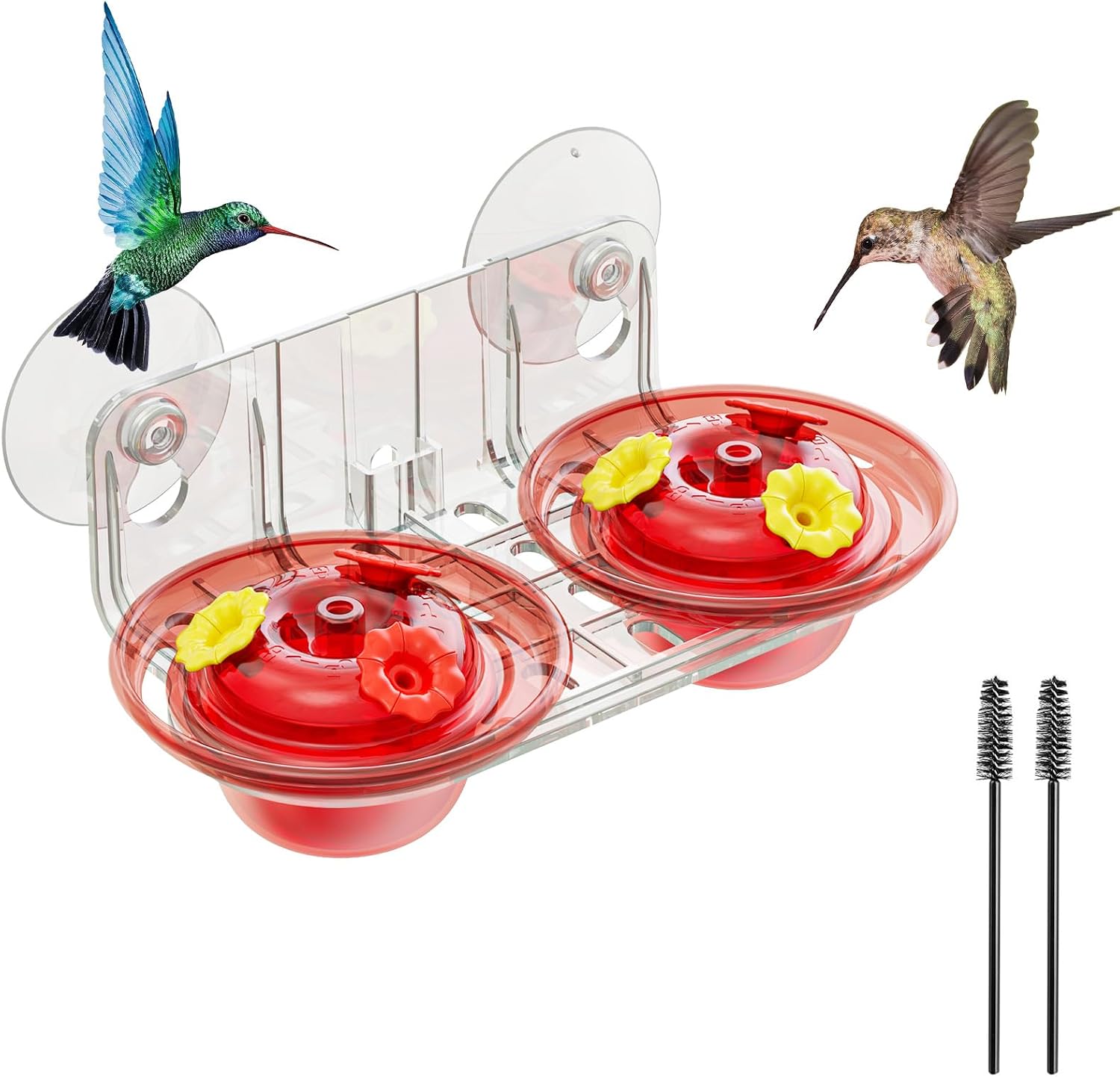 Visit on Amazon → Window Hummingbird Feeder, 2 Pack |
Nectar, 2.6 oz each | Hummingbirds at the glass, spring to first freeze | Rinse and refill often, small capacity spoils fast | Hang within three feet of the window. Check current Amazon price |
Analysis: what the log actually rewards
Four seasons of entries point at the same conclusion, and it isn't the one the packaging suggests. Draw beats capacity. A feeder that empties steadily is doing its job, and a big hopper with a slow draw is just a place for seed to go stale. Cleaning beats design. The feeders I keep recommending are the ones that come apart without a fight, because the weekly wash is the only habit that separates a healthy yard from a rehab intake.
Squirrel resistance is a spectrum, not a switch. The guard-style design on the Perky-Pet is the honest version of the idea: it makes the seed hard to reach rather than pretending squirrels don't exist. A squirrel that can't reach seed will spend its energy elsewhere, and that's the whole win. Any feeder that claims proof without a mechanism is selling you a warranty you'll use.
Water still brings more species than seed. From June through August the bath gets more entries in the log than every feeder combined, and a hummingbird feeder is the same idea in miniature: it's a liquid feeder, and liquids spoil. That's why small and easy to clean wins over large and impressive every single time. And the last thing the log says is that feeding is year-round. The best months here are May and June, when the migrants come through, and that's when a clean feeder and fresh nectar matter most.
Should you buy the Perky-Pet Squirrel-Be-Gone II?
Yes, if your yard has squirrel pressure and you want a guard doing the work instead of a plastic claim. The 8 lb capacity means fewer refills in the cold, and the trade-off is freshness, so check the bottom of the hopper at every refill and empty it if the seed clumps. It's the feeder I'd put on a pole in a yard where the tree rats have already won once.
Should you buy the More Birds Double Suet Cake Feeder?
Yes. Steel construction, a weather guard, and room for two cakes make it the winter workhorse on my fence, and the clingers find it fast. Downy and hairy woodpeckers are on suet within a week of the first hard freeze here, and a rancid cake is the only thing that stops them. Scrape it, wash it, dry it completely, and it earns its spot every February.
Should you buy the FEED GARDEN Tube Bird Feeder 2 Pack?
Yes, and the two pack is the entire argument. One hangs while the other dries, so your weekly cleaning never leaves an empty pole, and the price means a new birder can start with two feeders instead of one. Just remember they're plastic: take them apart, rinse the ports, and dry them fully rather than putting them back up wet.
Should you buy the Window Hummingbird Feeder with Suction Cups?
Yes, for the season it belongs to. A window feeder three feet from the glass is my answer to window strikes, and 2.6 oz is the right size because nectar spoils and small means you change it often. Keep it up from the first hummingbird of spring to the first hard freeze, then bring it inside. Suction cups and a Wisconsin February don't mix, and this feeder doesn't pretend otherwise.