Related: Best Bird Seed: What the Log Says Birds Actually Eat
Squirrel Proof Bird Feeder What Actually Works
I've been fighting fox squirrels for ten years now. My county life list sits at 214 species, 38 of them have hit my feeders, and every single one of those feeders has been tested by the same gray-furred demolition crew that patrols my yard like they pay property taxes. So when a manufacturer prints "squirrel-proof" on a box, I read that as a challenge, not a spec.
After a decade of the log, the three-week fox squirrel test, and more bent poles than I care to count, here's what actually works and what's just marketing words on plastic.
The short list
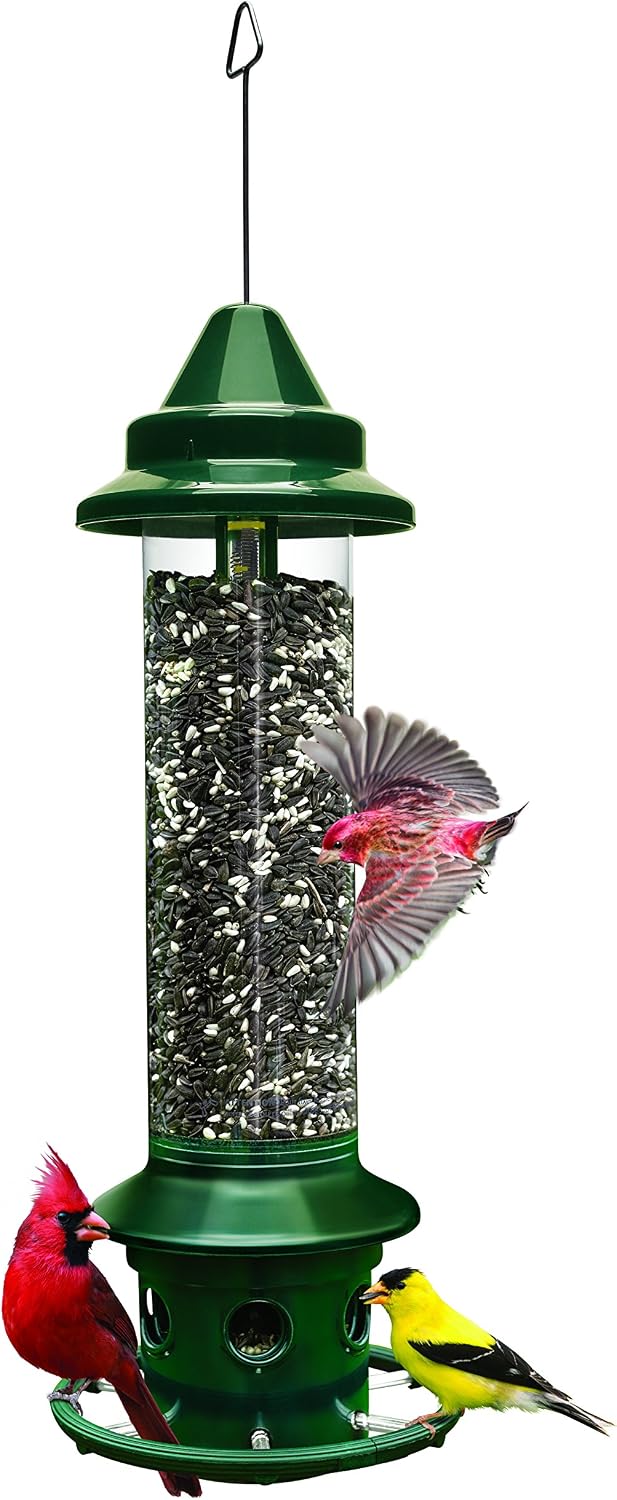
Brome Squirrel Buster Plus
Only feeder I'll call squirrel-proof without a footnote. Seed ports close under weight, every time.
Pricey for a tube feeder. Cardinals need the add-on ring.
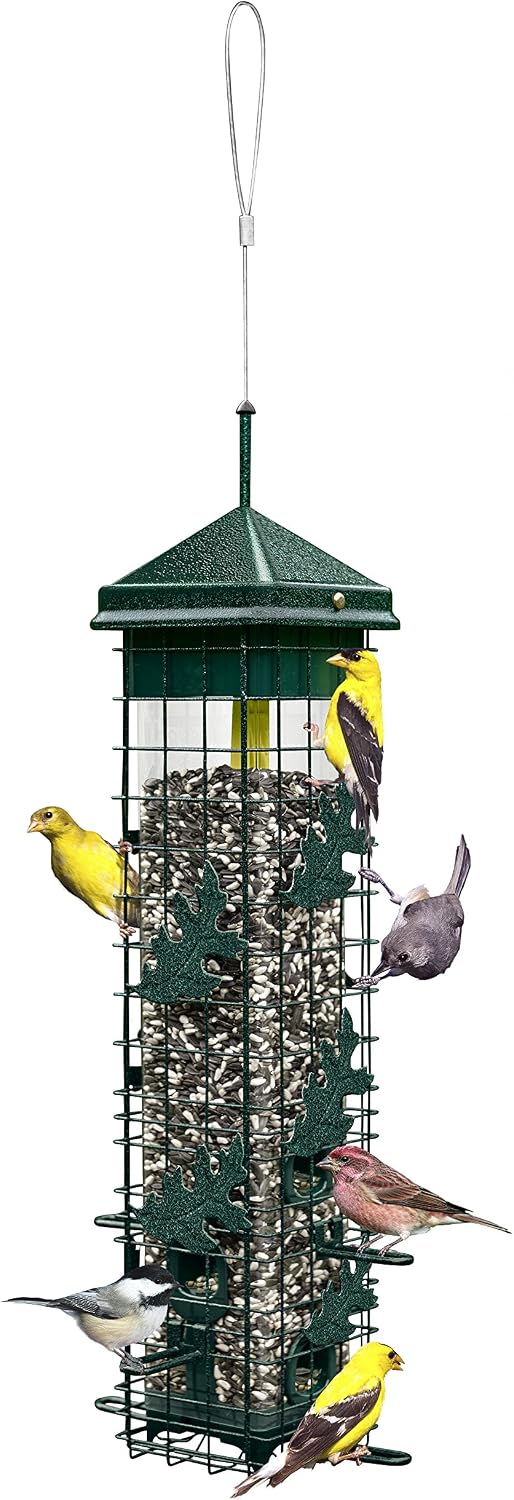
Brome Squirrel Solution 200
Ended the pole war entirely. Two winters, zero squirrels reached the seed.
Heavy. Needs a solid pole or it sags.
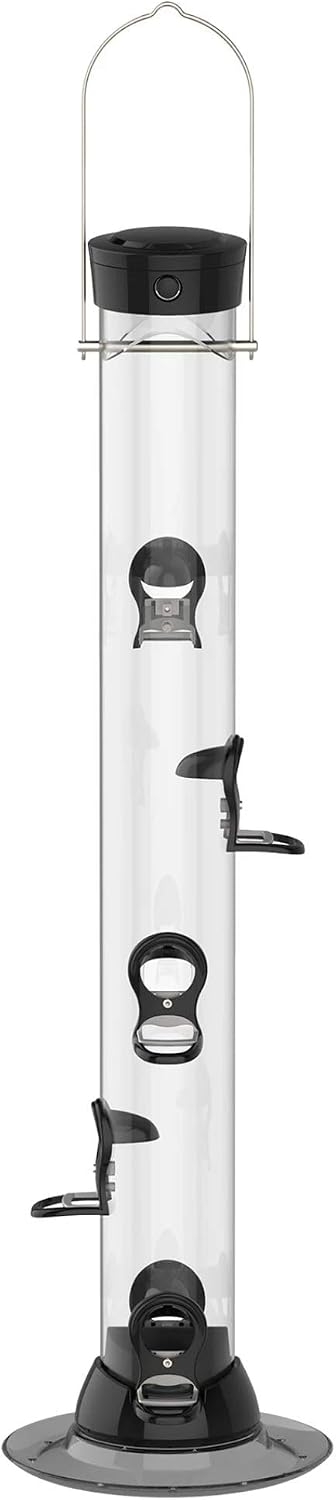
Droll Yankees Onyx Clever Clean and Fill Mixed Seed Bird Feeder, 6 Feeding...
Twist-off base, whole thing goes in the sink. Easiest tube I've owned.
Smaller birds get bumped by bigger ones. No cardinal perch.
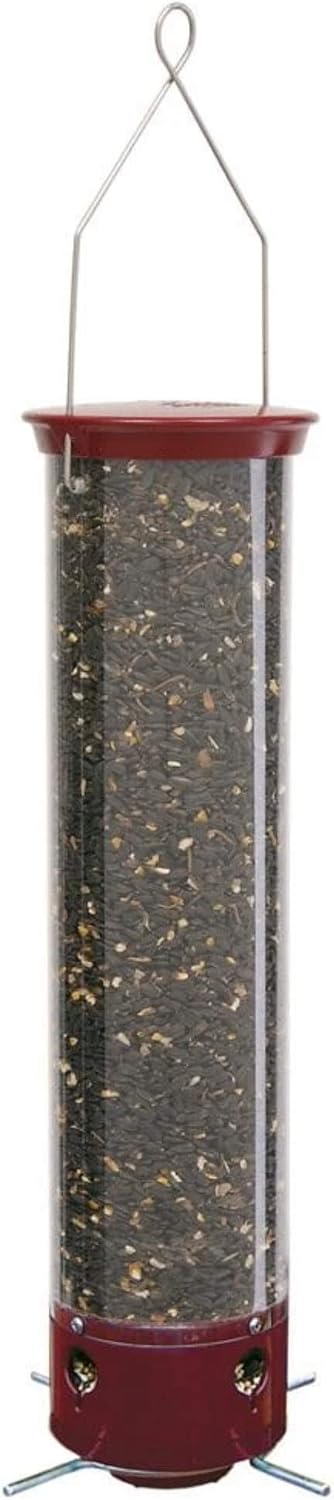
Droll Yankees YCPD-90M Yankee Dipper Bird Feeder, 5 lb, Burgundy
Goldfinches cleared it in five days flat. Mesh keeps nyjer from rotting.
Nyjer only. Don't bother with blends.
Prices and availability were captured from Amazon Creators API and may change.
Every feeder gets one full season minimum before it earns a spot on my fence. The squirrel test is three weeks of letting the neighborhood fox squirrels work on it. If a squirrel reaches seed once, it's "resistant" in my write-up, not "proof." I weigh rehab birds in grams, so I measure feeder draw the same way: cups per week, logged every Sunday.
I don't track prices day to day, so I won't pretend to know next week's. What I know is what things cost per day over a winter, and that math is the only math that matters.
Brome Squirrel Buster Plus: the only real squirrel-proof feeder I own
A fox squirrel spent three weeks hanging upside down off mine. I watched it from the kitchen window with coffee that went cold, and the seed ports closed every single time its weight hit the cage. Not once. Not "mostly." Every time.
That's the difference between squirrel-proof and squirrel-resistant. The Plus uses a weight-activated shroud that drops down and covers the ports. A 4-ounce chickadee lands and feeds fine. A 1.5-pound squirrel lands and the ports shut like a bank vault.
The version I own is the 20-inch tube, and it's been up for three winters now. Draw runs about three cups a week in January here, which is steady for a tube this size. The squirrel cage is wide enough that cardinals and blue jays can feed through it, but they bounce off the cage bars if they try to perch on the outside.
The Cardinal Ring fixes that, and I'd call it required if you want cardinals to stick around.
Cleaning is the weak point. The shroud and cage come apart, but it takes a few minutes and a screwdriver the first few times. After a while you learn the trick and it's a two-minute job.
The Brome Squirrel Buster Plus is the only feeder I'll call squirrel-proof without a footnote.
Brome Squirrel Solution 200: what finally ended the war
Here's the thing about the Plus: it protects the tube feeder, but the squirrels just moved to the pole below it and started chewing through the hanger. That's where the Solution 200 comes in.
It's a baffle, but not the cheap dome kind that squirrels learn to jump over. The Solution 200 is a 200-pound capacity spring-loaded cage that mounts on the pole. A squirrel steps on it, the cage drops, and the pole becomes a dead end. I've watched my resident fox squirrel try every approach for three weeks. It hasn't reached the seed once.
Two winters in, no squirrel has reached the seed above it. The log shows continuous feeding through January and February, which is exactly what you want when it's 10 degrees out and the chickadees need calories.
The catch is weight. This thing is heavy, maybe 4 pounds, and it needs a solid pole. I've got it on a steel shepherd's hook that's sunk into a concrete base, and it doesn't budge. On a flimsy aluminum pole, it would sag.
If you've got one feeder and one squirrel problem, the Plus alone might do it. If you've got a pole with multiple feeders, the Solution 200 is the piece that makes everything above it work.
Droll Yankees Onyx Clever Clean 18": the tube feeder for people who hate cleaning
I'll say it plain: a dirty feeder is a disease vector with a perch. Every salmonella case I've seen in rehab traced back to a feeder nobody took apart since fall. House finch eye disease spreads the same way.
The Onyx is the only tube I've owned where "easy clean" is actually true. The base twists off in one motion, the perch rings slide off, and the whole thing goes in the sink. No crevices, no hidden corners, no disassembly puzzle. I can have it apart, washed, dried, and back on the pole in under five minutes.
The downside is the perch spacing. The rings are set for smaller birds, so cardinals and blue jays struggle to get a comfortable grip. I get chickadees, titmice, nuthatches, and goldfinches on mine. The bigger birds go to the platform feeder.
Draw runs about three cups a week in January here, which is consistent with the Brome. The Onyx is the tube feeder I recommend to people who say they hate cleaning feeders. The base twists off in one motion and the whole thing goes in the sink.
Droll Yankees New Generation Finch Flocker: the nyjer feeder that made goldfinches stay
I logged 14 goldfinches on this feeder at once in February. Fourteen. On a feeder that's maybe 18 inches of mesh. That's a draw number that shows up in the log and makes me do a double take.
The Finch Flocker uses a stainless steel mesh instead of the typical nylon sock. That matters because nyjer goes rancid in a sock within a week, and goldfinches won't touch it once it does. The mesh lets air through, so the seed stays fresh longer, and the birds can cling to the sides instead of fighting for a perch.
It's a clinger feeder, built for birds that feed hanging sideways or upside down. Goldfinches, pine siskins, and the occasional redpoll all use it. Perch birds like house finches will try, but they're not built for it.
The price is the sticking point. It costs three times what a nyjer sock costs, and if you're only getting a few goldfinches a week, that's hard to justify. But the log says goldfinches cleared the Finch Flocker in five days flat. I'm not guessing, I count cups.
Aspects HummZinger Ultra: the hummingbird feeder that doesn't become a mold experiment
The FOS ruby-throated hit the HummZinger on April 20th two years running. That's the kind of date consistency that makes the log worth keeping.
The HummZinger Ultra is a wide-mouth feeder with a top that rinses out in 30 seconds. That's the spec that matters, because a hummingbird feeder that's a chore to clean becomes a mold experiment by August. I've seen it in rehab intakes. A dirty hummingbird feeder can kill the birds you're trying to help.
The Ultra holds 8 ounces, which is enough for a week between cleanings in most yards. The ant moat is built in, not an add-on that dries out by Tuesday. The bee guards actually work, which is more than I can say for most feeders in this price range.
It's not squirrel-proof, but hummingbirds don't care. Fox squirrels will occasionally investigate, but they can't reach it if it's hung on a wire away from the pole.
What doesn't work
I've tested a lot of squirrel-proof claims over the years. Most fail the three-week fox squirrel test by day two.
The plastic dome baffles with a 2-week warranty are the worst. Squirrels learn to jump over them or chew through them. The suction-cup window feeders fail at the first freeze, and I watched one cup let go at -6°F and hit the porch. Suction cups are for screened porches, not Wisconsin.
The cheapest tube feeders with "squirrel-proof" printed on the box are a joke. The seed ports are too wide, the weight mechanism is too stiff, and a determined squirrel will chew through the plastic cap in an afternoon.
The bottom line
Squirrel-proof is a marketing word. Squirrel-resistant is a real thing, and the difference is measured in weeks, not in the claim on the box. The Brome Squirrel Buster Plus is the only feeder I'll call squirrel-proof without a footnote, and the Solution 200 is the pole baffle that makes everything else work. Everything else is a compromise.
Buy the Brome pair if you want the war to end. Buy the Onyx if you hate cleaning feeders. Buy the Finch Flocker if goldfinches are your target. But don't buy anything with "squirrel-proof" on the box unless it's got a weight-activated port system and a cage a fox squirrel can't defeat. I've got the log to prove it.