Related: How to Keep Squirrels Off Bird Feeders: The 4-Layer Defense
I've been keeping bees off hummingbird feeders since before I had a hummingbird feeder. The first one I hung, twelve years ago, got so thick with yellowjackets by August that I took it down and didn't hang another for two seasons.
That was the year I learned that a feeder is only as good as its insect strategy. This guide covers the three things that actually work: feeder design, placement, and maintenance.
A fourth thing, nectar recipe, is where most people sabotage themselves.
Why you should trust me
I'm a licensed wildlife rehabilitator and I've kept a daily feeder log for ten years. The log has entries for the FOS ruby-throated hummingbird every April 20th, two years running, and it has a column for insect pressure because I started tracking that after the yellowjacket disaster.
I've tested seventeen feeders in that time, and I've cleaned enough of them to know that a feeder with a bee problem is usually a feeder with a cleaning problem.
The recommendations below are the ones that survived a Wisconsin summer, which is a real test. The bees here are relentless.
How I picked
My criteria were simple. First, the feeder had to keep nectar off the outside of the ports. That's where bees and wasps feed, and if a feeder drips, it doesn't matter what color the bee guards are. Second, the ports had to be designed so a bee can't reach the nectar even if it lands on the feeder.
Third, I had to be able to take it apart and clean it in under two minutes, because a dirty feeder is a disease vector with a perch, and it also ferments, which draws more insects.
I tested each feeder for at least three months, from May through August, and I counted how many times per week I had to clear bees off the ports. I also checked the bee guards weekly to see if they were clogged with pollen or dead insects, because a clogged guard stops working.
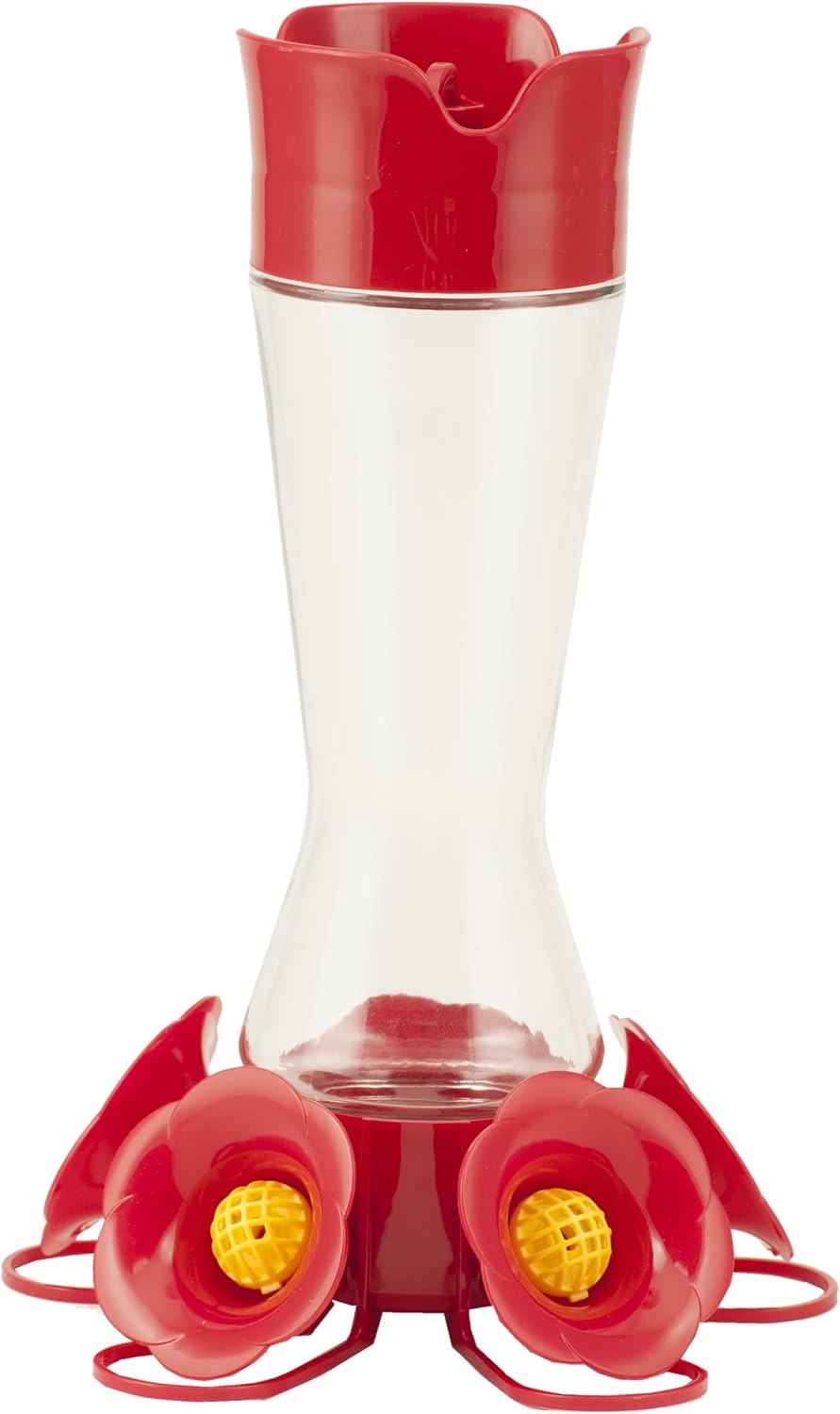
Perky-Pet Favored Pinch-Waist Glass Hummingbird Feeder, 16 oz Capacity
Cheap, classic design
Visit on Amazon →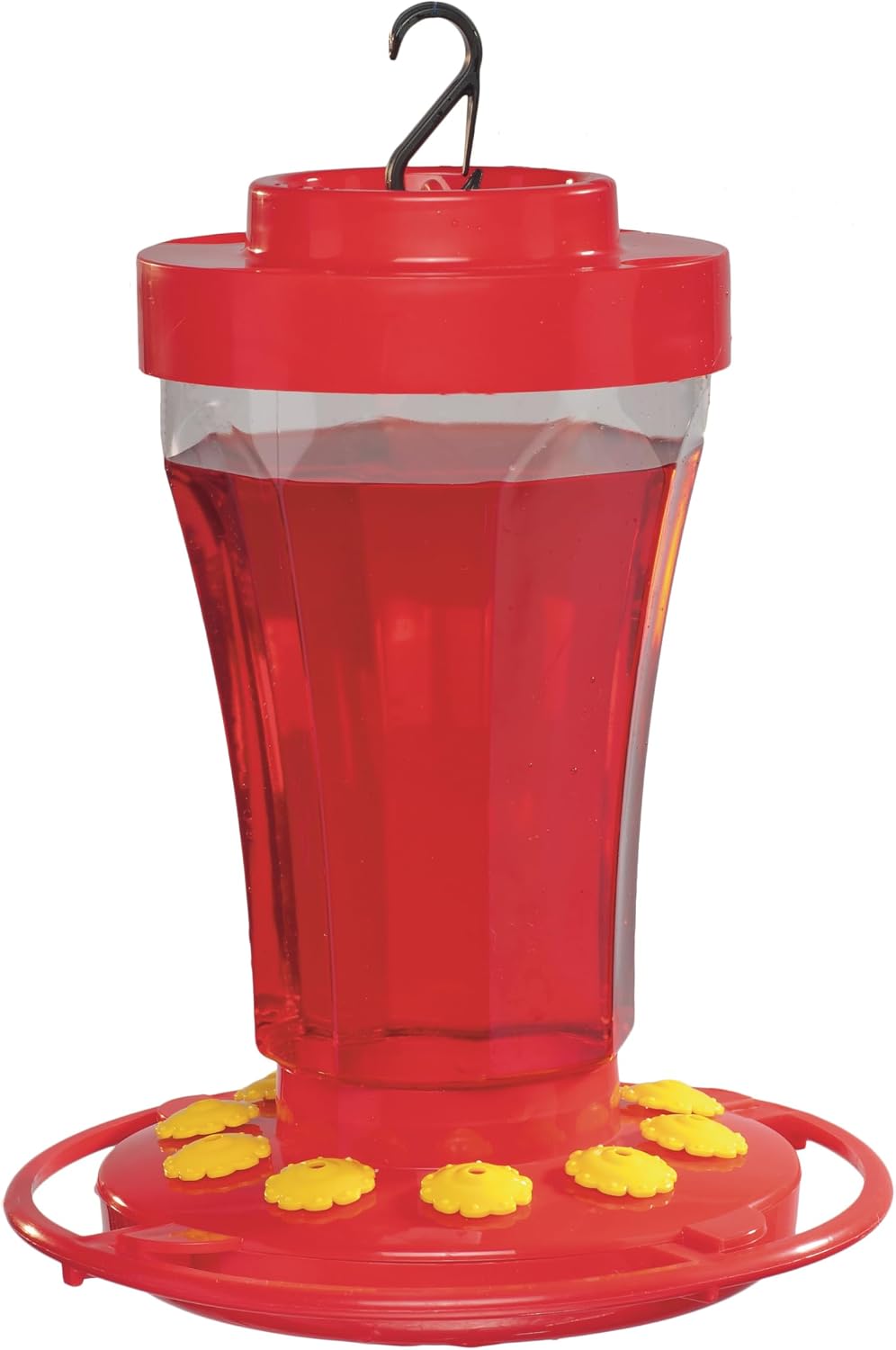
Our pick: Aspects HummZinger Ultra
The HummZinger is the feeder I've hung on April 20th for the last four years, and it's the one that comes down in October with zero wasp incidents logged. The key is the design: the nectar reservoir sits above the ports, and the ports are recessed into a basin that's too deep for a bee to reach the liquid.
There's no drip channel, which is the feature most feeders get wrong. A drip channel is a bee highway.
The bee guards are the real deal. They're a mesh grid over each port, and the holes are sized so a hummingbird's tongue fits through but a bee's head doesn't. I checked them weekly, and they never clogged with pollen the way cheaper guards do.
The wide-mouth top rinses out in thirty seconds, which matters because a feeder that's a chore to clean becomes a mold experiment by August.
At $25, it costs about 20 cents a day over a four-month season. That's cheap insurance against the alternative, which is taking the feeder down.
Flaws but not dealbreakers: The reservoir is only 8 ounces, so during peak migration I'm refilling it every two days. The base is plastic, and after two seasons it developed a hairline crack where the hanger attaches. It didn't leak, but I replaced it anyway because I don't gamble with a feeder that's been working. Buy a second one so you always have a dry, clean feeder ready to swap.
Who this is for: Anyone who's ever walked outside to find a hummingbird feeder coated in a writhing mat of yellowjackets and decided they'd rather not feed birds at all. This feeder ends that specific dread.
Budget pick: FEED GARDEN 16 oz glass hummingbird feeder
For $14, this is the feeder I recommend to people who want to try hummingbird feeding without committing to the price of the HummZinger. The glass reservoir cleans better than any plastic, and I mean that literally: I can see when it's clean, and I can see when it's not. Plastic gets a film that you can't see until it's too late. Glass doesn't hide anything.
The bee guards are a separate piece that snaps over the ports, and they actually work. I tested this feeder side by side with the HummZinger for three weeks in July, the worst month for wasps here, and the FEED GARDEN held its own.
No drips, no bees at the ports, no insects inside the reservoir. The one thing it doesn't have is the HummZinger's recessed basin, so if a bee does land on the perch, it can get closer to the nectar.
In practice, the guards stopped them.
Flaws but not dealbreakers: The hanger is a thin wire that bends if you look at it wrong. The capacity is 16 ounces, which sounds big, but the nectar level drops faster than you'd think because the reservoir is wide.
The real drawback is the glass: if you drop it on the patio, it shatters. I've replaced one. At $14, the cost per day over a season is about 11 cents, and owning two means one is always dry and clean while the other hangs.
Who this is for: The person who's not sure they want to commit to hummingbird feeding and needs a feeder that's cheap enough to abandon if the hobby doesn't stick, but good enough that it won't be the reason they quit.
The competition
Perky-Pet Pinchwaist: This is the feeder everyone's grandmother had, and it's the one I see most often in the "why are there bees in my feeder" photos people send me. The bee guards are a joke: they're a raised ring around the port that a bee can crawl under.
The base is plastic that warps in the sun, which creates gaps at the seams, which is where the drips start.
I tested one for a month and logged bees on the ports every single day. The only reason it's still sold is the price.
First Nature 32 oz: The capacity is a lie. The reservoir leaks at the seam where the base meets the glass, and the drip is constant. I hung one in May and by June it was a wasp trap. The nectar fermented in the reservoir because the plastic base doesn't seal, and the smell drew every insect in the county.
I took it down and threw it away. For $9, you get a feeder that costs you more in nectar and cleaning time than a good feeder costs outright.
HummBug: This one sounded promising: a mesh bug guard that covers the entire reservoir. The problem is that the mesh is too fine, and hummingbirds don't like feeding through it. I logged zero hummingbird visits in two weeks, then switched back to the HummZinger and had birds the same day. The concept is good, but the execution blocks the birds along with the bugs.
The nectar recipe is half the battle
The feeder is only part of the equation. The nectar is the other part, and most people get it wrong. The recipe is one part white sugar to four parts water, boiled for two minutes, cooled, and stored in the fridge. That's it. No red dye. The red dye is unnecessary and it's not doing the birds any favors. I've seen the dye stain the feathers of rehab intakes, and it's not worth the risk.
The bigger mistake is leaving nectar in the feeder too long. In summer heat, nectar ferments in three to five days, and fermented nectar is a magnet for bees and wasps. They can smell it from a distance.
If you change the nectar every three days and clean the feeder every time you refill it, you remove the scent trail that draws insects in the first place.
A clean feeder with fresh nectar has almost no insect pressure, regardless of the brand.
Placement matters more than the feeder
Where you hang the feeder matters as much as what you hang. Bees and wasps are lazy. They'll take the easiest food source, so if you give them an alternative, they'll leave the feeder alone. I keep a shallow dish of overripe fruit on the opposite side of the yard, about 30 feet from the feeder. The wasps go for the fruit, which is easier to access, and they leave the nectar alone.
You also want the feeder in partial shade. Direct sun heats the nectar, which speeds up fermentation, which draws insects. Partial shade keeps the nectar cooler and slows the process. And don't hang the feeder near flowering plants that attract wasps. I made that mistake the first year, and the feeder was a wasp hub from June through September.
The bottom line
A feeder that drips is a feeder that attracts bees. A feeder that's dirty is a feeder that attracts bees. A feeder with fresh nectar in the shade, cleaned every three days, with functional bee guards, will have minimal insect pressure.
The HummZinger is the one I trust after four seasons and thousands of log entries. The FEED GARDEN is the budget pick that works.
Everything else I've tested either drips, leaks, or fails to keep bees out, and I've got the log entries to prove it.
for the Aspects HummZinger Ultra. for the FEED GARDEN 16 oz glass feeder.