I keep a spreadsheet I call the log: every species that hits my yard, first-of-season dates for migrants, and how many cups of seed each feeder draws per week. Ten years of entries have taught me that a bird feeders and bird bath comparison is really a comparison of two chores, cleaning and refilling, and that everything else printed on the box is decoration. I run the songbird side of a county wildlife rescue out of my garage, which means I see the back end of feeder problems: the salmonella intakes, the house finch eye disease, the window strikes. Nearly all of it traces back to a feeder nobody took apart and a bath nobody rinsed.
So when four products land on my bench, I am not ranking product photography. I am asking what a Wisconsin February does to them, how long a full teardown takes, and whether a determined fox squirrel gets a meal out of it. The four here are a smart camera feeder, a 37-inch bath with a recirculating pump, and two Amish-made poly hoppers from the same builder, one with a suet holder and one without.
The short version: water brings more species than any seed blend, the big hopper holds the most seed per refill, and the camera feeder is worth buying only after you have honestly answered the cleaning question.
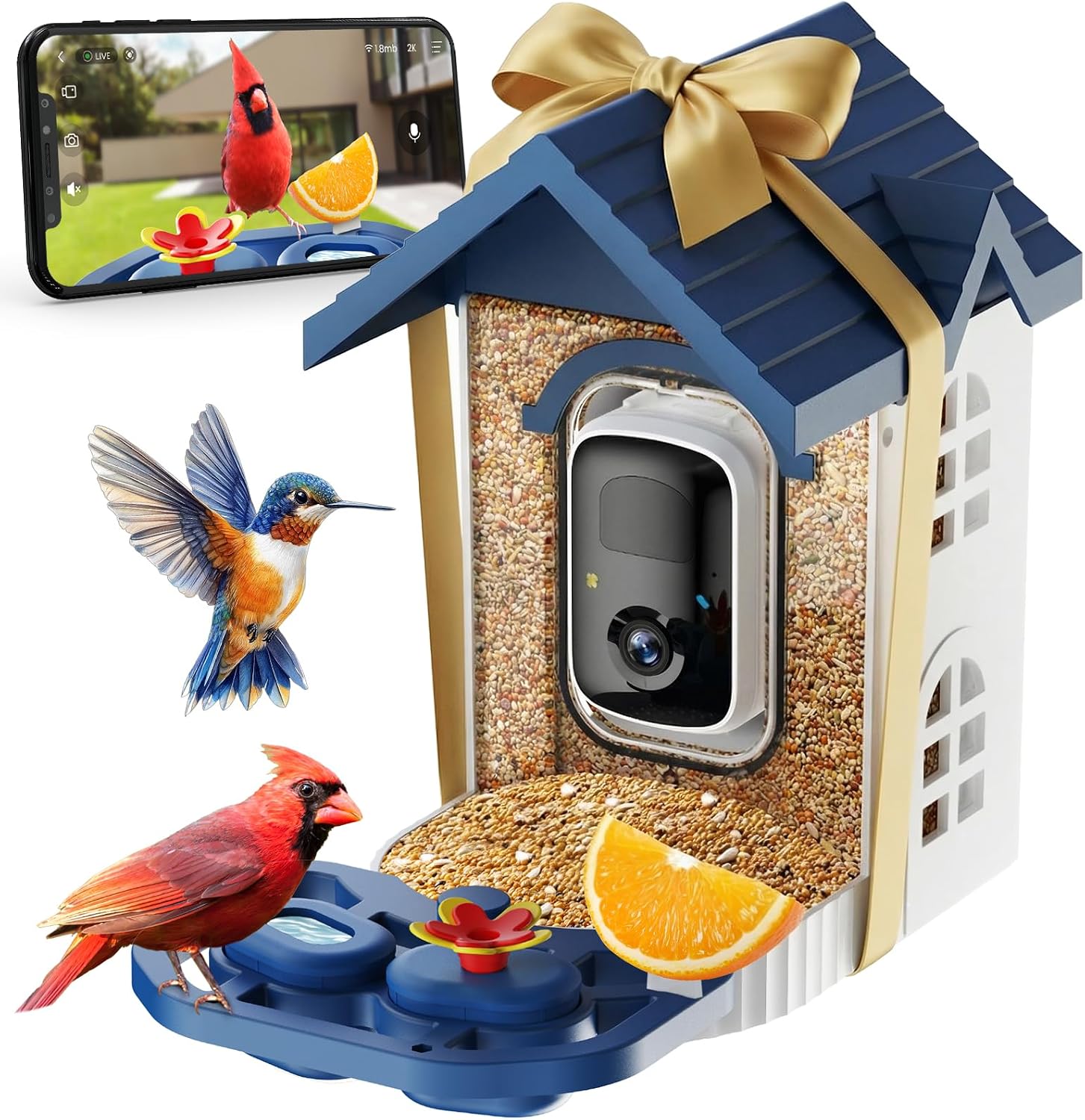
Smart Bird Feeder with 2K HD Camera Squirrel Proof Weatherproof Outdoor
Documents every visitor with a 2K camera, and the housing is built for weather
Electronics make the weekly teardown slower, and app features are the part you cannot inspect before buying
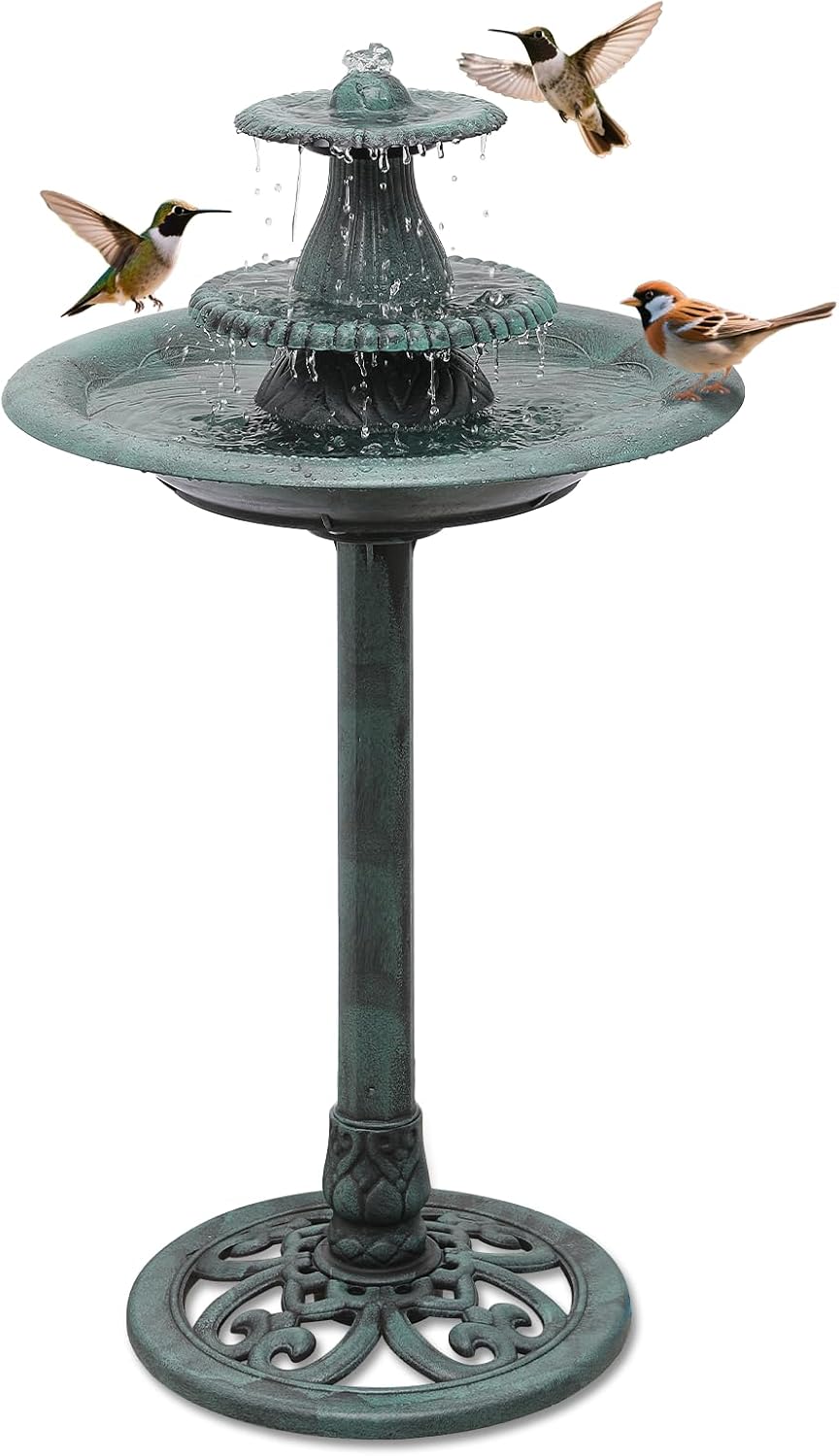
Athena Collection 37" Bird Bath for Outside with Recirculating Pump, Green
Moving water is the single best species draw in my log from June through August
The pump is one more thing to clean and store, and a 37-inch basin is heavy to dump
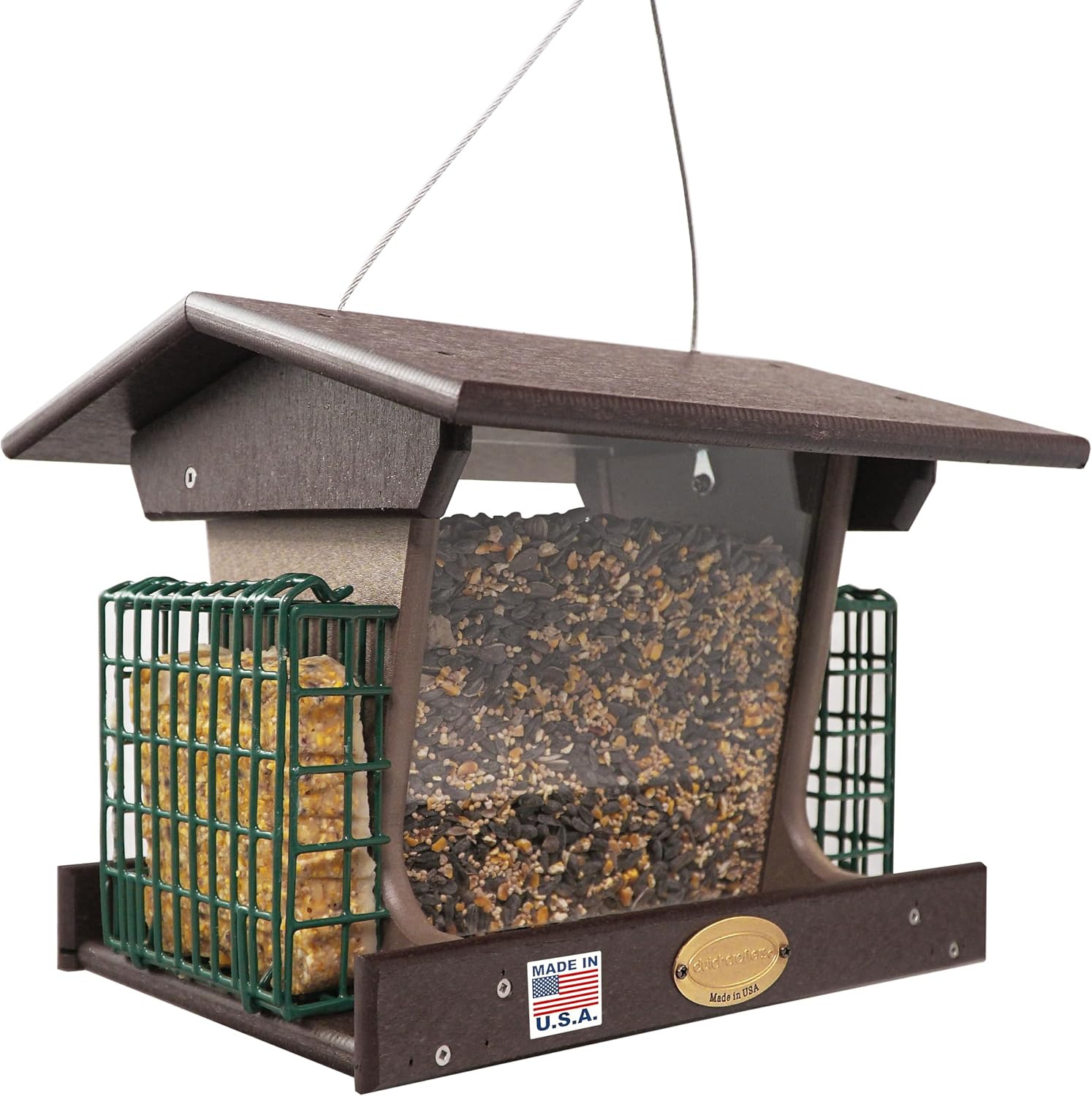
DutchCrafters Poly Hopper Bird Feeder with Suet Holder, Large Bird Feeder for Outdoors Hanging, Amish American Made (Milwaukee Brown & Weatherwood)
Big capacity plus a suet cage covers perch birds and clingers from one station
Seed sits in a hopper, and sitting seed plus rain is how you grow mold
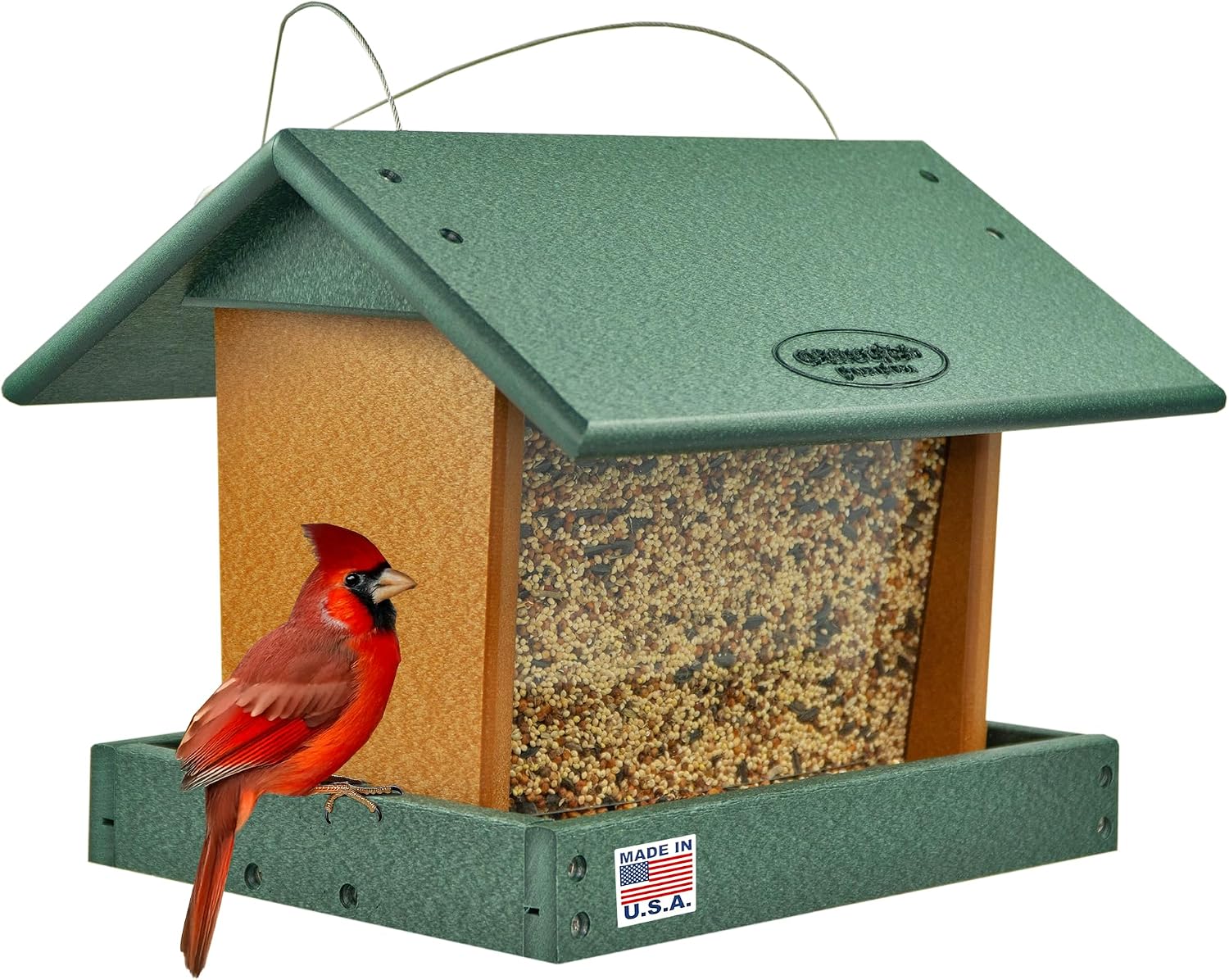
DutchCrafters Poly Hanging Hopper Bird Feeder, Large Hanging Bird Feeder for Outside, Outdoors, Amish American Made (Turf Green & Cedar)
Hangs, so you can take the whole thing down to clean instead of balancing on a stool
No suet cage, so woodpeckers and nuthatches need a second station
Prices and availability were captured from Amazon Creators API and may change.
How I judge a feeder or a bath
Five questions, in order, and the order matters:
- Will birds actually use it, or will it sit pretty on the pole while the juncos ignore it?
- Can I take it apart and clean it in under ten minutes?
- What does a determined fox squirrel do to it in week one?
- Will it survive a Wisconsin February, freeze, thaw, freeze?
- Would I still hang it after four seasons?
Notice what is not on the list: how it looks in a product photo. My log does not record finishes. It records draw, which is how fast a station empties. A feeder that empties in five days is working. A feeder that still holds seed on day twenty is either badly placed, badly designed, or full of filler the birds are sorting out onto the ground.
Water first, because the log says so
From June through August, my bath collects more entries than every feeder in the yard combined. That is not sentiment, that is ten years of rows in a spreadsheet. Birds need water for drinking and for bathing, and they need it more often in heat than they need sunflower hearts.
The Athena Collection bath brings a 37-inch basin and a recirculating pump, which is the combination I would point a new birder toward first. Moving water is audible, and sound is what pulls birds in from across the block. A still basin works, but a basin with a pump works faster and stays clearer, because water that moves does not grow algae on the same schedule.
Two honest caveats. First, 37 inches is a real basin, which means real water volume to dump and refill, and that is a heavier chore than a small pedestal bath. Second, the pump is a maintenance item. Impellers collect feathers, seed dust, and grit, and a pump you never open becomes a pump you replace. If you will not clean a pump, buy a still bath and change the water daily.
And the winter note: a recirculating pump and hard freeze do not mix. In Madison, a pump bath gets drained and stored before the first hard frost, and a heated bath takes over the winter duty. That is a limitation of the design, not a flaw in this particular bath.
The camera feeder: photos versus chores
The Smart Bird Feeder with 2K HD Camera is the one product here that adds a capability rather than a capacity. A 2K camera in a weatherproof housing means every visitor gets documented, including the ones that land at 6:40 in the morning while I am still in the kitchen. For someone who keeps a log, that is genuinely useful. I have written before that the photos are the fun part and the subscription question is the part that grates, and nothing about a camera feeder changes that math.
Four things to verify before you buy any camera feeder, this one included:
- Whether recordings require a paid subscription or save to a local card.
- What happens when the Wi-Fi drops, which in a Wisconsin February it will.
- Whether it runs on batteries, a cord, or solar, and how that interacts with your mounting spot.
- How many seams the housing has, because every seam is a place for moisture and seed dust to collect.
On the squirrel claim in the name: I treat "squirrel proof" as a marketing phrase until a fox squirrel has had three weeks with the product. The design may well hold up. What I will not do is repeat the claim as if it were a measurement.
The real trade-off with a camera feeder is cleaning. A tube feeder goes in the sink. A camera feeder has electronics, a lens, a housing, and a port, and each of those has its own cleaning step. If your current routine is a hose spray, a camera feeder will expose that habit within a month.
The two poly hoppers
These two come from the same builder and share the same core idea: poly lumber, Amish made in the United States, built to sit outside year round without paint to peel, rot to find, or cedar to crack. Poly is heavier than wood, which matters at hanging height, and it cleans with a brush and a hose rather than a scraper.
The DutchCrafters Poly Hopper Bird Feeder with Suet Holder in Milwaukee Brown and Weatherwood is the one I would call the winter workhorse. The hopper holds a real volume of seed, which means fewer refills during a January cold snap, and hopper designs are what pull in the bigger perch birds: cardinals, blue jays, grosbeaks, and the finches that ignore small ports. The suet holder is the part that earns its place, because suet is clinger food. Woodpeckers, nuthatches, and chickadees feed hanging sideways, and a cage gives them something to grab that a hopper tray does not.
The catch with any hopper is that seed sits. Seed that sits through a wet week is seed that clumps and molds, and moldy seed is a disease problem, not a waste problem. A large hopper is only a good buy if you are willing to empty it fully, dry it, and start over on a schedule rather than topping it off. In July, suet in a Wisconsin yard is also a losing proposition, so the cage earns its keep from roughly November through March.
The DutchCrafters Poly Hanging Hopper in Turf Green and Cedar is the same family with a different job. Hanging means height adjustable, and it means the whole feeder comes down to the cleaning station instead of you going up to it with a brush in the cold. If you have ever cleaned a feeder while standing on a step stool on ice, you understand why that matters. What it gives up is the suet cage, so if woodpeckers are the reason you feed, plan on a second station or accept that this one is for perch birds only.
Choose between them on your bird list, not on color. If your log shows downy and hairy woodpeckers and you want one purchase, take the version with the suet holder. If your priority is a cleanable station you can pull down in one motion, take the hanging version.
Squirrel proof is a marketing word
Squirrel resistant is the honest term, and the difference is measured in weeks. My test is simple: a fox squirrel gets three weeks with a feeder before I write a word about whether it holds. If the squirrel reaches seed once, the product is resistant in my write-up, not proof.
The design rules matter more than the label. A feeder within ten feet of a fence, a branch, or a roof line is a launch pad. A pole-mounted feeder needs a baffle below it, and a hanging feeder needs either a baffle above it or enough distance from anything a squirrel can leap from. No feeder survives a bad placement, and no feeder in this comparison comes with placement included.
Cleaning is the spec nobody prints
Every salmonella case I have seen in rehab traced back to a feeder that had not been taken apart since fall. That is the sentence I want people to remember, more than any capacity number in this article.
The routine I actually run: a weekly teardown in warm months, a scrub with a brush into the corners and ports, a disinfectant soak on a rotating schedule, a full dry before refilling, and clean water in the bath every day or two. Poly hoppers make that easier because there is no wood grain to hide debris. A camera feeder makes it harder because of the electronics. A pump bath adds an impeller and a filter to the list.
A dirty feeder is a disease vector with a perch on it. If a station cannot be disassembled, it cannot be cleaned, and it does not belong in a yard where birds gather.
Which one fits your yard
If your window looks out on a deck and you want birds close, start with water. The Athena Collection bath pulls species that never touch a seed feeder, and it will show up in your own notes faster than any hopper will.
If you feed a family and want documentation, the camera feeder is the fun purchase, provided you will maintain it and you have settled the subscription question for yourself first.
If you want fewer refills and a station that survives four seasons, the poly hopper with the suet holder is the highest-capacity, lowest-maintenance option here, with the hanging version as the easier-to-clean alternative.
What I would hang first
Water first, then capacity, then documentation. That order has not changed in ten years of the log, and it is the order I would hand to anyone starting a yard from scratch. Set the bath where you can see it and where a cat cannot sit under it. Hang the big hopper on a pole with a baffle. Add the hanging hopper as a second station if you want a rotation that lets one dry while the other serves. Buy the camera feeder when you want the record, not because you think it will bring birds a plain hopper would not.
Each row in the table above links to the current listing, so you can check the details that change, including price, at the source.