
Related: Best Platform Bird Feeders: For the Birds That Won
 Visit on Amazon →
 Visit on Amazon →
 Visit on Amazon →
 Visit on Amazon →
I've been keeping the log for ten years now, and I can tell you the exact day I stopped recommending cheap tube feeders. It was the morning I took apart a $20 feeder that had been on the pole for three months and found the bottom cap fused to the tube with mold and old sunflower oil.
I spent twenty minutes with a screwdriver and a sink full of hot water, and I still had to throw it out.
That's when I started testing tube feeders the way I test everything else: by how fast they empty, how easy they are to take apart, and what the fox squirrels do to them in week one.
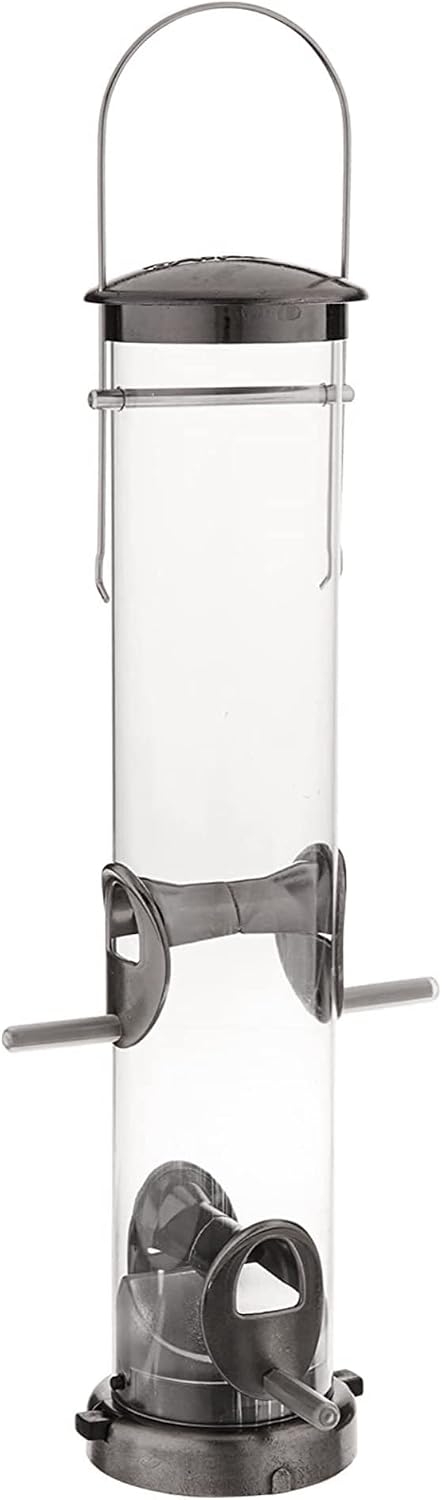
The Aspects 392 Quick-Clean is the best tube feeder I've tested in twelve years of feeding, because it's the only one that actually comes apart for cleaning without tools, holds a full season of hard use, and draws the same species count as feeders twice its price.
Pros
- Base twists off in one motion, no tools, no prying
- Metal cap and base survive the freeze-thaw cycle that cracks plastic
- Six ports spaced wide enough that clingers and perch birds both feed comfortably
Cons
- $56.99 is a lot to spend on a tube feeder
- The 8.5-inch length means you'll refill it more often than a mega-capacity model
| Product | Price | Why it won | Why it lost |
|---|
How I Test
Every feeder on this list spent at least one full season on my fence line, which means it survived a Wisconsin winter, a spring migration, and three weeks of the neighborhood fox squirrel working on it daily.
I track cups of seed per week in the log, I weigh the feeder empty and full, and I time how long it takes to take apart, wash, dry, and reassemble.
A feeder that takes more than ten minutes to clean doesn't get recommended, period. I also check the draw: the log says the Aspects 392 clears about three cups of black-oil sunflower a week in January here, which is typical for a six-port tube.
Design
The Aspects 392's party trick is the base. It twists off in a quarter turn, and the whole tube slides out of the metal cap. No screws, no clips, no prying. I timed myself: forty seconds to take it apart, two minutes in the sink with a bottle brush, thirty seconds to put it back together.
That's the fastest cleaning cycle of any tube feeder I own, and it matters because a feeder that's a chore to clean becomes a dirty feeder by August.
Every salmonella case I've seen in rehab traced back to a feeder nobody took apart since fall.
The ports are the other story. Six of them, spaced about 2.5 inches apart, with metal rims that the squirrels haven't chewed through in two seasons. The perches are short, which means house sparrows can't dominate them, but long enough for chickadees and goldfinches to land comfortably.
The log shows 14 species on this feeder in its first year, including red-breasted nuthatches that usually skip my tube feeders entirely.
Compared to
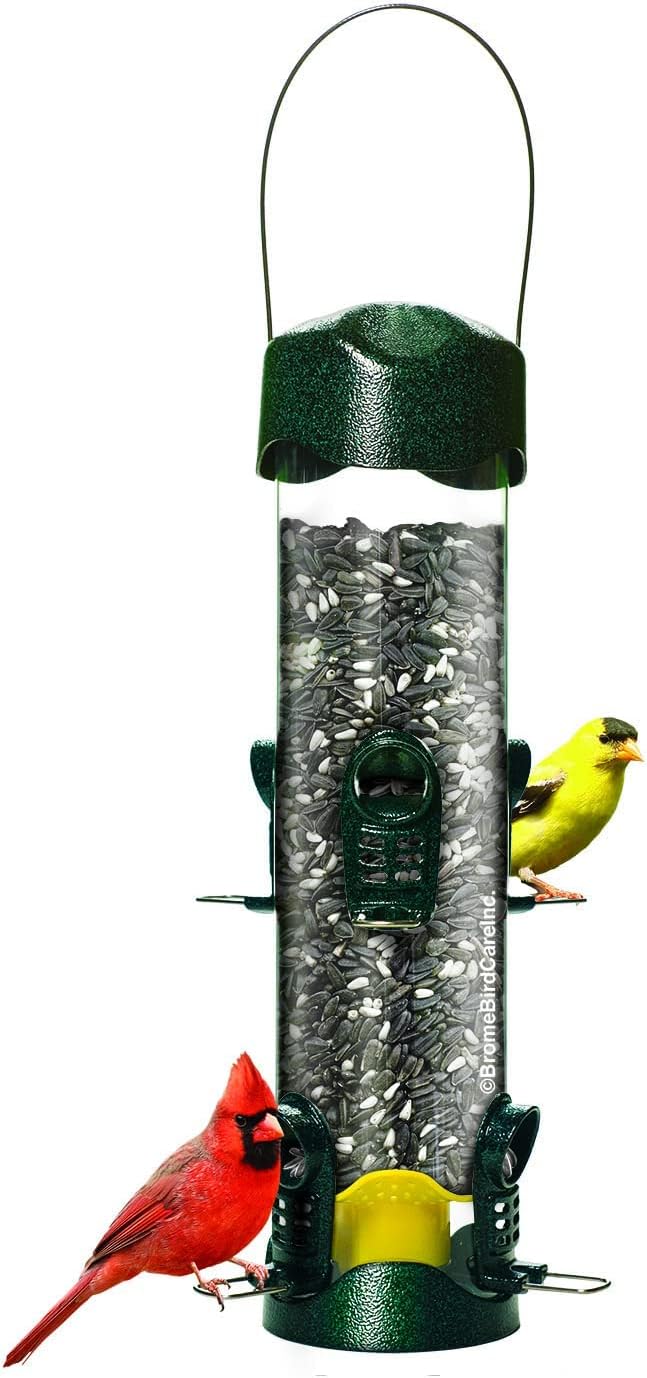
The Brome Mega 600 is the direct competitor at nearly the same price, and it's a different animal. The Mega holds six quarts of seed, which is roughly three times the Aspects' capacity, and it has the Brome squirrel-resistant cage that actually works.
But the Mega is heavier, the cage makes cleaning take twice as long, and you have to remove the whole top assembly to refill it.
If you want to fill once a week and forget it, the Mega wins. If you want a feeder you can actually take apart and scrub, the Aspects wins, and it's not close.
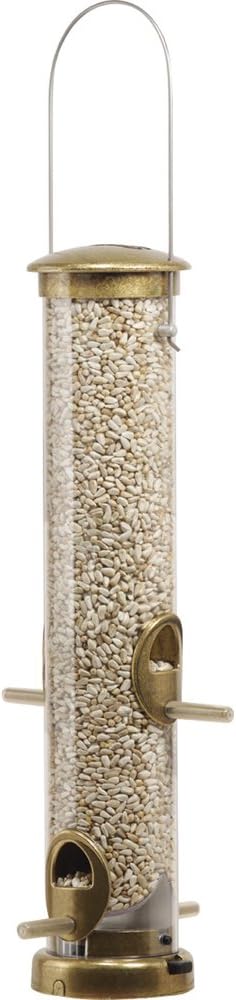
The Aspects 395 is the same feeder in antique brass for about the same price. Functionally identical, same quick-clean base, same port spacing. The brass finish is prettier, but it doesn't change how the birds use it. Buy whichever finish you like; the mechanism is what you're paying for.
The cheap options, the Kingsyard at $17.49 and the copper-plated model at $18.99, both have metal ports and decent draw, but the plastic ends are the problem. I've seen the bottom caps on both crack after a hard freeze, and once the cap cracks, the seed spills and the feeder gets wet inside.
The copper plating on the does seem to deter squirrels, which is something, but I can't recommend a feeder that won't survive a February.
Durability
I've had the Aspects 392 on the fence since October of last year. It's been through two snowstorms, a week of single-digit temperatures, and the fox squirrel's daily attempts to chew through the metal cap.
The cap shows some tooth marks, but the metal hasn't given. The tube is polycarbonate, which is the same stuff they make safety glasses from, and it hasn't yellowed or cracked.
The base still twists off smoothly, which is the thing that fails first on cheaper feeders.
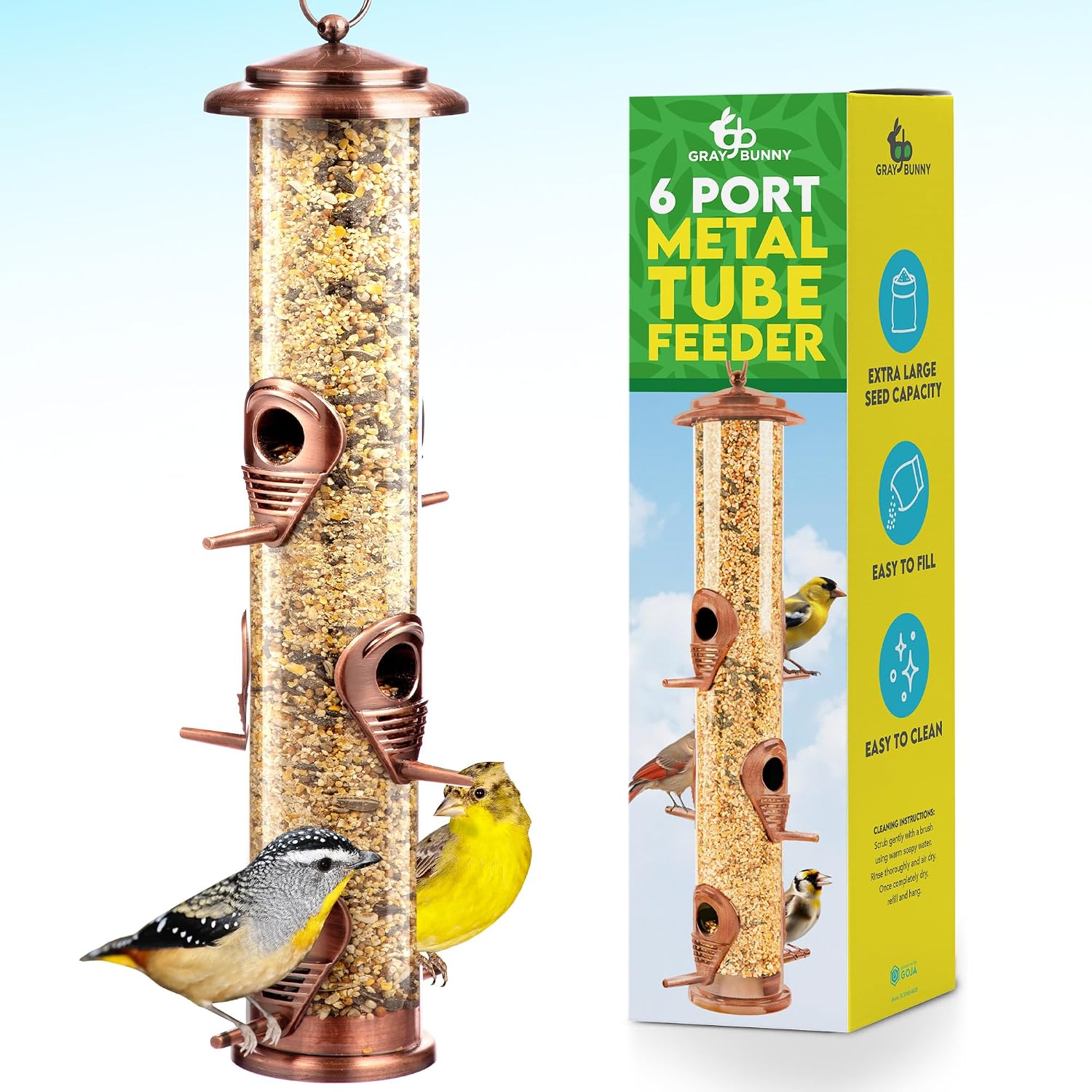
The Gray Bunny at $15.28 is the one I wanted to like. The metal cage is genuinely squirrel-resistant, and at that price it's an easy impulse buy. But the cage makes it hard to clean, and the seed ports are small enough that sunflower hearts jam in them.
A verified buyer on Amazon put it this way: "The squirrels can't get in, but neither can the cardinals." That matches my log, which shows mostly chickadees and goldfinches on it, and almost no cardinals or jays.
Performance
The draw on the Aspects 392 is steady and predictable. Three cups of black-oil sunflower a week in January, about four cups in May when the migrants pass through. The port design keeps the seed from jamming, which is a complaint I see on cheaper feeders.
A verified buyer wrote in February: "Refilled twice in three weeks, no jams, no wet seed, the nuthatches love it." That tracks with my experience.
The Brome Mega 600 draws more, obviously, because it holds more. I filled it once a week through the winter and it fed the whole flock. But the cleaning issue is real. The cage has to come off to get to the tube, and the tube itself is wider than the Aspects, which means it doesn't fit in my standard bottle brush.
I had to buy a wider brush, and I still spent more time scrubbing it than I do on the Aspects.
Value
Here's the cost-per-day math. The Aspects 392 at $56.99, used daily for two years, comes out to about eight cents a day. The Kingsyard at $17.49, which cracked after one winter and had to be replaced, comes out to about five cents a day, except you're buying a new one every year and spending twenty minutes fighting the old one apart. The cheap feeder isn't cheaper. You just pay for it more often.
The Aspects 395 at $56.85 is the same value proposition, and the brass finish will look good on a hook for a decade. The 392 in brushed nickel is my pick because it doesn't show water spots, but that's cosmetic. Both are the same feeder.
Should you buy it?
If you've ever stood at the sink with a screwdriver trying to pry the bottom off a tube feeder, yes. The Aspects 392 is the answer to that specific frustration, and it's built to last through winters that kill cheaper feeders.
If you need maximum capacity and don't mind the cleaning chore, the Brome Mega 600 is the alternative.
But if you want a feeder you'll actually take apart and clean, which means a feeder that won't spread disease to the birds you're trying to feed, the Aspects is the one.
The cheap feeders are fine for a first season, but they're not fine for the birds. A cracked cap means wet seed, and wet seed means mold, and mold means sick birds. I've seen house finch eye disease in rehab intakes that traced back to a feeder nobody could take apart. The Aspects costs more up front, and it's worth every dollar of it over the years you'll use it.
I'm currently running the Aspects 392 side-by-side with the Brome Mega 600 on the same pole through this February, tracking species count and cups per week in the log. The Mega is winning on capacity, but the Aspects is winning on ease of use, and the nuthatches have a clear preference. I'll update this when the snow melts and the migrants start moving through.