Related: Where to Hang a Feeder So Birds Stop Hitting the Window
The first thing I do with any new feeder is hang it and let the log settle the argument. Twelve years of feeding backyard birds and ten years of writing down species, first-of-season dates, and cups of seed per week have made me a skeptic about packaging. A squirrel-proof bird feeder is the hardest claim in this hobby to earn, because the animal doing the testing has never read a product page.
This comparison covers four different jobs: a weight-activated tube feeder built for the squirrel war, a caged feeder for smaller yards and smaller budgets, a no-melt suet cake for the woodpeckers and nuthatches that work the trunks, and a solar camera feeder for people who want the log to fill itself in. I keep them separate on purpose. A tube that empties in three days is not competing with a suet cake that lasts a week, and neither one replaces the other.
One thing up front, because it is the part of feeding birds that gets skipped: a dirty feeder is a disease vector with a perch. The house finch eye disease and the salmonella cases that come through rehab intake almost always trace back to a feeder nobody took apart since fall. Whatever you hang, budget ten minutes a week and a bottle brush.
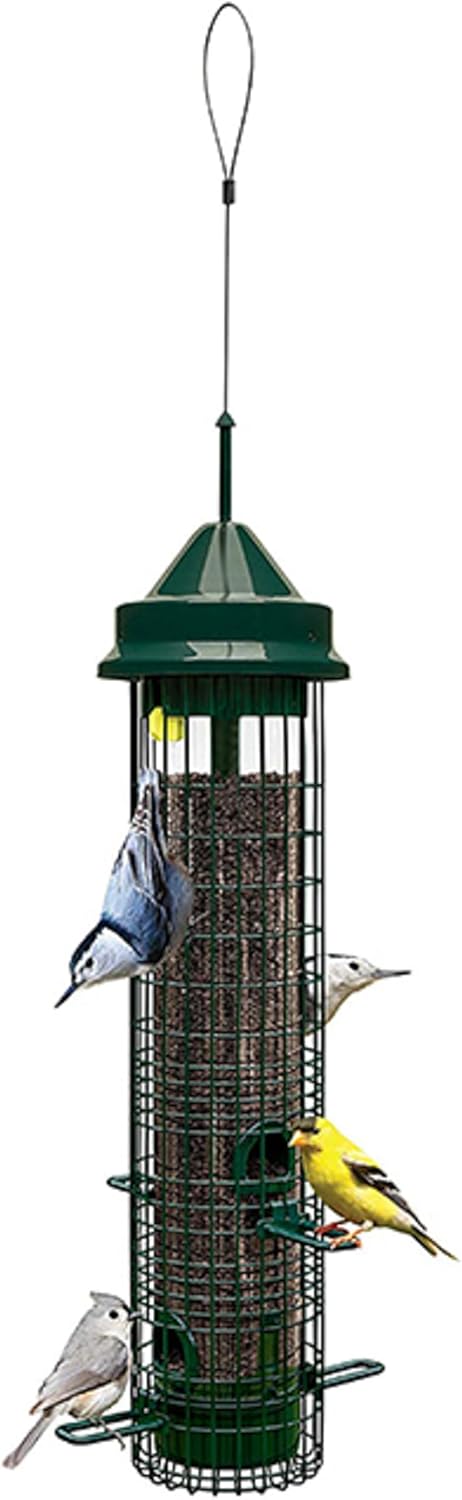
Squirrel Buster Classic: the tube for a yard with a real squirrel problem
This is the smaller sibling of the Brome feeder I will call squirrel-proof without a footnote, and it works on the same principle. A squirrel's weight on the outer cage closes the feeding ports. Not a baffle, not a shock, not a spinning collar: the bird-sized animal keeps eating and the heavier one gets shut out. Four feeding ports, 2.4 pounds of seed capacity, and a hangar that survives a Wisconsin February of freeze, thaw, freeze.
Two things to know before you buy one. First, 2.4 pounds is not a lot of seed. That is fine if you are home to refill it and less fine if you travel, and the draw is the number that matters. A busy tube in January empties faster than the capacity printed on the box suggests. Second, the cage that makes the whole thing work is also why a cardinal can look clumsy on it. Bigger birds do not always get a comfortable grip on a caged tube, so if cardinals are the point of your setup, hang this one beside something more open rather than replacing everything with it.
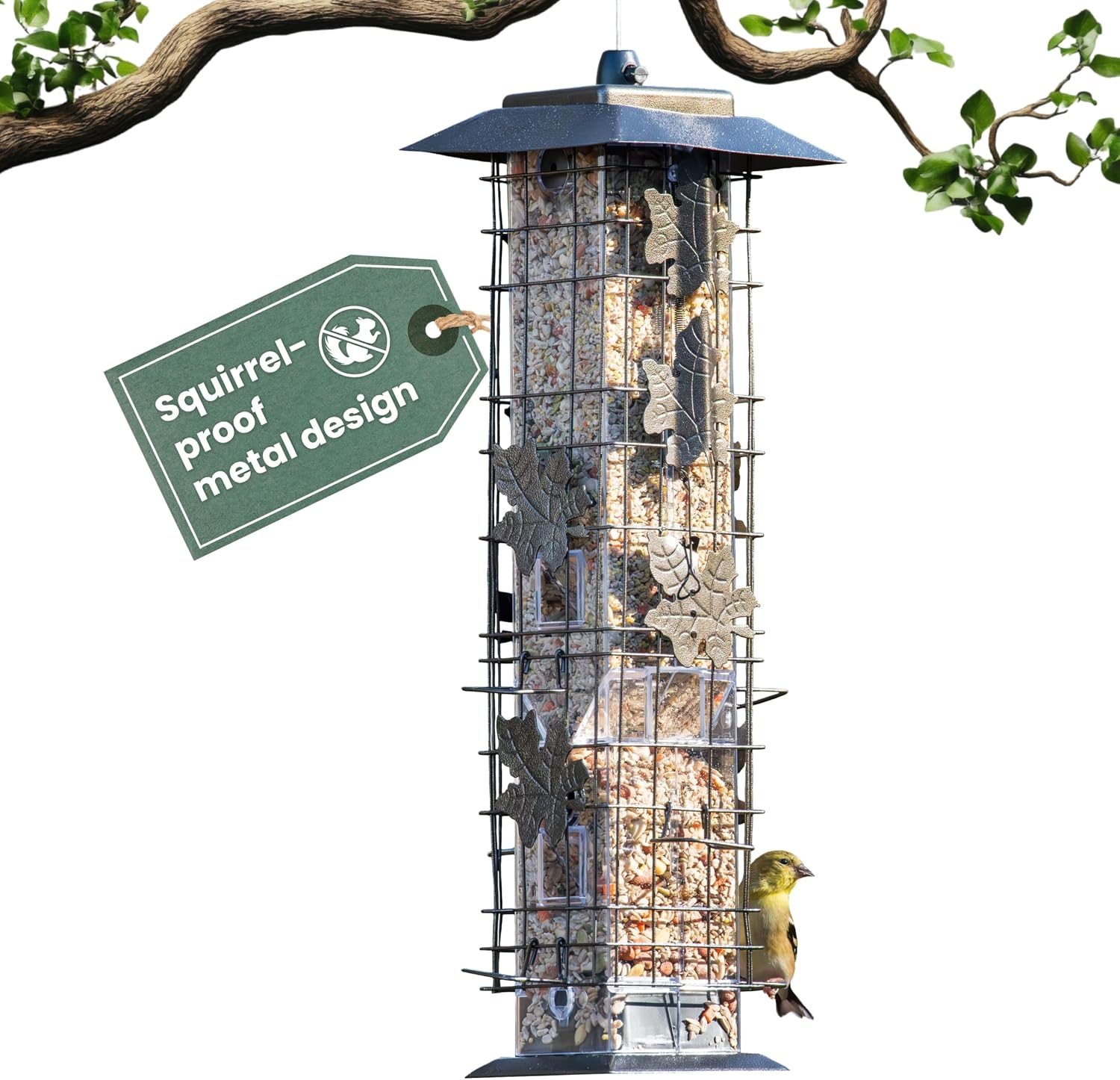
Perky-Pet Squirrel-Be-Gone: the budget cage that tells the truth
The Squirrel-Be-Gone is the feeder I point people toward when the budget is the deciding factor and the squirrel pressure is moderate. The idea is straightforward: an outer cage stands between the ports and anything bigger than a finch. It holds up to 2 pounds of seed, the inner tube lifts out for filling, and it costs a fraction of a weight-activated tube.
Here is the honest framing. This is a squirrel-resistant feeder, not a squirrel-proof one, and the difference is measured in weeks rather than in the words on the box. A determined fox squirrel will spend a week working the cage, and if the feeder hangs close enough to a fence rail or a low branch for a leap, it will eventually get a mouthful. That is not a defect in the design. It is a placement problem, and you can solve it with a baffle and a pole that stands away from launch points.
For chickadees, titmice, house finches, and goldfinches, the cage is not an obstacle at all. For a cardinal or a blue jay, it is. Know which birds you are feeding before you choose the cage.
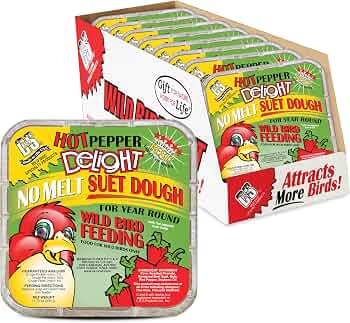
C&S Hot Pepper Delight No Melt Suet Dough: winter fuel for the clingers
Suet is the feeder that keeps the log interesting from November through March, and this is the cake I keep on hand. Two features earn it a spot. The hot pepper is something mammals taste and birds do not, which means a squirrel that raids the basket once usually does not come back for seconds. And the no-melt formula means the cake holds its shape when a warm front rolls through instead of softening into a grease puddle.
Suet cages are built for clingers, not perch birds, and that is the point. Downy and hairy woodpeckers, red-bellied woodpeckers, white-breasted nuthatches, and chickadees all feed sideways or upside down, and a plain tube feeder is the wrong tool for them. Hang the cake in a cage with vinyl-coated wire so feet do not freeze to bare metal in January, and load it in seconds when you are already outside refilling seed.
If you render your own cakes with peanut butter and mealworms, keep doing it. This is the bought version for the weeks when the laundry room is full of rehab birds and you do not have time.
Fazoxo Bird Feeder with Camera: the feeder that writes the log for you
A camera feeder is a different purchase than a seed feeder, and I treat it that way. The Fazoxo combines a camera, a solar panel, and AI bird identification in one house-style unit, which is exactly the combination that appeals to someone who already keeps a species list and wants photographs without standing at the window with binoculars.
The solar panel matters more than it sounds. A camera feeder that needs a cable run to an outlet is a camera feeder you will not move, and the whole pleasure of the format is catching the bird you missed while you were making coffee. Solar keeps the unit where the birds are instead of where the outlets are.
Two cautions from someone who has watched this category closely. First, read the app requirements before you buy, because camera feeders live or die by their software, and the AI identification is only as good as the library behind it. Second, hang a plain feeder on the same pole. Birds should not have to queue for a camera, and a simple tube beside it keeps the traffic flowing while the smart feeder does its thing.
How I judge a feeder in this yard
Every product that hangs on my fence has to answer five questions before it earns a permanent spot.
First, will birds actually use it, or will it sit pretty on the pole while the seed goes stale? Second, can I take it apart and clean it in under ten minutes, because a feeder I dread cleaning is a feeder that becomes a disease vector. Third, what does a determined fox squirrel do to it in week one? Fourth, will it survive a Wisconsin February, freeze and thaw and freeze again? Fifth, would I still hang it after four seasons?
I check the same things on every feeder: how the ports hold up, whether the base traps water, whether the hanging hardware is metal or plastic, and how many tools it takes to get the thing open. A feeder that needs a screwdriver to clean will not get cleaned. That is not an opinion, it is a pattern I have watched repeat for a decade.
Squirrel-proof versus squirrel-resistant
The word on the box and the word in my write-up are different words, and the gap between them is the single most useful thing I can tell you about this category.
Squirrel-proof means the mechanism defeats the animal even when the animal is motivated. A weight-activated cage does that: the ports close, the squirrel gets nothing, and it learns to stop trying. Squirrel-resistant means the feeder survives most attempts and loses occasionally, usually because of where it hangs. Cage feeders fall into this group, and so does almost everything else with a claim printed on it.
Placement decides more than the product does. A feeder within leaping distance of a fence, a branch, or a roof edge is a squirrel feeder with bird seed in it. A feeder on a pole with a baffle, standing in the open, at least eight feet from any launch point, gives even a budget cage a real chance.
The backyard feeder reference table
This is the table I keep in the kitchen, and it is the same one I use when someone asks what to hang first. Match the feeder to the job.
| Product | Type | Capacity | Squirrel strategy | Cleaning notes |
|---|---|---|---|---|
 Visit on Amazon → Visit on Amazon →Squirrel Buster Classic |
Weight-activated tube feeder | 2.4 pounds of seed | Ports close under a squirrel's weight | Tube separates from the base for a full wash |
 Visit on Amazon → Visit on Amazon →Perky-Pet Squirrel-Be-Gone |
Caged tube feeder | 2 pounds of seed | Outer cage blocks the ports | Cage and inner tube both need a brush |
 Visit on Amazon → Visit on Amazon →C&S Hot Pepper Delight No Melt Suet Dough |
Suet cake for cage feeders | See product | Capsaicin, which mammals taste and birds do not | Cake drops in, basket gets scrubbed |
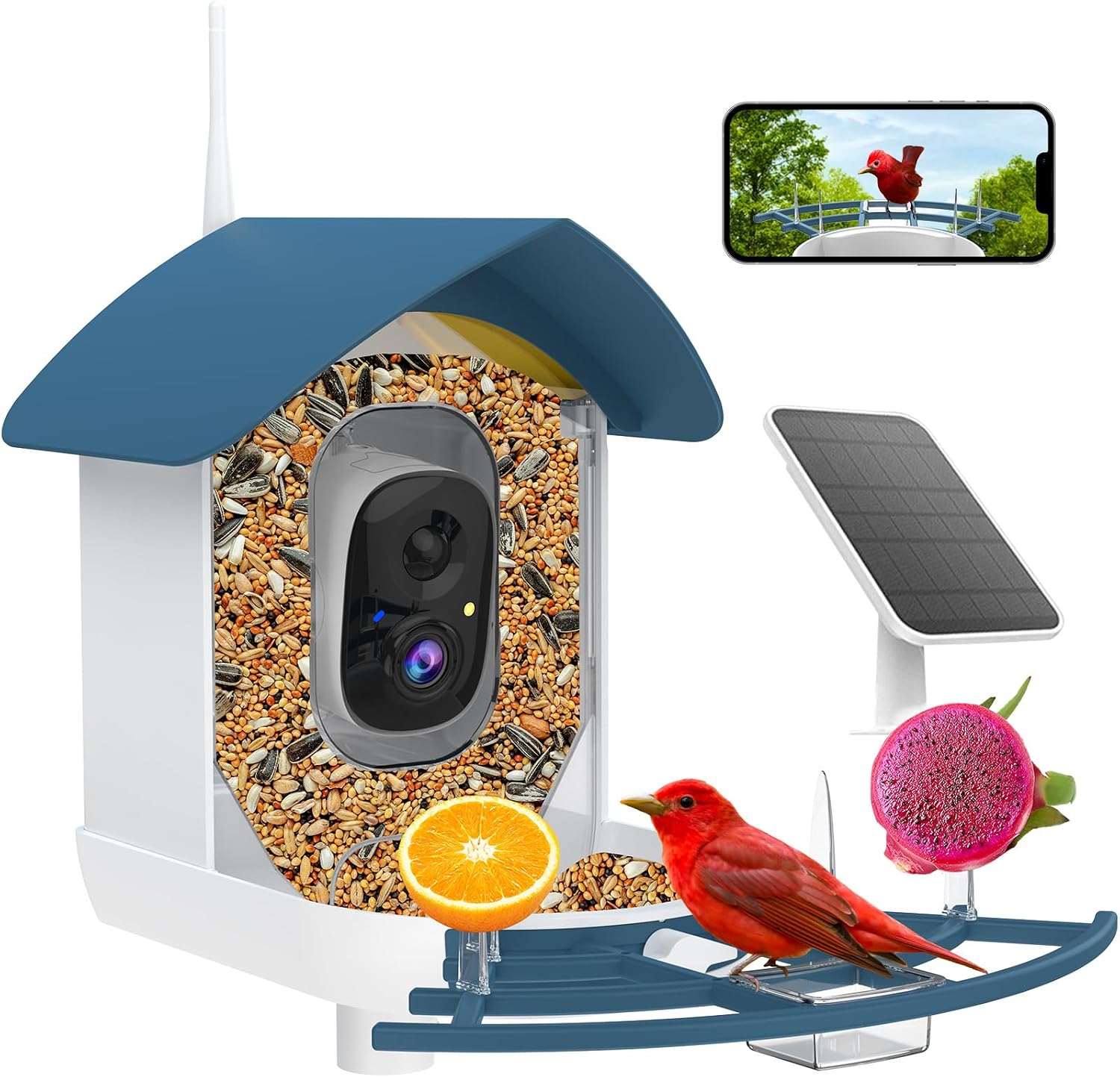 Visit on Amazon → Visit on Amazon →Fazoxo Bird Feeder with Camera |
Camera feeder with solar panel and AI bird ID | See product | See product | See product |
The pattern in that table is simple. Capacity tells you how often you refill. The squirrel column tells you how honest the marketing is. The cleaning column tells you whether the feeder will still be hanging in three years.
Should you buy the Squirrel Buster Classic?
Yes, if you have a real squirrel problem and you want a tube feeder that holds its ground. The weight-activated cage is the only mechanism I will call squirrel-proof without a footnote, and the four ports keep chickadees, nuthatches, and finches busy all winter. It holds 2.4 pounds of seed, so plan on refilling more often than you would with a big tube, and hang it where a cardinal has a comfortable alternative.
Should you buy the Perky-Pet Squirrel-Be-Gone?
Buy it when the budget is the deciding vote and the squirrel pressure is moderate. The outer cage does its job on smaller birds, it holds up to 2 pounds of seed, and it is the cheapest way into a caged design. Call it squirrel-resistant, put it on a pole with a baffle, keep it away from launch points, and it will earn its spot. If you want the version that wins the argument outright, spend the difference on the weight-activated tube instead.
Should you buy the C&S Hot Pepper Delight No Melt Suet Dough?
Yes, if woodpeckers, nuthatches, and chickadees are on your list, and they should be. The hot pepper deters mammals without bothering birds, the no-melt formula survives a warm spell, and a suet cage gives the clingers a feeder that suits how they actually eat. It is the cheapest way to add species to a yard that only has a tube feeder right now.
Should you buy the Fazoxo Bird Feeder with Camera?
It is the pick for the person who already keeps a list and wants the photographs to prove it. The camera, the solar panel, and the AI bird ID handle the identification while you are doing something else, and the solar charging keeps it where the birds are. Check the app details before you commit, because the software is half the product. Then hang a plain feeder next to it, so the yard keeps feeding birds whether or not the camera is watching.