A window bird feeder puts birds three feet from your glass, and that distance is the entire point. The placement rule that Audubon and every rehab intake sheet repeats is simple: feeders and baths belong within three feet of a pane, or beyond thirty feet, and nowhere in between. A bird that launches from a perch three feet out never builds enough speed to hurt itself on the glass. Hang the same feeder fifteen feet into the yard and you have built a slingshot aimed at your living room.
I have been feeding backyard birds for twelve years and keeping the log for ten of them. The log is a spreadsheet: every species that visits, first-of-season dates for migrants, and cups of seed each feeder draws per week. It has talked me out of more feeders than it has talked me into, and it is the reason a window setup is the first thing I recommend to anyone who wants birds close enough to actually watch.
The good news is that this is a two-item project. A feeder that sticks to the glass, and seed that does not leave a mess on the sill. The rest is placement, filling, and cleaning, and I will walk through all three.
Why you should trust me
I am a licensed wildlife rehabilitator in Madison, Wisconsin. I work part time at a small animal clinic and run the songbird side of a county wildlife rescue out of my garage, which means the incubator lives in the laundry room and the gram scale lives on the kitchen counter. My county life list sits at 214 species, and 38 of them have hit my feeders.
I got into rehab the hard way. A white-throated sparrow hit my dining room glass and spent three days recovering in a shoebox. The same year I hung my first window feeder three feet from that exact pane, which is where it should have been all along. I have weighed every rehab bird in grams since, and I have seen what a dirty feeder does to a flock. House finch eye disease and salmonella both show up in intake records, and both trace back to a feeder nobody took apart since fall.
What you actually need before you start
Two things, plus a cleaning kit.
The feeder has to hold onto glass through weather, and the seed has to be something birds will clear instead of something that sits and molds. Beyond that, you need a window you can see from a chair you actually sit in, a bucket, a bottle brush, and a ten-minute slot in your week that you will not skip.
That last one is not optional. A window feeder is the closest thing in this hobby to a pet, and it needs the same standard of care.
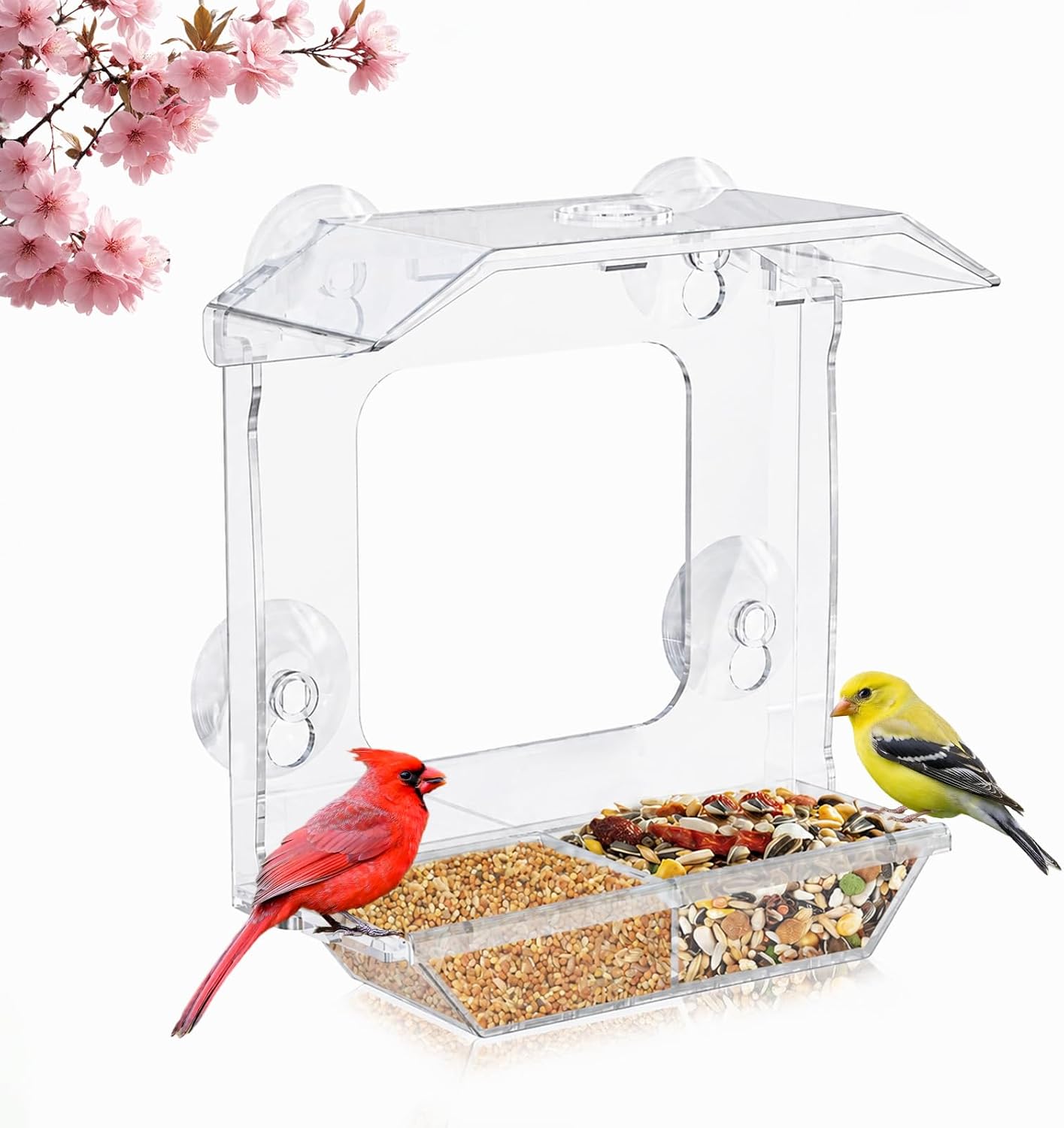
Our pick: Window Bird Feeder with 4 Extra Strong Suction Cups (2.5 Inch)
 Visit on Amazon →
Four cups instead of two is the specification that matters here, and it has nothing to do with how the feeder looks in a photo. A suction mount is a load problem. Two cups put the whole weight of the tray, the seed, and a landing house finch on two points of contact, and when one lets go the tray swings and dumps. Four cups spread that load across four seals, and if one seal weakens you usually get a warning lean instead of a crash. The 2.5-inch cups are on the large side for this category, which gives each seal more surface area to hold.
The trade-off is honest and I will not dress it up. Suction cups are a warm-weather and sheltered-window solution. In a climate that freezes and thaws, the cup stiffens, a film of water works under the seal, and adhesion drops. That is true of every suction feeder I have ever handled, at every price. If you live where January means single digits, plan on bringing the feeder in at night during cold snaps or moving to a bracket that bolts through the sill for the winter months. Treat the cups as a three-season mount and you will be happy with them. Treat them as permanent and you will be sweeping seed off the porch.
For anyone with a screened porch, a sheltered window, or a mild winter, this is the cheapest way to get birds at arm's length. Clean the glass first, mount it empty, and give the cups a full day before you add a single seed.
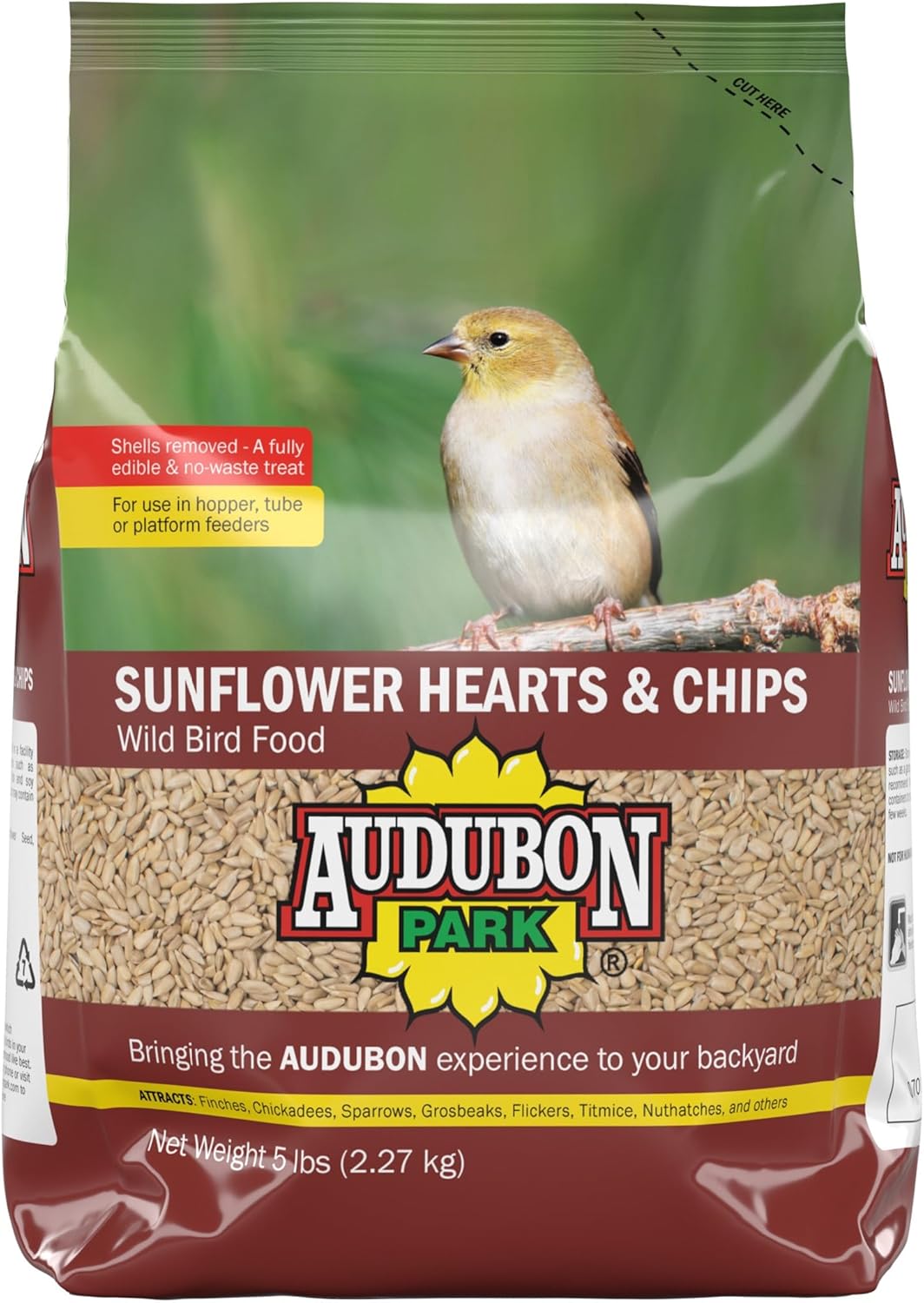
The seed: Audubon Park Sunflower Hearts & Chips Wild Bird Food, No Mess Sunflower Seeds for Birds, 5-Pound Bag
 Visit on Amazon →
Hearts and chips means the hulls are already gone, and that is the whole reason this is the right seed for a window tray. Black-oil sunflower is a fine feeder seed, but the birds crack it and drop the hulls, and every one of those hulls lands on your sill, your siding, or the mulch below the window. On a deck or under a window you cannot hose off easily, that litter adds up fast.
Hulled sunflower also draws the widest range of birds for the money. Chickadees, house finches, cardinals, nuthatches, and most of the sparrows will work a tray of hearts, and there is nothing left behind for the squirrels to pick through or for the rain to sprout.
Two caveats. Hulled seed has no shell protecting it, so it goes stale and moldy faster than whole seed, especially in a shallow tray that catches rain. Fill a window tray one-third to one-half full, not to the brim, and top it up every couple of days instead of dumping in a week's worth. And the price per pound is higher than whole sunflower, which you are paying for the convenience of zero hull litter. The 5-pound bag is the right size for a window feeder, since a tray that small will not burn through it before it turns.
The setup, step by step
This takes about twenty minutes, plus a day of waiting.
Step one: pick the window. Three feet from the glass, no farther. It should be a window you look through while you sit, because a feeder you never watch is a feeder you never clean. There should be a shrub or a tree within ten feet so birds have cover to retreat to, but nothing so close that a cat can lie in wait on a branch. Avoid a window directly above a heat vent or a dryer vent, since warm air rising past the glass messes with both the cups and the birds.
Step two: clean the glass and the frame. Suction cups stick to glass, not to grime, pollen, or a film of cooking oil. Wipe the mounting area with a damp cloth and a little dish soap, then dry it completely. A cold pane on a warm day will fog, so give it a minute before you mount.
Step three: pick the height. Mount it at or slightly below your seated eye level. That angle lets you look down into the tray and see what is actually in there, and it puts the feeder high enough that a cat on the ground cannot swat at it. It also needs to be low enough that you can reach it with both hands for cleaning and refilling. If you have to stand on a chair to take it down, you will stop taking it down.
Step four: seat the cups. Press the center of each cup flat against the clean glass and push the air out, one at a time, holding for a few seconds. Mount the feeder empty and let it hang for a full day before you add seed. This is the step everyone skips and the reason most suction feeders fail in week one.
Step five: add seed, but not much. One-third to one-half full. A full tray of hulled seed in humid weather is a mold experiment. In summer, fill it lightly and check it daily.
Step six: expect a schedule. Give it a few days. Chickadees and house finches usually find a new window tray first, then the cardinals and the woodpeckers. If nothing shows up in a week, you are probably too far from cover, or the seed has gone stale.
Step seven: clean it weekly. Take the whole feeder down, not just the tray. Wash it in hot soapy water, scrub the corners and the seams where seed dust collects, rinse it in a dilute bleach solution, and let it dry completely before it goes back up. Every salmonella case I have seen in rehab traced back to a feeder that had not been taken apart in months. A hose spray is not cleaning. You have to get into the corners.
Step eight: handle the cold. When the forecast drops below freezing, bring the feeder in at night. If you want birds at the window all winter, switch to a bracket mount that bolts through the sill, or hang a pole feeder a few feet out and keep the window tray for the shoulder seasons.
Where window feeders go wrong
The first failure is placement. A feeder hung five to twenty feet from a window is worse than no feeder at all, because it teaches birds to fly toward glass. Three feet or less, or thirty feet or more.
The second is a dirty feeder. A window feeder is small and it holds a small amount of seed, which means the seed sits close to the surfaces birds are standing on. That is a disease vector with a perch if you let it go. Weekly, in hot weather twice a week.
The third is a hawk. A window feeder concentrates songbirds in one spot, and a sharp-shinned hawk will figure that out. If you start finding feather piles, take the feeder down for a week and let the flock disperse. The birds will come back.
The fourth is water. Hulled seed plus a shallow tray plus a rainy week equals clumped, sour seed. Shake the tray out after a storm and refill with fresh.
The alternatives and why they lost
A pole feeder is the better winter setup in a cold climate. It does not care about freeze-thaw, it holds more seed, and you can add a baffle. What it does not do is put a chickadee eighteen inches from your nose while you drink coffee. If close viewing is the goal, the window feeder wins, and you can run both.
A hanging feeder on a shepherd's hook gets you the same species at a slightly greater distance, with no suction cup risk. It also swings in the wind, which some birds tolerate and some do not, and it puts seed within reach of any squirrel that can climb the pole.
A nyjer sock is for finches and nothing else, and it belongs on a pole, not a window.
A suet cage is a winter feeder for clingers: woodpeckers, nuthatches, chickadees. It is a great second feeder, but it is a mess in July and it is not a seed feeder at all.
A hummingbird feeder is a completely different project with completely different cleaning rules, and it hangs in the shade, not in a sunny window.
What this all costs
The feeder and the seed are both inexpensive, and I am not going to quote you a number that will be wrong by the time you read this. Check the current Amazon price on each and do the math against a bag of bargain blend that is half milo and red millet. Cheap seed is the most expensive seed you will buy, because the birds sort through it, the filler sits in the tray, it molds in the rain, and you clean the feeder twice as often for half the birds.
The recurring cost is seed, and the one-time cost is the feeder plus a bottle brush. That is the entire budget. A window feeder is the cheapest entry point into this hobby that exists, and it is the one that pays you back in birds you can identify without binoculars.
The bottom line
Clean the glass, mount four cups within three feet of the pane, let it hang empty for a day, and fill it partway with hulled sunflower. Take the whole thing apart every week. Bring it in when the temperature drops, or bolt a bracket through the sill and leave it up.
That is the job. The sparrow that taught me this would have survived the glass if I had done it ten years earlier. Do it now and your window becomes the best seat in the yard.