
Related: How to Clean a Bird Feeder: The 10-Minute Routine That Stops Disease
How To Clean A Bird Feeder To Prevent Disease
The marketing says a feeder is done once you dump out the old seed and give the tube a quick rinse. After ten years of keeping the log and three separate house finch eye disease outbreaks traced back to feeders in my county, I'll tell you that's not cleaning. That's decorating.
I'm Mara. I run the songbird side of a county wildlife rescue out of my garage, and I've been logging every species that hits my feeders for a decade. Every salmonella intake I've seen in rehab came from a dirty feeder.
Every single one. So when I talk about cleaning, I'm not being precious about germs. I'm talking about the difference between a feeder that feeds birds and a feeder that kills them.
Here's the short version of what I use and why.
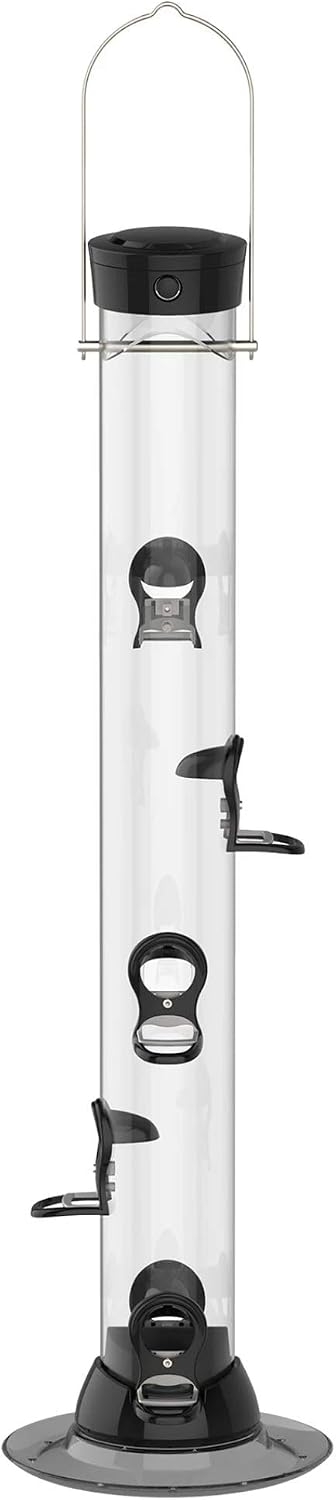
Droll Yankees Onyx Clever Clean and Fill Mixed Seed Bird Feeder, 6 Feeding Ports, 24-Inch, Black
Base twists off in one motion, whole tube goes in the sink. The only tube feeder I've used where...
Visit on Amazon →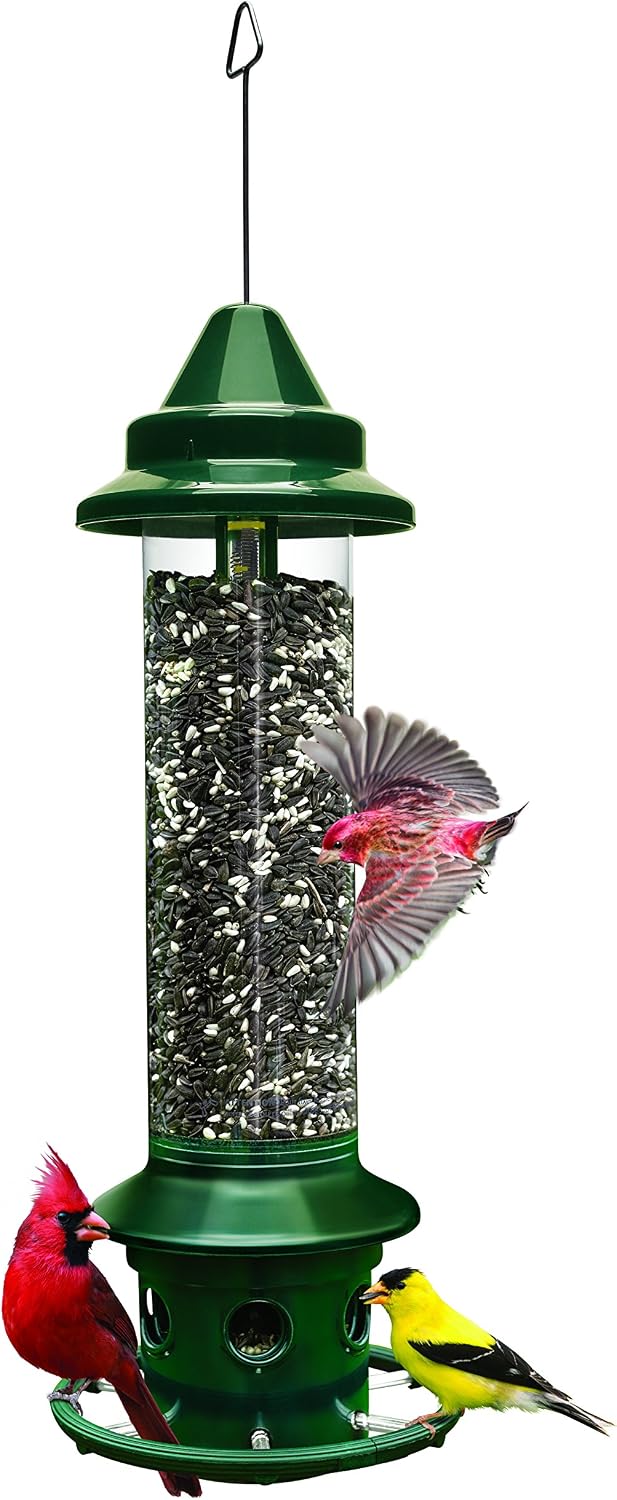
Squirrel Buster Plus Squirrel-proof Bird Feeder w/Cardinal Ring and 6 Feeding Ports, 5.1-pound Seed Capacity, Adjustable, Pole-mountable (POLE ADAPTOR SOLD SEPARATELY), Green
The Squirrel Buster Plus is a deluxe truly squirrel-proof bird feeder. It holds 1 gallon/5.1 pounds of bird seed. It comes with a Cardinal Ring, but other accessories are also available.
Visit on Amazon →Droll Yankees Onyx Clever Clean and Fill Mixed Seed Bird Feeder, 6 Feeding Ports, 24-Inch, Black
Vinyl-coated wire won't cut feet, cake loads in seconds, and the whole thing can soak in hot...
Visit on Amazon →
K&H Pet Products Thermo-Birdbath for Outdoors Heated Gray 1 Gallon 17 X 23.5 X 4 Inches
K&H Pet Products Thermo-Birdbath for Outdoors Heated Gray 1 Gallon 17 X 23.5 X 4 Inches.
Visit on Amazon →The version I own
I've got the Droll Yankees Onyx Clever Clean 24-Inch hanging on the east side of the house, the Brome Squirrel Buster Plus on the pole by the garage, and the HummZinger Ultra on a shepherds hook three feet from the dining room glass.
That last placement is the Audubon recommendation for window strike prevention, and it's also where I can see the feeders while I'm washing dishes.
That matters more than you'd think, because seeing a feeder every day is the only thing that reminds you to clean it.
The Onyx has been up since October of 2022. The Brome since March of 2021. The HummZinger gets hung every April 20th when the FOS ruby-throated shows up in the log, and it comes down the first week of October.
Why a dirty feeder is a disease vector with a perch
Let me give you the rehab version. House finch eye disease shows up as swollen, crusty eyes. The birds can't see, which means they can't feed, which means they starve. Salmonellosis hits them in the gut and they sit puffed up on the feeder tray, looking cold, until they die. I've seen both in intake. Both trace back to feeders nobody took apart since November.
The disease transmission happens at the perch. A sick bird sits on the port, drops saliva or feces, and the next twenty birds that visit that perch pick it up. Seed hulls and moisture create the perfect culture medium. In warm weather, mold grows in the tray. In cold weather, the damp seed freezes and thaws and grows bacteria anyway.
The fix is not a spray bottle. The fix is taking the feeder apart, scrubbing every surface, soaking it in a dilute bleach solution, rinsing it completely, and letting it dry before you refill. That's a ten-minute job on a good feeder. It's a forty-minute job on a bad one, which is why you'll stop doing it.
Droll Yankees Onyx Clever Clean 18": the one that actually cleans
The Onyx is advertised as the feeder for people who hate cleaning. I've tested that claim for two winters and I'll confirm it. The base twists off with a quarter turn and the whole tube slides apart into three pieces: the cap, the tube, and the base. Every port is accessible. Every surface can be scrubbed.
The draw on mine is about three cups of sunflower hearts a week in January. That's a manageable volume, which means I'm not scrubbing caked seed off the ports every three days. The Onyx goes in the sink, gets a scrub with a bottle brush, gets a soak in the bleach solution, and is back on the pole in eight minutes flat.
The downside is the price. At $60, it's not the cheapest tube feeder you can buy. But here's the math I run in my head: a $25 tube feeder that you clean twice a season because it's a pain becomes a $25 disease vector. The Onyx costs more and you'll actually use it. Over three years, that's about 5 cents a day for a feeder that doesn't make the birds sick.
One thing I'll tell you straight: the seed ports are sized for sunflower and safflower. If you want to run nyjer through it, get the Finch Flocker instead. The Onyx is for the everyday seed.
Brome Squirrel Buster Plus: the squirrel test
The Brome Squirrel Buster Plus is the only feeder I'll call squirrel-proof without a footnote. I've had a fox squirrel working on mine for three weeks straight. It hung upside down, it chewed the cage, it tried to pry the ports open. The ports closed every single time.
The cleaning story is the second reason I recommend it. The cage and the tube separate without tools. The base unscrews. The seed ports are individual pieces that pull out for scrubbing. The whole thing can go in a sink of hot soapy water. I've had mine apart more times than I can count, and it's never broken a latch or stripped a thread.
The criticism I'll level at it: without the Cardinal Ring, larger birds bounce off the cage. I added the ring in year one and cardinals started holding the perch. That's an extra $20, which makes this a $95 setup. For that money, you could buy two cheaper feeders. But the cheaper feeders will be emptied by squirrels in a week, and you'll be right back where you started.
The Brome draws about four cups a week in my yard in winter. The dark-eyed juncos work the tray underneath, and the chickadees and nuthatches work the ports. It's the workhorse of the pole, and it's survived two Wisconsin Februaries without cracking.
Aspects HummZinger Ultra: thirty seconds, no mold
The HummZinger Ultra is the hummingbird feeder I hang every April 20th, the day the FOS ruby-throated hits the log two years running. The wide-mouth top rinses out in thirty seconds. The base comes apart completely, which means I can scrub the feeding ports individually. That matters because a hummingbird feeder that's a chore to clean becomes a mold experiment by August.
I've seen what happens with cheap hummingbird feeders. The narrow necks trap nectar, the ports grow black mold, and the birds stop coming. The HummZinger's saucer design means the nectar sits in a shallow basin where you can actually see it. When it goes cloudy, you dump it, rinse it, refill it. Two minutes total.
The downside is the saucer style. Some birds prefer the bottle style, and the saucer can drip if you fill it too full. I fill mine to the line and it doesn't leak. The bee guards work, which is more than I can say for the glass feeder I used before this one.
I use a 1:4 sugar-to-water ratio, no red dye. The dye is unnecessary and it's not doing the birds any favors. The red base of the HummZinger is enough to draw them in.
C&S EZ Fill Suet Basket: the winter workhorse
The C&S EZ Fill Suet Basket is the cheapest thing on this list and the one I'd replace the same week if it broke. The vinyl-coated wire won't cut feet like bare metal, the cake loads in seconds, and the whole thing can soak in hot soapy water. Downy and hairy woodpeckers are on it by week one of every winter log.
The cleaning protocol is simple: pull the cake, soak the basket in the bleach solution, scrub the wire with a dish brush, rinse, dry, reload. Five minutes. The vinyl coating means I don't have to worry about rust, which is the failure mode of every cheap metal basket I've owned.
I render my own suet and mix in peanut butter and mealworms. The EZ Fill holds a standard cake, and the wire mesh gives clingers like nuthatches and chickadees something to grip while they work. The log shows the basket draws more species than any tube feeder in winter.
The criticism: the spring-loaded bottom can pop open if you drop it. I've had a cake hit the ground twice. Pick it up, wash it off, it's fine.
K&H Thermo-Birdbath: water is part of the hygiene story
I preach that water brings more species than seed. The log backs it up: from June to August, the bath gets more entries than every feeder combined. The K&H Thermo-Birdbath has been ice-free at -10°F for two winters on my deck rail. The thermostat keeps the water open without cooking it, and I check the wattage before I recommend any heated bath. K&H is the one that passes.
The cleaning routine is weekly: dump the basin, scrub with a brush, rinse, refill. The 1-gallon basin is shallow enough for songbirds, and the heating element is sealed so I don't have to worry about water getting into the works. The whole thing unplugs and can be hosed off in spring.
The criticism: it's a birdbath, not a feeder, but it's part of the disease prevention picture. Stagnant water breeds mosquitoes and bacteria. A bath that's cleaned weekly and kept ice-free in winter gives birds a reliable water source without turning into a health hazard.
I don't track prices day to day, so I won't pretend to know next week's price. What I know is that the K&H has survived two winters and the thermostat hasn't failed. That's the spec that matters.
The cleaning protocol I actually run
Every Sunday, the feeders come down. The Brome and the Onyx get taken apart. The HummZinger gets rinsed and scrubbed. The suet basket gets soaked. Everything goes into a sink of hot water with a splash of bleach. I scrub every surface with a dedicated feeder brush. I rinse everything twice. I let it all dry on a towel on the kitchen counter before I refill.
The whole operation takes about twenty minutes. It's the single most important thing I do for the birds in my yard. I've seen what a dirty feeder does to a flock of house finches, and I never want to be the one who hangs the disease vector.
The seed matters too. I buy 40-pound bags of sunflower hearts because there's no hull litter under the feeder and the cost per pound is half what I'd pay for a no-mess blend in a small bag. If you're feeding a blend, check the ingredients. Milo and red millet are filler. The birds won't eat them, they'll rot in the tray, and you'll be cleaning twice as often.
The bottom line
A feeder you can't take apart is a feeder you won't clean, and a feeder you won't clean is a disease vector with a perch. The Onyx, the Brome, the HummZinger, the EZ Fill, and the K&H all pass the test: they come apart, they clean in under ten minutes, and they've survived multiple seasons in my yard.
Buy those, run the weekly protocol, and your birds will be healthier than most. Skip the cleaning and none of it matters.